




Why Do Wet and Sticky Materials Cause Screen Blinding?
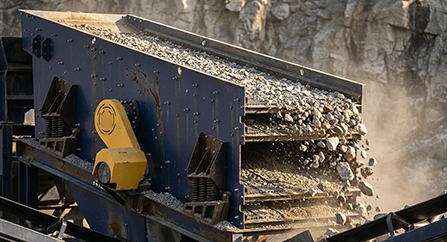
Screen blinding is a common problem in mining, quarrying and aggregate production, especially when processing wet and sticky materials. Moisture, clay content and fine particles can cause material to adhere to the screen surface, block screen apertures and reduce the effective screening area.
When screen openings become partially or completely blocked, fewer particles can pass through the screen as expected. This can reduce screening efficiency, increase misplaced material and affect the performance of the crushing and screening process.
1. What Is Screen Blinding in Mining?
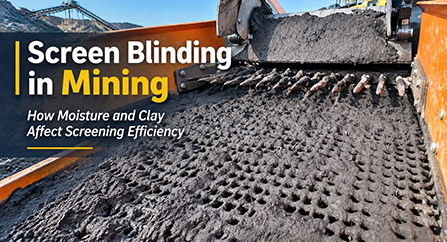
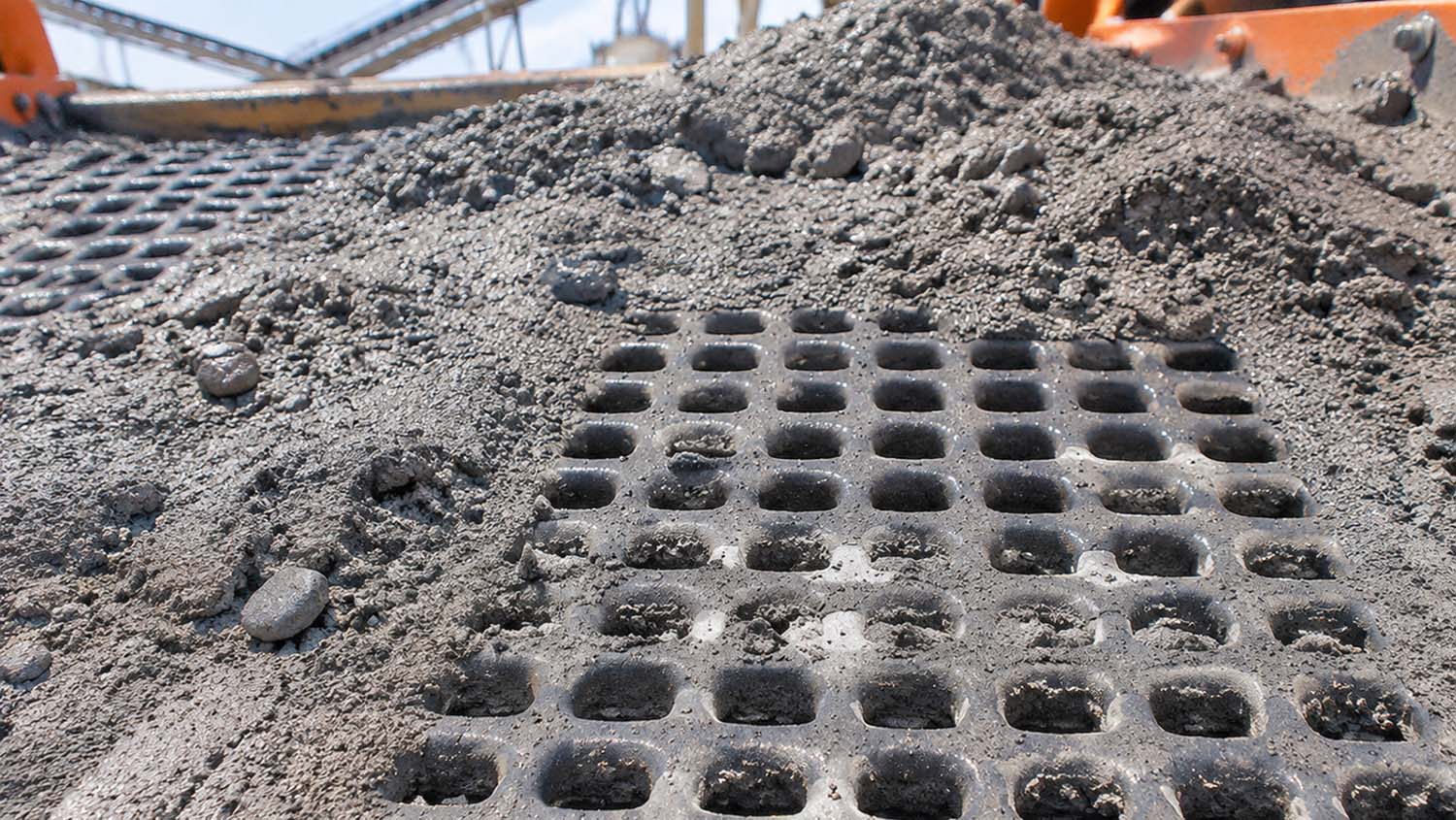
Screen blinding occurs when fine or sticky materials accumulate on or inside screen apertures, reducing the available opening area for particles to pass through. It commonly happens when processing damp sand, clay-containing aggregates, wet ores and fine mineral materials.
During normal screening, undersized particles pass through the screen openings, while oversized particles continue toward the discharge end. However, when wet and sticky particles adhere to the screen mesh or accumulate inside the openings, material separation becomes less effective.
Screen blinding should be distinguished from other screening problems, particularly screen pegging and material agglomeration.
| Screening Problem | Definition | Typical Appearance |
|---|---|---|
| Screen Blinding | Fine or sticky particles cover screen openings and reduce the effective open area. | A layer of damp material accumulates on the screen surface. |
| Screen Pegging | Particles close to the aperture size become lodged inside the screen openings. | Individual stones or particles become stuck in the holes. |
| Material Agglomeration | Fine particles adhere to one another and form larger clusters. | Small particles form sticky lumps or aggregates. |
Although these phenomena are different, they can occur simultaneously. For example, moisture can cause fine particles to agglomerate, and these clusters may subsequently accumulate on the screen surface or become trapped in the apertures.
2. How Does Moisture Cause Screen Blinding?
Moisture is one of the main factors affecting the screening behavior of fine and sticky materials. When water is present on particle surfaces, it can increase adhesion between particles and between particles and the screen media.
2.1 Liquid Bridge Formation Between Particles
When damp mineral particles come into contact, small amounts of water can form liquid bridges between their surfaces. These bridges generate capillary forces that hold particles together, making it more difficult for fine particles to separate and move independently across the screen surface.
As a result, fine particles may adhere to larger particles instead of separating according to their original sizes. These clusters may not pass through the intended screen openings.
2.2 Adhesion Between Particles and Screen Mesh
Moist fine particles can also adhere to the wires or surfaces of screen media. As more material accumulates, the effective opening area gradually decreases.
This is particularly important when screening fine mineral particles. Smaller particles may be more difficult to detach from larger particles or the screen surface under certain moisture conditions.
2.3 Particle Agglomeration and Moisture Variations
When moisture promotes particle-to-particle adhesion, small particles may combine into larger clusters. These agglomerates may behave differently from the original particles and fail to pass through the intended screen openings.
Moisture conditions can also change during transportation, storage and feeding. Rainfall, water spraying and variations in the material source may cause feed moisture to fluctuate, resulting in inconsistent screening performance.
It is important to distinguish external or surface moisture from total moisture content. The measurement method and sampling basis should remain consistent when comparing screening test results.
3. How Does Clay Content Affect Screening Performance?
Clay-containing materials can create additional screening difficulties, particularly when combined with moisture and fine mineral particles.
Depending on their mineral composition, some clay-rich materials can absorb or retain water, become sticky when wet and form coatings on mineral particles and screen surfaces.
3.1 Clay Coating on Mineral Particles
Fine clay particles may attach to larger rock or mineral particles. This coating changes the surface properties of the feed material and can make it more difficult for individual particles to separate during screening.
When fine clay particles remain attached to coarse particles, they may be discharged with the oversize material instead of passing through the required screen openings.
3.2 Clay Accumulation on Screen Surfaces
Wet clay can accumulate on screen wires and apertures. As material builds up, fewer openings remain available for particle passage, gradually reducing screening efficiency.
This condition can become particularly problematic when processing clay-rich ores, weathered rock, wet sand and gravel, or mineral materials containing a high proportion of cohesive fines.
3.3 Different Materials Can Behave Differently
Not all clay-containing materials have the same screening characteristics. Their behavior depends on clay mineral composition, clay content, moisture conditions, particle size distribution and the properties of the screen media.
For this reason, the material name alone is not enough to predict whether screen blinding will occur. A representative material sample and an analysis of its properties are important for understanding actual screening conditions.
4. HAMAC Vibrating Screen
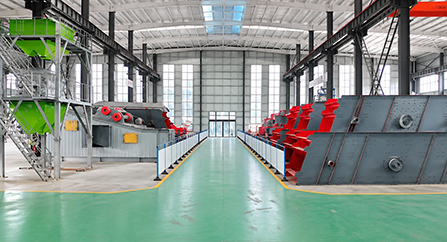
Different materials and operating conditions require different screening equipment. HAMAC offers screening and feeding equipment for various aggregate and mining applications. The following options can be considered according to material characteristics and project requirements.
HAMAC Tracked Vibrating Screening Plant – For Sticky Aggregate Applications
For projects involving viscous aggregates and mobile screening requirements, the HAMAC tracked vibrating screening plant is an option worth considering.
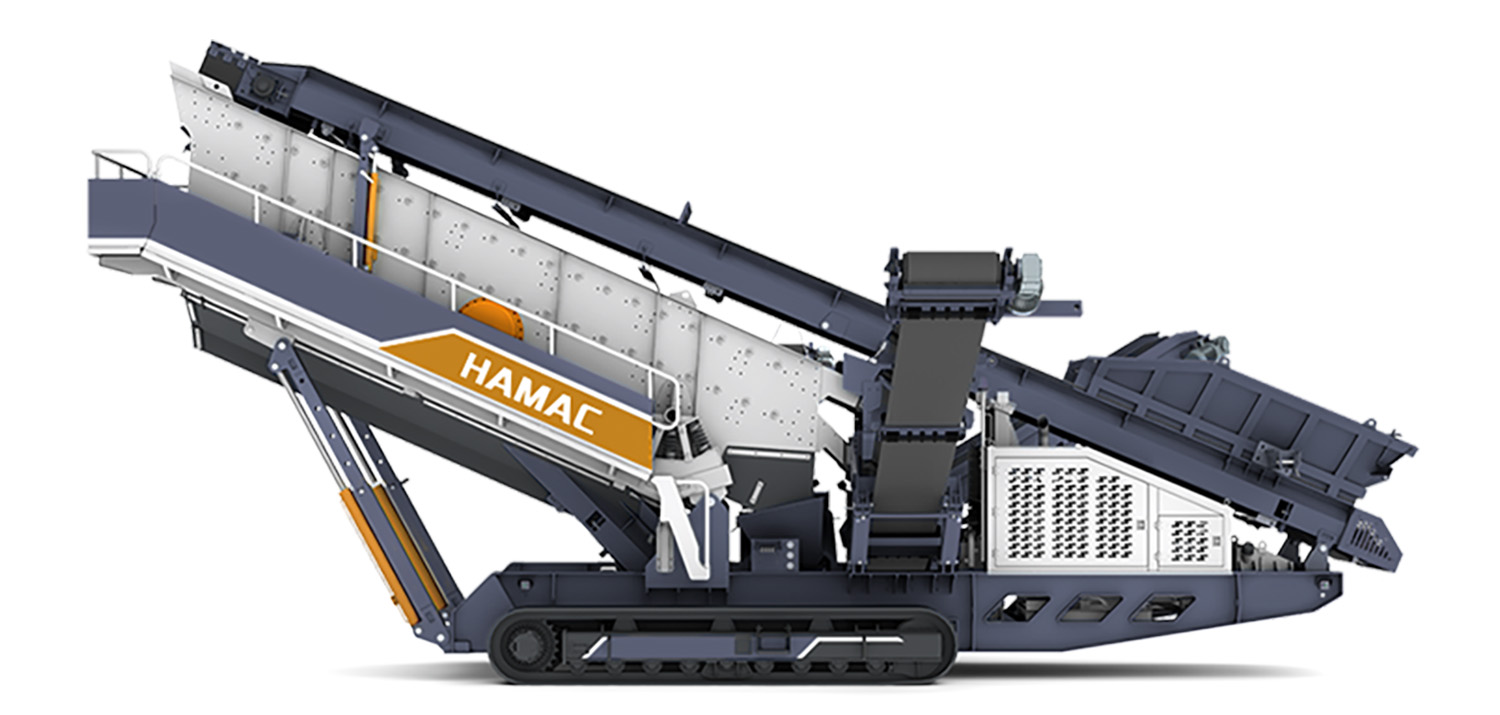
HAMAC lists viscous aggregate separation among the applications of its tracked crushing and screening equipment. Its crawler-mounted design allows the plant to move between working areas, while the pre-screening system supports material separation before further processing.
Explore the HAMAC Tracked Vibrating Screening Plant for more information.
HAMAC YK Series Circular Vibrating Screen – For Conventional Screening Applications
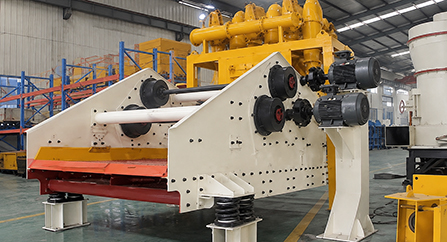
For relatively dry ores and rocks, the HAMAC YK series circular vibrating screen is designed to separate aggregates, sand and minerals into different sizes.
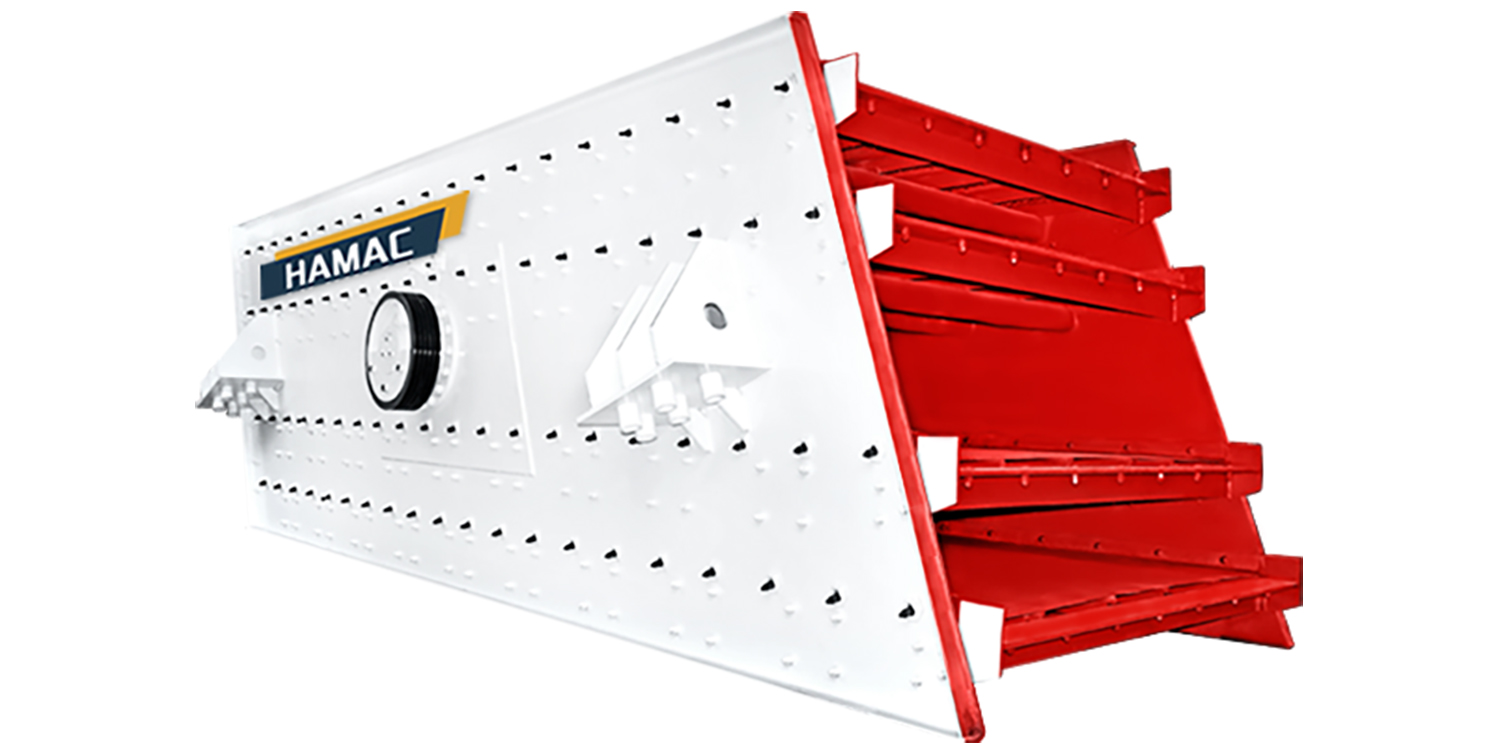
According to HAMAC's published product information, the YK series is suitable for screening materials with moisture content below 5%. It is available in different models and screen deck configurations for aggregate and mineral processing applications.
Selected model specifications include:
| Model | Screen Area | Frequency | Published Capacity | Motor Power |
|---|---|---|---|---|
| YK1236 | 4.32 m² | 800–900 r/min | 25–200 m³/h | 5.5 kW |
| YK1860 | 10.8 m² | 800–900 r/min | 75–600 m³/h | 15 kW |
| YK2675 | 19.5 m² | 800–900 r/min | 145–1100 m³/h | 30 kW |
These capacities are catalogue reference values, not guaranteed performance for wet, sticky or clay-rich materials. If feed moisture exceeds the published application range, or the material contains substantial sticky fines, a project-specific assessment is necessary before selecting a standard YK screen.
Learn more about the HAMAC YK Series Circular Vibrating Screen.
HAMAC Vibrating Feeder – Supporting Stable Material Feeding
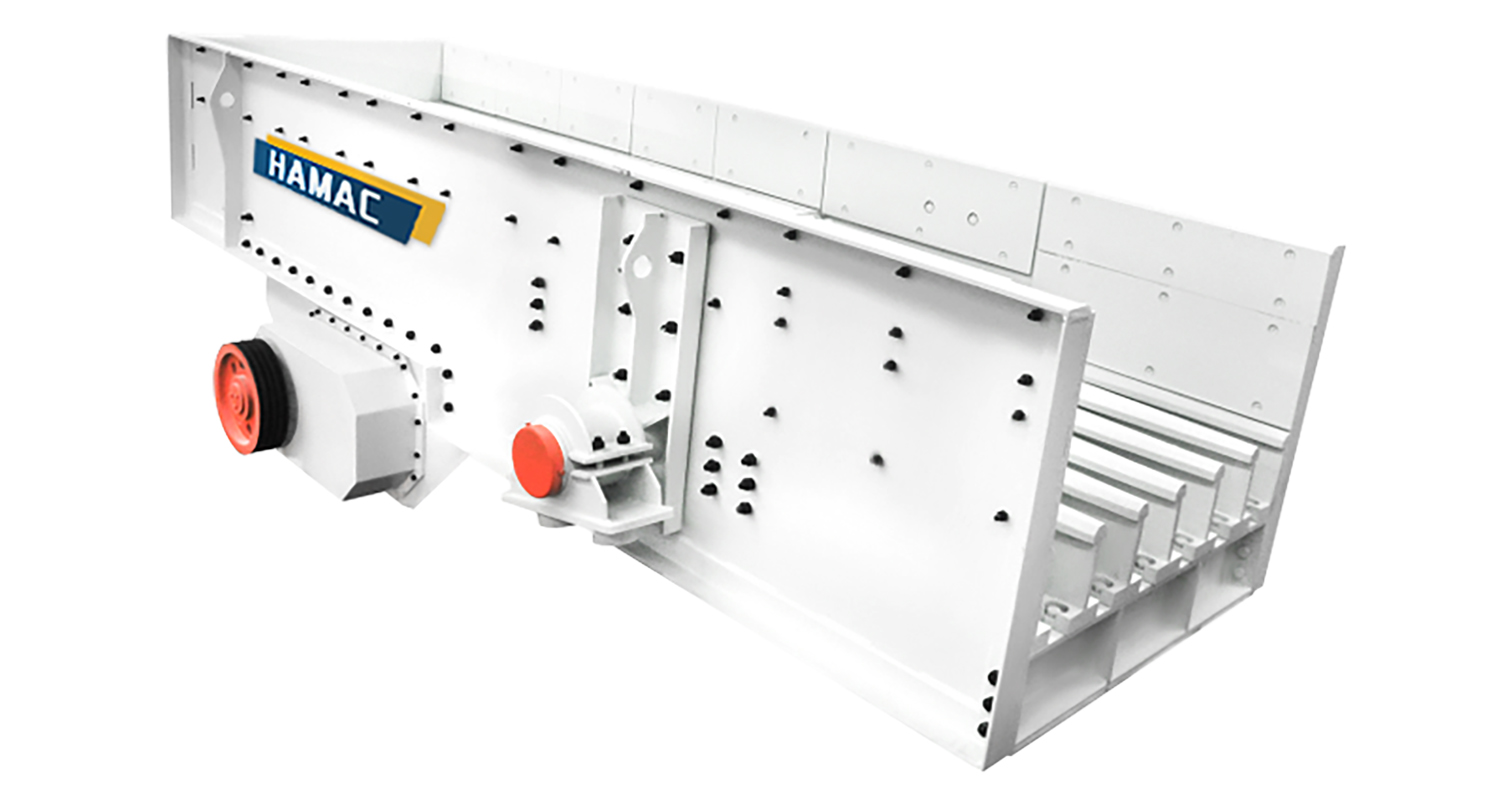
A vibrating feeder helps transport raw materials continuously and evenly from the hopper to downstream equipment. Stable feeding can reduce uneven material accumulation and support consistent material flow through the crushing and screening plant.
Although a vibrating feeder does not directly eliminate screen blinding, it can help maintain more stable feeding conditions.
Explore the HAMAC Vibrating Feeder.
5. Frequently Asked Questions About Screen Blinding
Q1: Why does wet sand clog vibrating screen mesh?
Wet sand contains fine particles that may adhere to one another and to the screen surface. When moisture promotes particle agglomeration, fine particles can form larger clusters or accumulate inside the screen openings, reducing the effective screening area.
Q2: Does high clay content affect screening efficiency?
Yes. Clay-rich materials can become sticky when wet. Fine clay particles may coat larger mineral particles or accumulate on the screen surface, making particle separation more difficult.
Q3: What is the difference between screen blinding and screen pegging?
Screen blinding occurs when fine or sticky material covers screen openings. Screen pegging occurs when particles close to the aperture size become lodged inside the openings. Both can restrict material passage, but their mechanisms are different.
Q4: Does higher moisture always cause lower screening efficiency?
Not necessarily. Screening performance depends on material type, moisture conditions, particle size distribution, clay content and screen design. Different materials may respond differently to the same moisture level.
Q5: Can screen blinding affect the capacity of a crushing plant?
Yes. When screen apertures become blocked, fewer particles can pass through the screen. This may increase misplaced material, circulating load and the pressure on downstream crushing equipment.
Q6: What information is needed to evaluate wet material screening problems?
Important information includes material type, moisture content, clay content, feed particle size distribution, screen aperture size, actual feed rate and required finished-product sizes.
For screening equipment inquiries, contact HAMAC:
Email: sales21@hamac.cn
WhatsApp: +86 151 3623 6223
Website: www.hamacgroup.com