




Tailings Dewatering Screen: Working Principle, Specifications & Applications | HAMAC
Product Overview
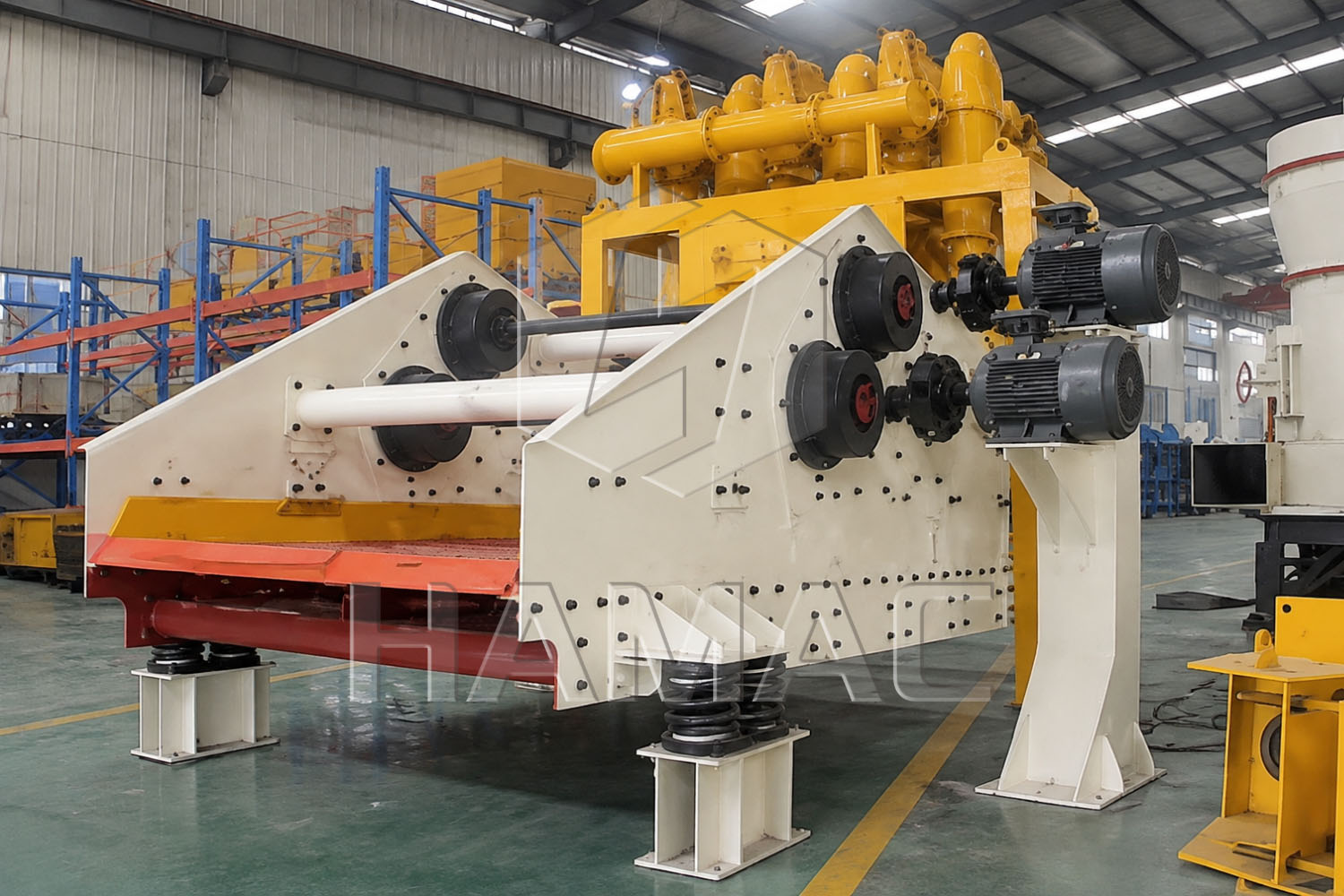
The tailings dewatering screen is a high-frequency linear vibrating screen designed specifically for tailings dewatering and recovery in mineral processing plants. By combining the characteristics of mineral tailings with high-frequency screening technology, it achieves classification, dewatering and desliming in one continuous operation, helping mines reduce tailings pond risk, cut fresh water consumption and move toward responsible tailings management and dry stacking.
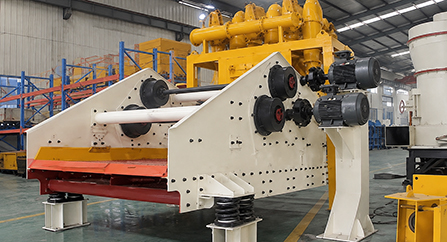
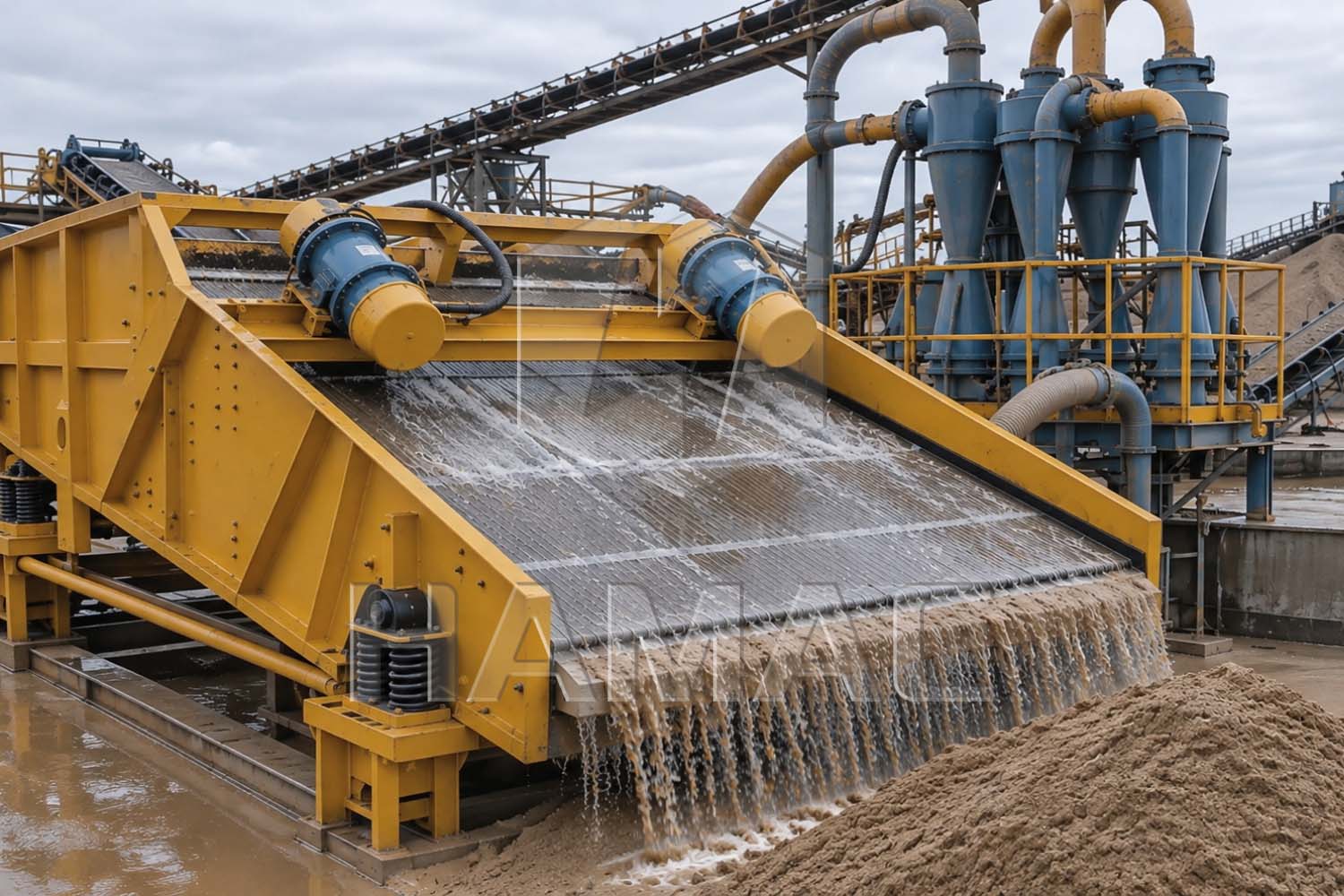
Two vibration motors rotate synchronously in opposite directions to generate a linear excitation force that drives the screen deck in a reciprocating motion. Thickened tailings material is continuously thrown, loosened and conveyed along the deck; water drains through the polyurethane screen panels while solids are retained by the material bed and discharged as a drip-free filter cake at the discharge end.
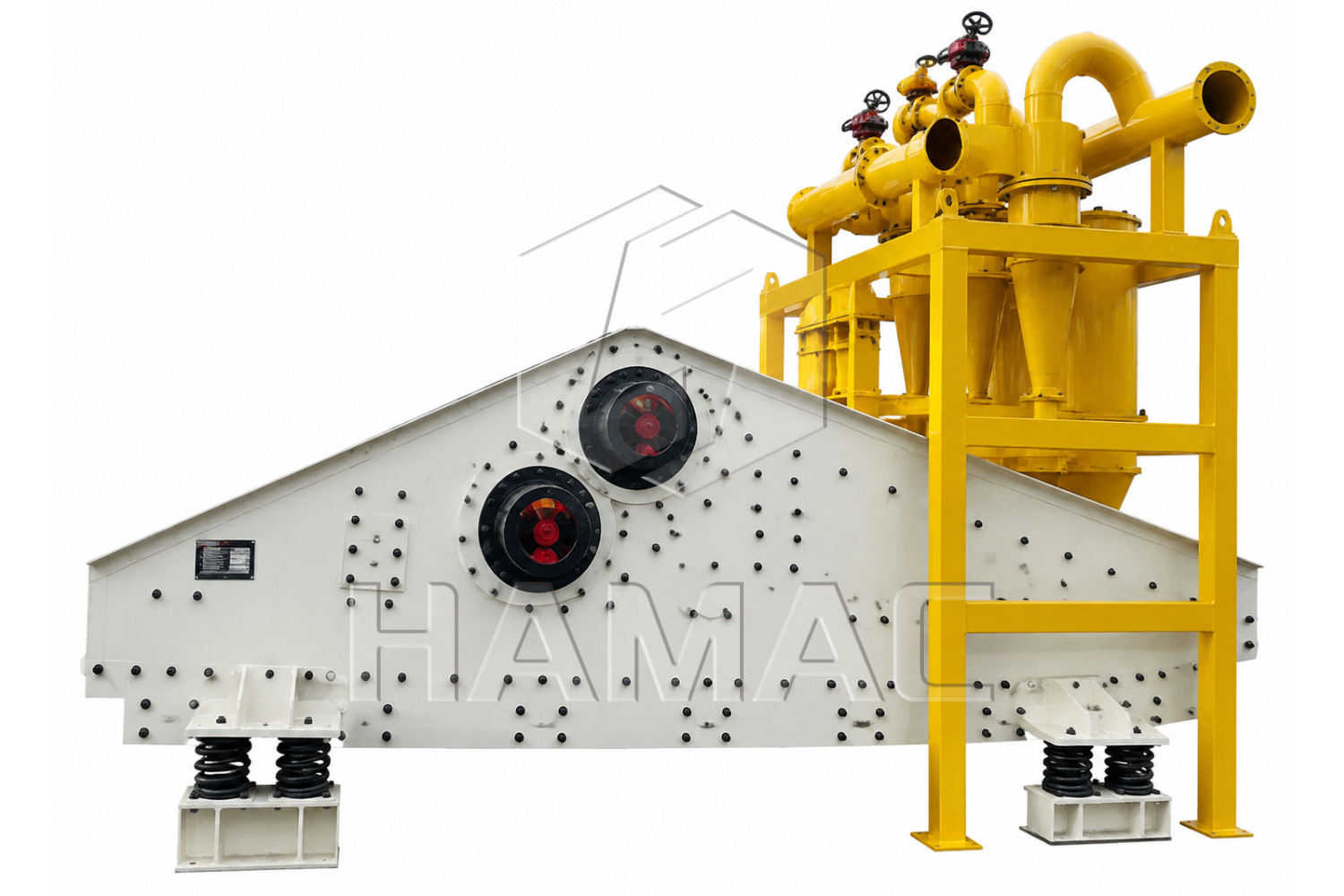
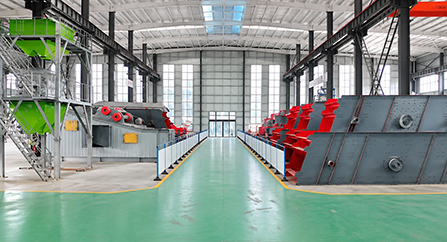
HAMAC supplies the screen as a complete tailings dewatering system consisting of a hydrocyclone, linear vibrating screen, slurry pump and accessories, which can be integrated with your existing supporting equipment and return-water circuits.
| System Unit | Function |
|---|---|
| Hydrocyclone | Classifies and thickens the tailings slurry; the underflow (thickened coarse particles) feeds the screen evenly, while the overflow (fine slime water) reports to the thickener or return water pond |
| Linear vibrating screen | High-frequency linear vibration removes water through polyurethane panels and forms the filter cake |
| Slurry pump | Delivers tailings slurry from the plant to the hydrocyclone at the required pressure |
| Accessories | Piping, valves, launders and return-water connections for a closed water circuit |
Technical Features
The design of the tailings dewatering screen focuses on one goal: removing as much water as possible while keeping fine particles in the product stream. Seven features work together to achieve it.
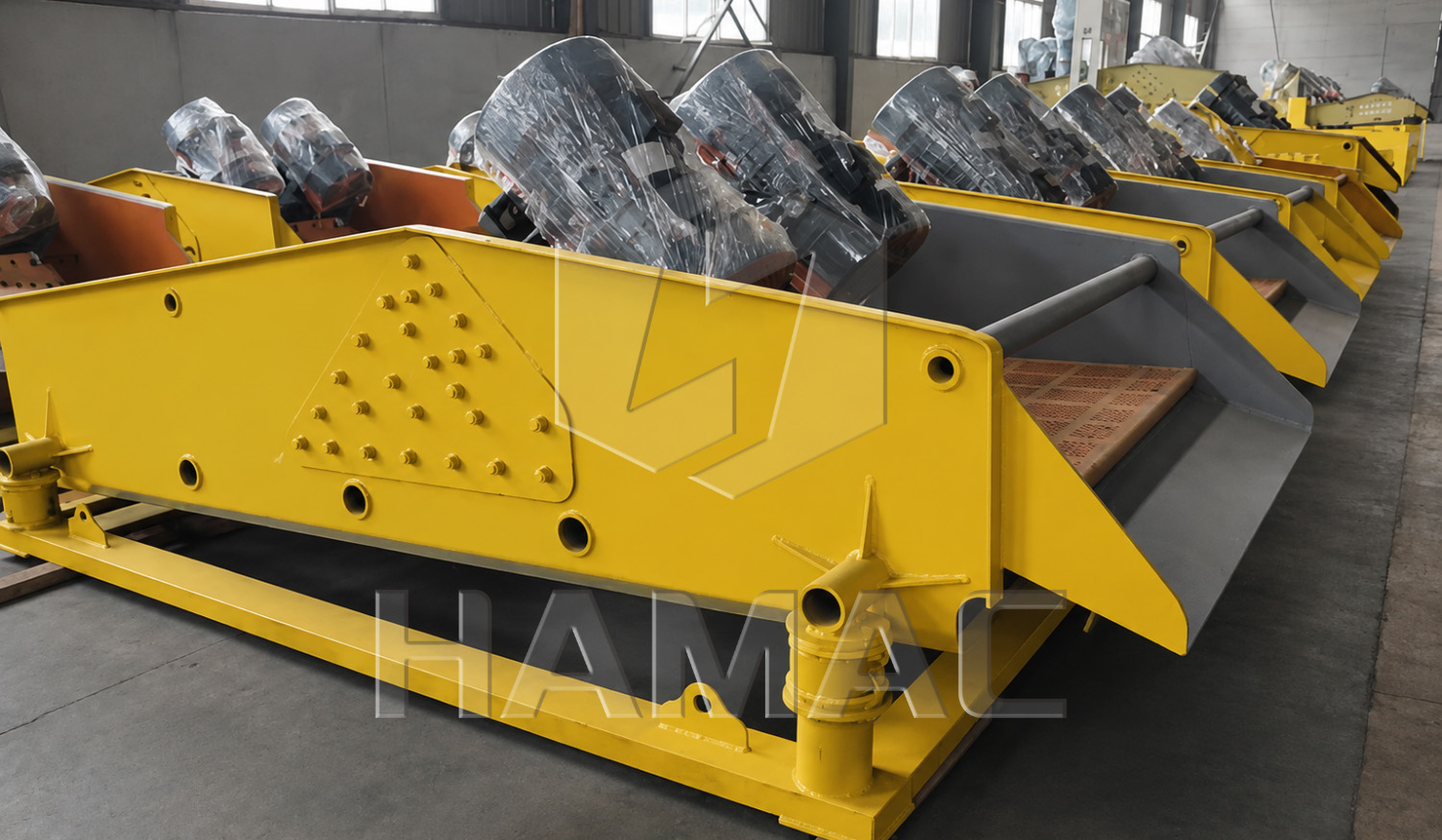
| Feature | Description |
|---|---|
| Cyclone pre-thickening | The slurry pump feeds tailings slurry into the hydrocyclone; the thickened underflow reports evenly onto the screen surface while fine slime water goes to the thickener or return water pond, reducing the load on the screen |
| Dual-motor linear vibration | Two vibration motors rotate synchronously in opposite directions, generating a linear excitation force that throws solids upward and forward while water continuously drains through the screen panels |
| Self-forming filter bed | Material accumulates at the junction of the inclined and flat screen decks, forming a thin filter bed that captures finer particles; even where apertures are larger than some particles, fines are retained |
| Polyurethane screen panels | Wear-resistant panels with uniform aperture, suited to wet fine-material dewatering duties and long service life |
| Negative-angle discharge | The discharge end of the deck slopes slightly upward (approx. -5°) and is fitted with a discharge weir, building a thick material bed that extends dewatering time and produces a drip-free filter cake |
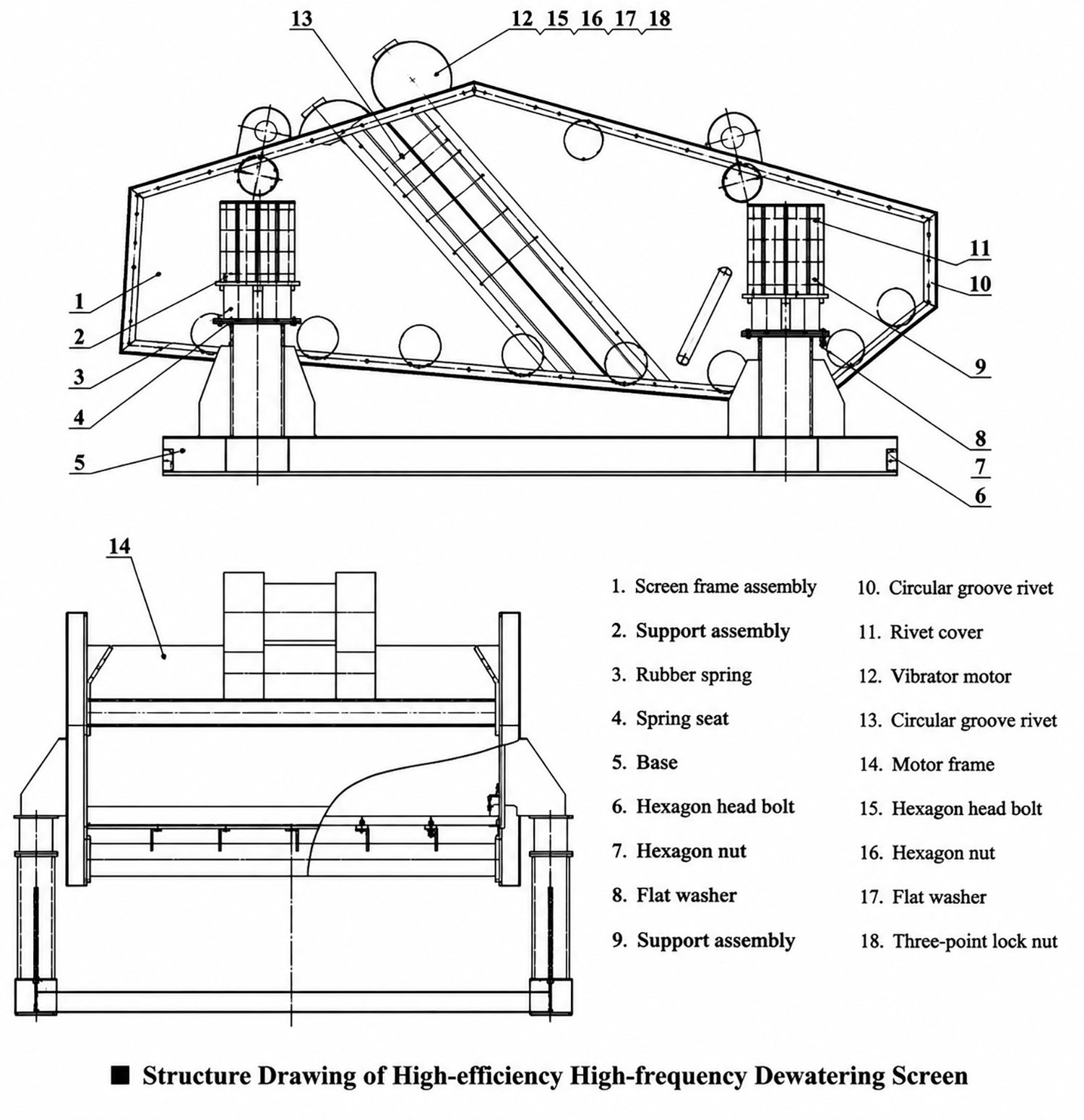
| Robust structure | Screen box assembled with Huck (ring-groove) rivets and supported on rubber damping springs at four corners; stable operation and easy maintenance |
| Complete package supply | Integrates with cyclone cluster, slurry pump and return water system; supplied as a single unit or as a complete package |
Working Principle
The tailings dewatering screen works in five continuous stages, from slurry feed to dry cake discharge.
1. Feed. The slurry pump delivers tailings slurry to the hydrocyclone. The cyclone underflow — thickened coarse particles — falls evenly onto the screen surface, while the overflow of fine slime water reports to the thickener or return water pond for clarification and reuse.
2. Pre-dewatering. The feed-end screen panel is installed at approximately 45° to the horizontal. On this steep section, gravity pulls free water through the panels immediately, removing about one third of the moisture before the material reaches the main deck.
3. Filter bed formation. At the junction of the inclined and flat panels, material accumulates and particles settle into a thin filter bed. This bed acts as a self-building filter medium: it traps particles finer than the screen apertures and thickens progressively, so fine sand and valuable fines are recovered instead of lost to the water circuit.
4. High-frequency vibration dewatering. Two vibration motors rotate synchronously in opposite directions, generating a linear excitation force. The material is thrown upward and forward at approximately 5 g acceleration, which keeps the bed loose and creates continuous drainage channels so water passes through the polyurethane panels and drains away.
5. Discharge. The deck slopes slightly upward at a negative angle of about -5°, and the discharge weir holds a thick material bed on the screen. By the time material reaches the end of the deck, it leaves as a drip-free filter cake ready for conveyor transport or dry stacking.
Process flow: tailings slurry → slurry pump → hydrocyclone → underflow to dewatering screen → filter cake discharge; overflow and screen underdrain → thickening / return water system → water reuse.
Technical Specifications
The following reference specifications apply to the HAMAC high-frequency linear tailings dewatering screen.
| Parameter | Unit | Value |
|---|---|---|
| Screen type | — | High-frequency linear vibrating dewatering screen |
| Vibration mode | — | Dual vibration motors, linear vibration |
| Vibration frequency | rpm | 1500 (50 Hz) / 1800 (60 Hz) |
| Installation angle | ° | -5 (negative angle) |
| Double amplitude | mm | 2–4 |
| Dry solids capacity | t/h | ≤15 |
| Feed concentration to screen | % | ≥60 |
| Feed particle size | mm | ≤10 |
| Discharge moisture | % | Sand 8–15; tailings 15–20 |
| Panel type | — | Polyurethane screen panels |
| System composition | — | Hydrocyclone + linear vibrating screen + slurry pump + accessories |
| Applications | — | Iron, copper, gold and aluminum tailings |
Actual capacity and discharge moisture depend on particle size distribution, slime content, feed concentration and panel configuration. Final values are confirmed in the technical selection proposal — contact HAMAC with your material test data for a project-specific solution.
Applications
The tailings dewatering screen is mainly used for dewatering and dry disposal of metal mine tailings, where it recovers water, stabilizes the tailings and reduces pond storage.
| Material | Typical Application | Selection Considerations |
|---|---|---|
| Iron ore tailings | Dewatering before dry stacking or backfill | Ore hardness, fines content, required cake moisture |
| Copper ore tailings | Tailings disposal and water recycling in concentrators | Slime content and cyclone classification performance |
| Gold ore tailings | Dewatering of CIL / flotation tailings | Residual reagents and fine particle share |
| Aluminum (bauxite) tailings | Red mud and fine tailings pre-dewatering | Very fine fractions may require thickener + filter press |
Beyond tailings, the same machine is widely used for fine sand recovery and dewatering in sand washing and manufactured sand plants, where it recovers 0.075–1 mm fines from washing water and delivers stackable sand directly off the deck. It also dewashes concentrates and middlings in processing plants.
For tailings with very high slime content, no single machine is the complete answer. HAMAC combines the dewatering screen with a thickener and a filter press in a staged tailings dewatering system: the thickener clarifies water, the screen removes the coarse fraction continuously, and the filter press polishes the finest slime when dry stacking requires it. See our global project cases for reference installations.
Get a tailings dewatering solution: HAMAC supplies dewatering screens, hydrocyclones, slurry pumps and complete systems for mines and washing plants worldwide. Send your tailings sample data and capacity target to our engineers for a selection proposal and quotation.