



Sand Making Machine for Different Materials: Granite, Basalt, Limestone & More
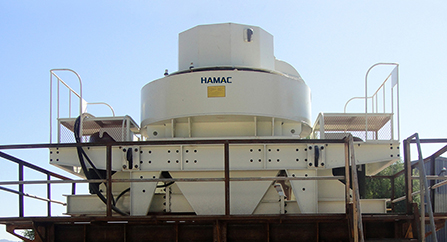
HAMAC VSI5X Sand Making Machine: Product Details
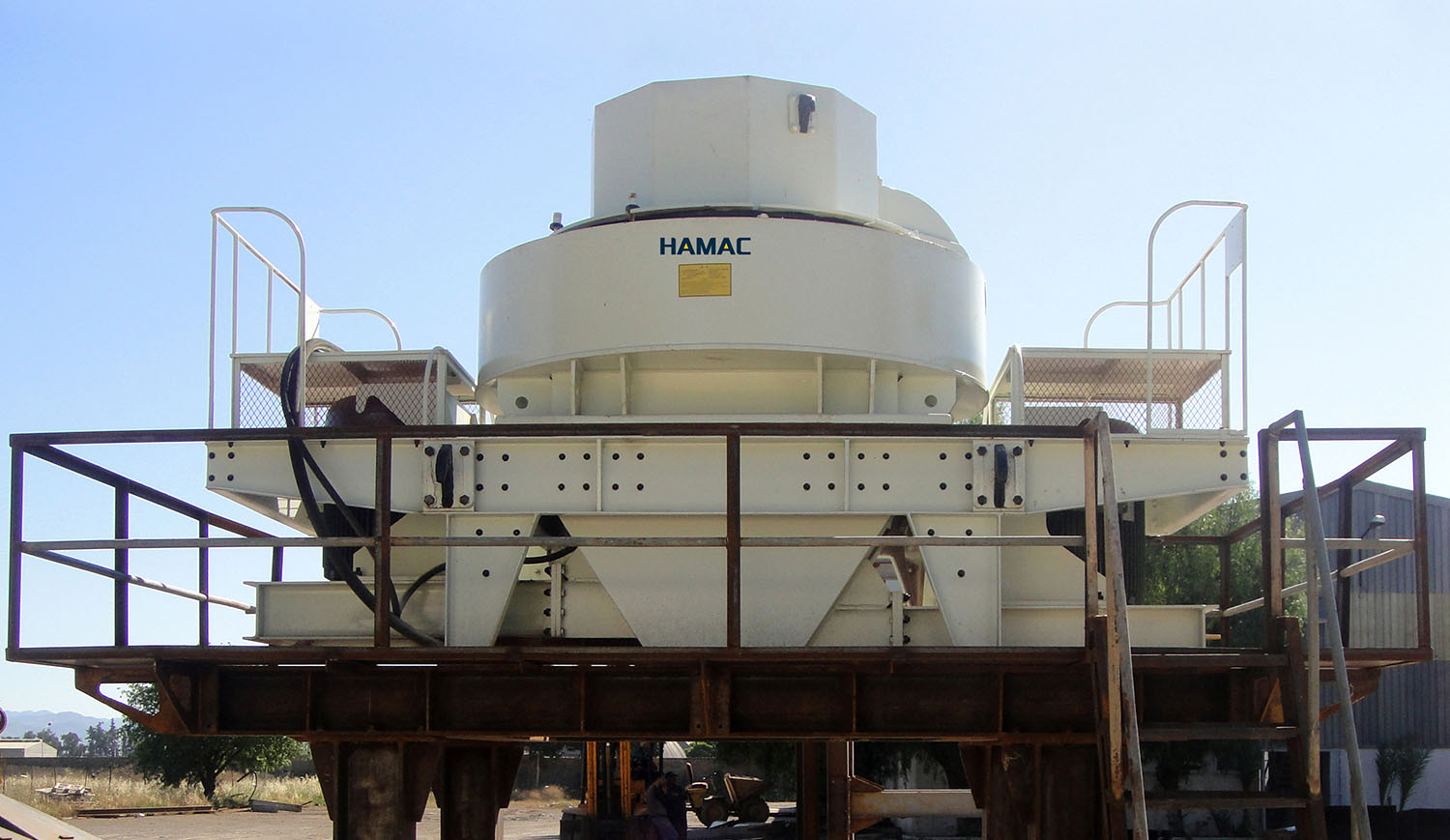
The HAMAC VSI5X series is a vertical shaft impact crusher, also called a sand making machine, designed for manufactured sand production and for shaping aggregate into cubical particles. It is normally installed after the secondary crusher and works with a vibrating screen in closed circuit. The series offers four models, with capacity from 70 to 640 t/h depending on the feeding method.
How the HAMAC VSI Works
Material enters the hopper and drops through the central feed opening into a rotor spinning at high speed. The rotor throws it out, where it first collides with material rebounding from the chamber and then hits the impact plate around the vortex chamber. The rebounding material forms a continuous curtain with new material leaving the rotor, so most of the crushing happens between particles. The finished product is then discharged from the outlet and sent to the screen.
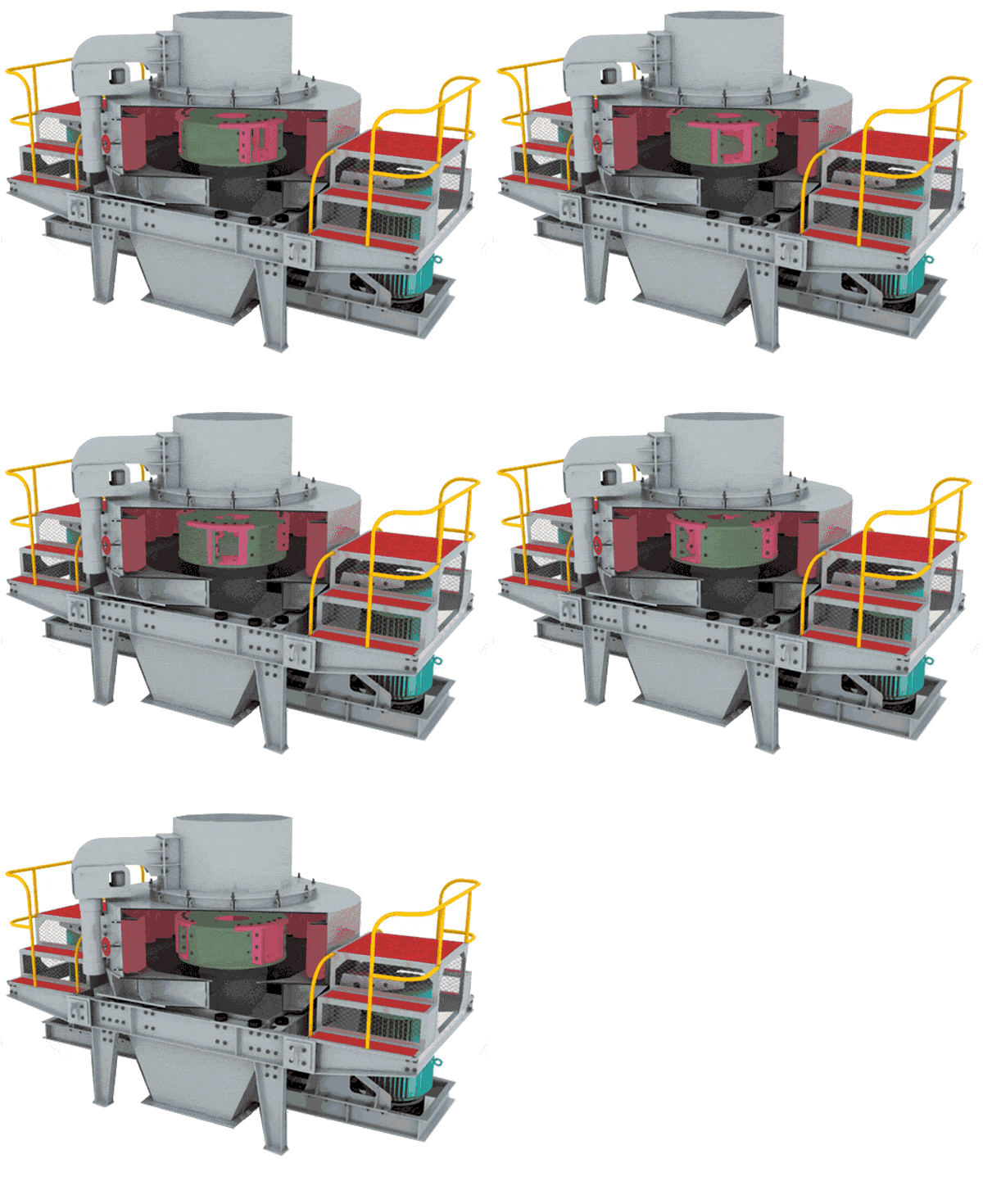
Key Design Features
- Deep-cavity rotor: combines hard rock shaping and sand making in one rotor structure.
- Dual-purpose spread dish: switches easily between center feeding and center-plus-ring (cascade) feeding.
- Combined wear hammers with auxiliary hammers: only the worn hammer is replaced, and the auxiliary pair protects the main hammer and side plates.
- Rhombus-shaped impact plate: protects the side plates from direct damage.
- Reversible side plates: the plate direction can be changed to use more of the material.
- Wear-resistant, heat-resistant materials in the key wear areas.
- Imported bearings and a sealed main shaft: designed to prevent oil leakage.
- Lubrication station: twin oil pumps, water cooling and an oil box heater for cold-weather starts. The unit stops when oil pressure or flow is lost.
HAMAC VSI5X Technical Parameters
| Model | VSI5X7615 | VSI5X8522 | VSI5X9532 | VSI5X1145 |
|---|---|---|---|---|
| Capacity, center and ring feeding (t/h) | 150–280 | 240–380 | 350–540 | 500–640 |
| Capacity, center feeding (t/h) | 70–140 | 120–200 | 180–280 | 250–360 |
| Max. feed size, soft material (mm) | < 35 | < 40 | < 45 | < 50 |
| Max. feed size, hard material (mm) | < 30 | < 35 | < 40 | < 45 |
| Rotation speed (r/min) | 1700–1900 | 1500–1700 | 1300–1510 | 1100–1310 |
| Twin-motor power (kW) | 110–150 | 180–220 | 260–320 | 400–440 |
| Dimensions L × W × H (mm) | 4100 × 2330 × 2300 | 4140 × 2500 × 2700 | 4560 × 2600 × 2900 | 5000 × 2790 × 3320 |
| Weight (t) | 8.6 | 11.8 | 17.5 | 27.5 |
| Lubrication station | Twin oil pumps 2 × 0.31 kW; oil box heater 2 kW; station size 820 × 520 × 1270 mm | |||
Capacity depends on material hardness, feed gradation, moisture, rotor speed and the finished-sand specification. The model range is updated regularly, so the final model is confirmed in the plant proposal.
Typical Applications
The VSI5X series makes artificial sand from river pebbles, limestone, granite, basalt, diabase, andesite, ore tailings and stone chips. It also shapes aggregate for highways, railways, bridges, airport runways, hydropower projects and municipal works, and it processes steel slag and construction waste. In concrete production, cubical sand and aggregate fill voids better than flaky particles. For a full line, view the HAMAC vertical shaft impact crusher page or send your material data through our contact page. You can also read how to select a sand making machine for manufactured sand production.
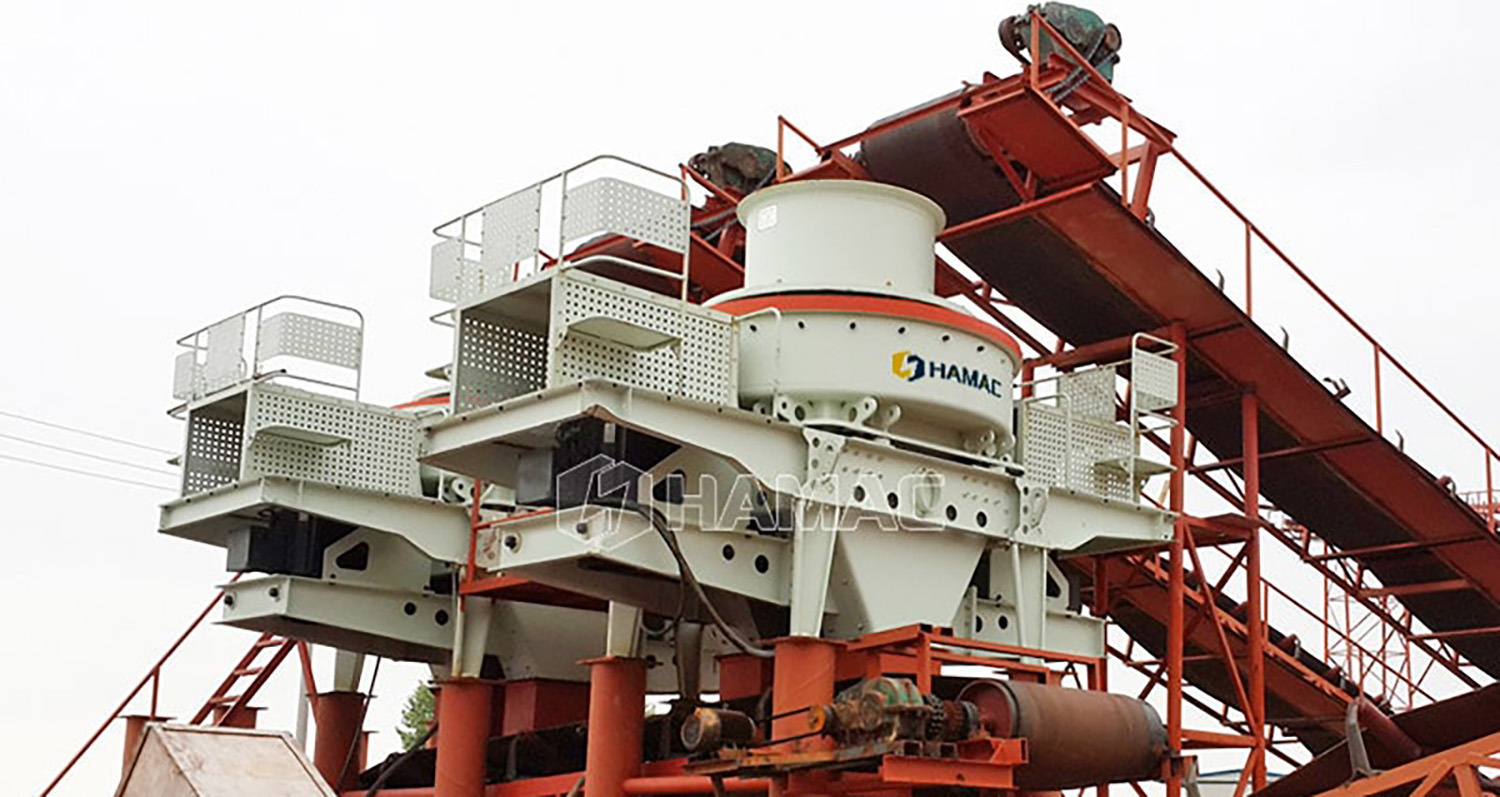
Choosing a sand making machine for different materials starts with the rock, not the machine. A VSI (vertical shaft impact) sand maker is only the last crushing stage of a manufactured sand production line. The hardness, abrasiveness and clay content of your raw material decide how many crushing stages you need, how fast wear parts are consumed, and whether the finished 0–5 mm sand meets concrete specifications.
This guide covers granite, basalt, river pebbles, limestone, dolomite, quartzite, mine tailings and construction waste. Each section gives the material data, a recommended plant configuration and the points to check before you invest. Reference values are typical ranges; final selection depends on your own material test report.
How a VSI Sand Making Machine Handles Different Materials
A VSI crusher feeds material into a high-speed rotor and throws it out at roughly 60–80 m/s. Higher rotor tip speed gives a finer product and better shape, but it also increases wear and power draw and lowers throughput. Metso notes that rock-on-rock crushing offers the lowest wear cost per ton of any impact crushing method, while an anvil ring improves the reduction ratio at slightly higher wear cost.
| Item | Rock-on-rock mode | Rock-on-iron mode |
|---|---|---|
| Principle | Material hits a self-forming rock lining | Material hits high-chrome or carbide anvils |
| Best for | Granite, basalt, river pebble, quartzite | Limestone, dolomite, soft to medium-hard rock |
| Wear on chamber | Very low (rock protects steel) | Higher; anvils need periodic replacement |
| Particle shape | Best cubicity | Good, slightly less cubical |
| Sand yield per pass (supplier-reported) | About 25–35% | About 40–55% |
Yield figures are supplier-reported ranges and change with feed size, rotor speed and target gradation. Most VSI machines can be converted between the two modes by changing the chamber wear parts.
Typical VSI series on the market share the ranges below. They are reference values only; HAMAC confirms the model after reviewing your material and capacity.
| VSI size class | Capacity (t/h) | Max feed size, hard / soft material (mm) | Rotor speed (r/min) | Twin-motor power (kW) |
|---|---|---|---|---|
| Small (e.g. 7611 class) | 60–180 | 30–35 / 35 | 1700–1890 | 110–150 |
| Medium (e.g. 9526 class) | 150–380 | 35–40 / 40–45 | 1360–1510 | 264–320 |
| Large (e.g. 1140 class) | 225–520 | 45 / 50 | 1180–1310 | 400–440 |
Because VSI feed size is limited to roughly 30–50 mm, the stages before it must be screened in closed circuit. For help choosing the machine itself, read our guide to selecting a sand making machine for manufactured sand production.
Sand Making Machine for Granite
Characteristics: Granite is hard (Mohs 6–7), strong (about 200–300 MPa) and rich in quartz and feldspar, so it is abrasive.
Recommended configuration: vibrating feeder + PE jaw crusher + HP hydraulic cone crusher + vibrating screen + VSI in rock-on-rock mode. Screen the cone crusher product at about 30–40 mm and return the oversize to the cone crusher.
Product quality: strong, angular particles that become cubical after VSI shaping. Check mica content, because it can reduce concrete strength.
Watch-outs: wear parts are the main cost item. Use carbide rotor tips and rock-on-rock mode, and keep feed stable and centered. See our guide to choosing a crusher for granite, basalt and limestone.
Sand Making Machine for Basalt
Characteristics: Basalt is dense and tough (about 300–400 MPa), with lower silica than granite, so it is less abrasive than its strength suggests.
Recommended configuration: the same jaw + cone + VSI route as granite, with the cone crusher chamber and closed-side setting chosen to feed the VSI evenly. Read how to choose a cone crusher chamber and CSS.
Product quality: dense, cubical sand and aggregate suited to high-strength concrete and asphalt.
Watch-outs: toughness means higher energy per ton. The handbook work index is about 20 kWh/t for basalt versus about 16 kWh/t for granite, so check motor power and throughput. Full process details are in our basalt crushing plant guide.
Sand Making Machine for River Pebbles
Characteristics: river pebbles are smooth, rounded and usually Mohs 6–7, but the lithology is mixed (quartz, granite, quartzite and others), so abrasiveness varies from batch to batch.
Recommended configuration: scalping screen + jaw crusher for oversize pebbles + cone crusher + VSI in rock-on-rock mode. Crushing creates fractured faces and improves bonding in concrete.
Product quality: good shape after VSI shaping, with consistent strength if lithology is stable.
Watch-outs: rounded feed is hard for a jaw crusher to grip. Wet or muddy pebbles need pre-screening or washing before the VSI to avoid clogging.
Sand Making Machine for Limestone and Dolomite
Characteristics: Limestone and dolomite are soft (Mohs 3–4), weakly abrasive (Ai below 0.05) and easy to crush.
Recommended configuration: vibrating feeder + jaw crusher + PF impact crusher + vibrating screen, then a VSI in rock-on-iron mode when you need a higher sand yield. See the limestone crushing plant guide.
Product quality: softer grains produce more stone powder. Handbook Los Angeles abrasion loss is about 30–45% for limestone versus about 17–35% for granite. Limestone sand can meet concrete specifications when grading, powder content and methylene blue value are controlled.
Watch-outs: clay in the quarry face causes screen blinding and sticky feed. Plan pre-screening or washing, and keep feed moisture low (a commonly cited VSI limit is about 3–5%).
Sand Making Machine for Quartz and Quartzite
Characteristics: Quartzite is Mohs 7 with 90–99% SiO₂ and the highest abrasion index of common aggregates (about 0.75).
Recommended configuration: jaw crusher + cone crusher with hard liners + VSI in rock-on-rock mode with carbide tips.
Product quality: hard, sharp particles that are suitable for high-friction or specialty uses.
Watch-outs: wear cost must be calculated carefully before committing, because it can decide whether manufactured sand from this rock is economic. See the cone crusher liner material guide.
Sand Making from Mine Tailings
Characteristics: Tailings are already fine and highly variable in grading, chemistry and moisture. China’s sand standard GB/T 14684-2022 lists tailings among the raw materials for manufactured sand, defined as particles below 4.75 mm.
Recommended configuration: classification screening, then crushing and shaping for the coarse fraction, followed by sand washing, dewatering and fine sand recovery. HAMAC’s published Peru sand washing case shows a hydrocyclone and dewatering screen circuit recovering 85–95% of fine sand.
Watch-outs: test for harmful substances and check local environmental rules before using tailings in concrete.
Sand Making from Construction Waste
Characteristics: Construction waste contains concrete, brick, rebar, wood and plastic, and its quality changes with every load.
Recommended configuration: pre-sorting + jaw or impact crusher + magnetic separator + screen + secondary impact crushing or VSI + dust control. Metso’s recycled aggregates guidance advises removing large unwanted items before crushing and using magnets to remove metal. Compare crushers in our jaw vs impact crusher for concrete recycling guide.
Watch-outs: brick crushing creates more fines than concrete, and recycled sand usually absorbs more water because of adhered cement paste. Plan for dust control from the start.
Recommended Sand Making Configuration for Common Materials
| Material | Primary crushing | Secondary crushing | Sand making / shaping | Key consideration |
|---|---|---|---|---|
| Granite | Jaw crusher | Cone crusher (closed circuit) | VSI, rock-on-rock | Wear parts, mica content, powder control |
| Basalt | Jaw crusher | Cone crusher (closed circuit) | VSI, rock-on-rock | Higher energy per ton, stable feed |
| River pebble | Jaw crusher for oversize | Cone crusher | VSI, rock-on-rock | Rounded feed, lithology variation, mud |
| Limestone | Jaw crusher | PF impact crusher | VSI, rock-on-iron (optional) | Clay, powder content, moisture |
| Dolomite | Jaw crusher | Impact or cone crusher | VSI as required | Actual hardness and end use |
| Quartz / quartzite | Jaw crusher | Cone crusher with hard liners | VSI, rock-on-rock, carbide tips | Extreme abrasion, wear cost calculation |
| Mine tailings | Classification screen | Crushing of coarse fraction only | Shaping if needed, then washing | Fine sand recovery, chemistry, moisture |
| Construction waste | Jaw or impact crusher | Impact crusher + magnetic separator | VSI per recycled sand standard | Rebar, brick, plastic, dust |