



Mobile Crusher: Buy or Rent? A Practical Cost and Project Decision Guide | HAMAC
When your next project needs a mobile crushing plant, should you buy the equipment or rent it?
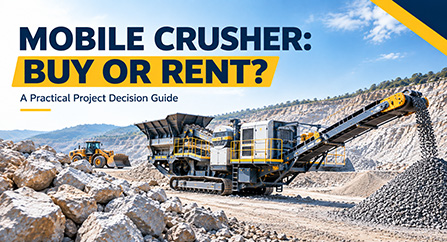
This is a practical decision for quarry owners, road contractors, demolition companies, aggregate producers and recycling operators. A mobile crusher can process limestone, granite, basalt, concrete, asphalt and construction waste close to the material source. However, the right financing and equipment-use approach depends on how long the project will run, how often the machine will be used, how frequently it must move between sites and whether similar projects are planned in the future.
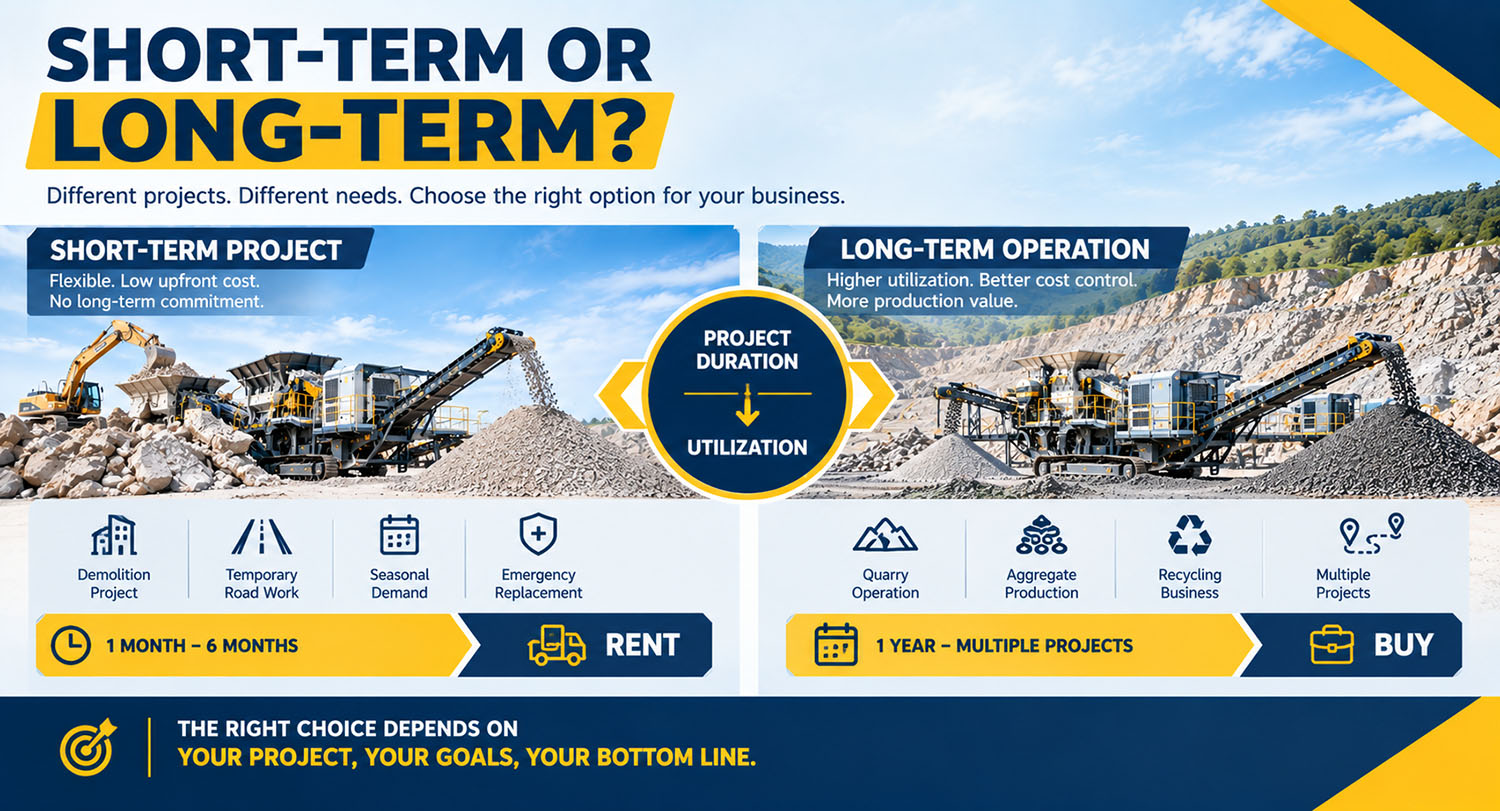
Renting a mobile crusher may be a practical option when the project is short-term, the crushing volume is uncertain or the machine is only needed for one demolition, road construction or temporary aggregate-production job. It can reduce upfront capital investment and avoid the cost of owning an idle machine after the project ends.
Buying a mobile crusher may be the better long-term option when your company has continuous quarry production, recurring construction projects, regular concrete recycling work or multiple sites that need crushing capacity every year. Ownership gives you more control over production scheduling, equipment availability, maintenance planning and future project deployment.
When Does Mobile Crusher Rental Make Sense?
Renting a mobile crusher is often suitable when crushing demand is temporary, seasonal or uncertain. It allows contractors and recycling operators to access crushing capacity without making a large capital investment at the beginning of a project.
| Project Condition | Why Renting May Be Suitable |
|---|---|
| Short-term demolition project | The crusher can be returned after concrete, brick or mixed construction waste has been processed. |
| Temporary road construction project | Equipment can be used only during the project period without long-term ownership costs. |
| Seasonal aggregate production | Rental can help increase output during peak demand without holding equipment throughout the year. |
| Emergency replacement capacity | A rental crusher can support production while an owned crusher is under maintenance or repair. |
| New recycling business | Renting can help test concrete recycling, asphalt recycling or aggregate demand before purchasing equipment. |
| Uncertain material or capacity requirement | The customer can first verify whether a mobile jaw crusher, impact crusher or screening plant is suitable. |
Rental is not automatically the lowest-cost choice. It is most valuable when the customer needs flexibility, wants to reduce upfront investment or does not expect to use the equipment continuously after the current project ends.
When Does Buying a Mobile Crusher Make Sense?
Buying a mobile crusher is usually worth evaluating when crushing is a repeated and long-term part of the business. Quarry owners, aggregate producers, mining contractors and recycling companies may benefit from owning equipment when annual utilization is predictable and the crusher can move between multiple projects.
| Project Condition | Why Buying May Be Suitable |
|---|---|
| Long-term quarry or mining operation | The crusher can support continuous production and planned expansion over several years. |
| Several projects every year | One machine can be transferred between quarry, road, aggregate and recycling projects. |
| Stable material supply | Known limestone, granite, basalt or concrete volumes make capacity planning easier. |
| High annual operating hours | Frequent long-term use can justify ownership, maintenance planning and spare-parts management. |
| Need for production control | The owner can schedule crushing, screening, maintenance and operators based on internal project priorities. |
| Future resale or redeployment plan | The machine may retain value and can be transferred to another project after the first job is completed. |
Buying should not be judged only by the machine price. The actual decision should consider financing, delivery, commissioning, fuel or power, maintenance, wear parts, labor, transport, downtime, storage, insurance and potential resale value.
HAMAC offers mobile crushing solutions for different materials and production requirements. Visit HAMAC Mobile Crushing Plant Solutions to explore mobile jaw crushers, impact crushers, cone crushers and screening equipment.
Compare Total Cost, Not Only Rental Rate or Purchase Price
A low daily rental price does not always mean the lowest project cost. In the same way, a low purchase price does not always mean the lowest long-term ownership cost. Buyers should compare total project cost over the expected period of use.
| Cost Item | Renting a Mobile Crusher | Buying a Mobile Crusher |
|---|---|---|
| Initial payment | Usually includes rental payment, deposit and possible mobilization cost. | Includes machine purchase, freight, possible financing and commissioning. |
| Cash flow | Short-term and more flexible, but repeated rental periods can accumulate. | Requires a larger initial investment or long-term financing arrangement. |
| Maintenance responsibility | Must be confirmed in the rental agreement. | Normally managed by the equipment owner. |
| Wear parts | May be included, partially included or charged separately. | Purchased and managed by the owner. |
| Machine transport | Check mobilization and demobilization charges for every project move. | Owner pays transport costs when moving between sites. |
| Idle time risk | Lower, because the machine can be returned after the project. | Owner must manage storage, maintenance and idle equipment cost. |
| Residual value | No resale value after the rental period. | The machine may have resale or redeployment value after use. |
| Equipment availability | Availability may be limited during peak construction or rental seasons. | Equipment is available according to the owner's production schedule. |
A practical comparison can use the following approach:
Total Rental Cost = Rental Charges + Transport + Extra Hours + Wear Parts Not Included + Operator and Operating Costs
Net Ownership Cost = Purchase and Delivery + Financing + Maintenance + Wear Parts + Transport + Operating Costs − Expected Residual Value
The comparison should be based on actual saleable production, not only on the nameplate capacity of one machine. For example, stable production of qualified aggregate is more valuable than a high theoretical TPH figure that cannot be maintained because of poor feeding, unsuitable material or insufficient screening capacity.
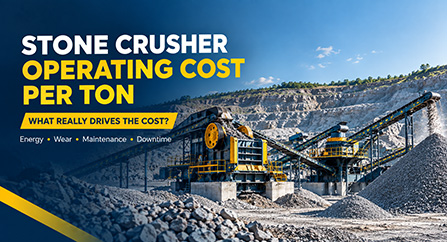
For more information about production cost analysis, read Stone Crusher Operating Cost Per Ton: Calculation and Cost Reduction.
Choose the Right Mobile Crusher Type First
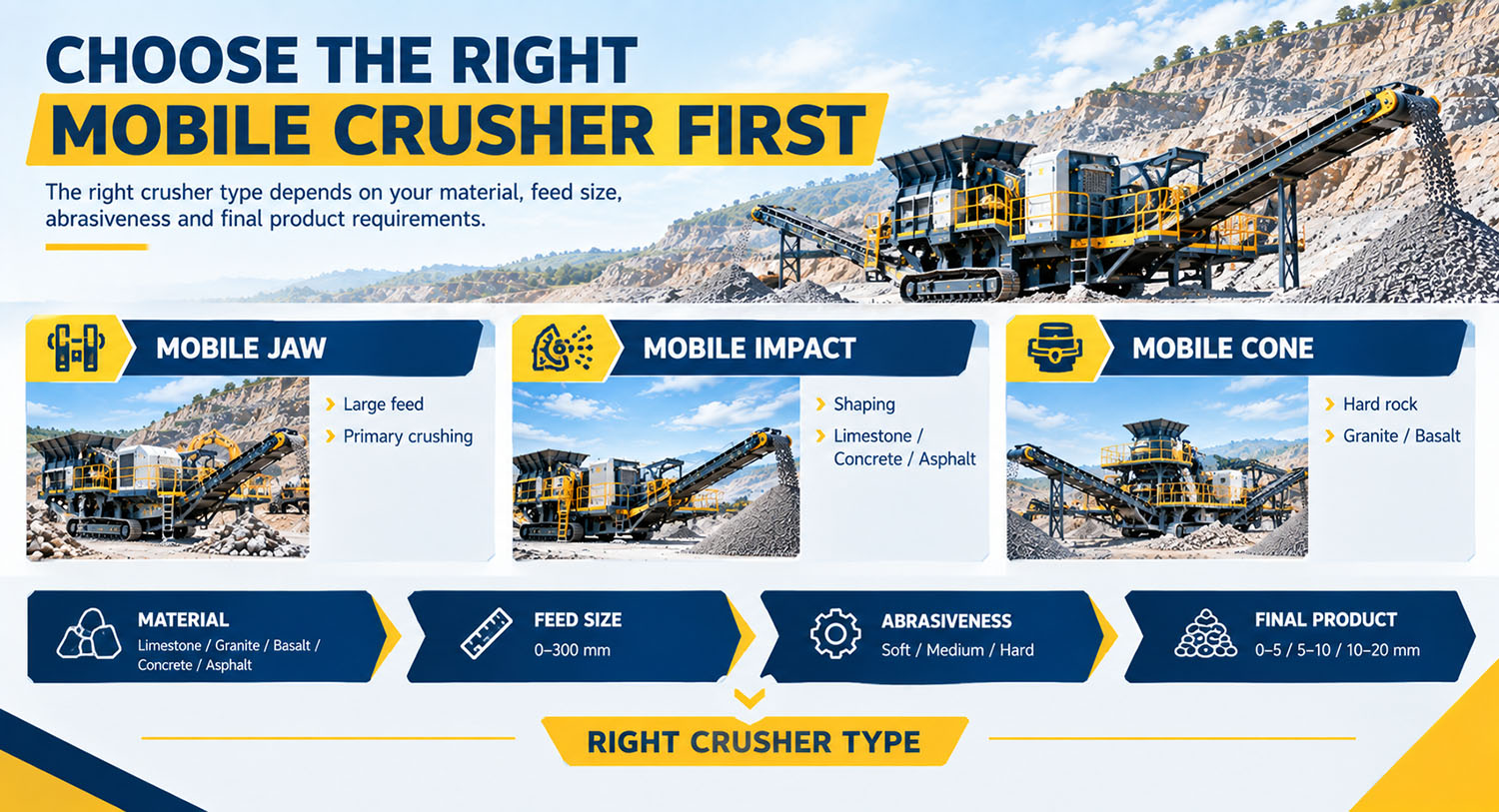
Before deciding whether to rent or buy, customers should first identify the correct mobile crusher type. A mobile jaw crusher, mobile impact crusher and mobile cone crusher perform different jobs. The right machine depends on material hardness, feed size, abrasiveness, impurities, required capacity and final product sizes.
| Material or Application | Mobile Equipment Direction to Evaluate | Main Selection Point |
|---|---|---|
| Limestone and softer rock | Mobile jaw crusher + mobile impact crusher | Primary crushing, aggregate shaping and multiple finished sizes |
| Granite, basalt and hard rock | Mobile jaw crusher + mobile cone crusher + screening plant | Hardness, abrasiveness, wear parts and closed-circuit screening |
| Concrete demolition waste | Mobile jaw crusher or mobile impact crusher | Rebar, contaminants, feed size and recycled aggregate quality |
| Asphalt recycling | Mobile impact crusher + mobile screening plant | Required recycled asphalt size and controlled fines content |
| Multi-size aggregate production | Mobile crusher + tracked vibrating screening plant | Screening area, material recirculation and stockpiling layout |
| Projects requiring frequent relocation | Tracked mobile crusher plant | Site mobility, ground condition, transport dimensions and setup time |
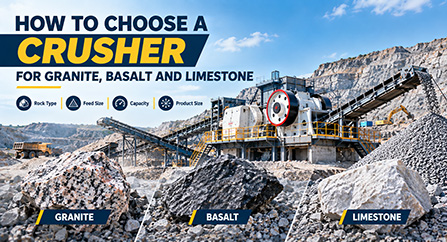
For a simple material-based crusher selection guide, read How to Choose a Crusher for Granite, Basalt and Limestone.
Important Questions Before Renting a Mobile Crusher
Before signing a mobile crusher rental agreement, confirm the full commercial and technical scope. Rental terms can vary by country, supplier, machine type and project condition.
| Question to Confirm | Why It Matters |
|---|---|
| What material will be processed? | Material hardness, moisture, clay, rebar and contaminants affect machine selection and wear. |
| What is the maximum feed size? | The crusher inlet must safely accept the largest expected material. |
| What stable capacity is required? | Confirm whether the target is 50 TPH, 100 TPH, 200 TPH or a larger production requirement. |
| What final product sizes are required? | This determines whether a screening plant, recirculation system or additional crusher stage is needed. |
| Who pays for transport and site mobilization? | Moving a crusher between projects can be a significant project cost. |
| Are maintenance and wear parts included? | Clarify responsibility for jaw plates, blow bars, liners, belts, screens and routine service. |
| Is an operator included? | Confirm operator training, daily inspection responsibility and safety requirements. |
| What happens if the machine is damaged or works overtime? | Damage, excess-hours and downtime terms should be clear before work starts. |
Mobile crushers are designed for on-site material processing in quarry, aggregate, mining, construction and recycling applications. For an external industry overview of mobile versus stationary crushing, see Mobile vs. Stationary Crushers: Key Differences Explained.
Information Needed for a Buy-or-Rent Recommendation
To decide whether mobile crusher rental, purchase or a rent-to-buy approach is more suitable, prepare the following information before contacting a supplier.
| Project Information | Example |
|---|---|
| Raw material | Limestone, granite, basalt, river stone, concrete, asphalt or mixed construction waste |
| Material condition | Maximum feed size, moisture, clay content, steel reinforcement or other impurities |
| Required capacity | 50 TPH, 100 TPH, 200 TPH, 300 TPH or higher |
| Final product sizes | 0-5 mm, 5-10 mm, 10-20 mm, 20-31.5 mm or recycled aggregate specification |
| Project duration | One month, six months, one year or multiple long-term projects |
| Expected annual utilization | Estimated working days or operating hours per year |
| Site relocation frequency | One fixed quarry, several job sites or frequent project movement |
| Project location | Country, local regulations, site access, transport route and fuel or power conditions |
HAMAC can recommend a mobile jaw crusher, mobile impact crusher, mobile cone crusher, tracked crusher plant or mobile crushing and screening plant based on the material, capacity, final product requirement and project schedule.
Mobile Crusher: Rent, Buy or Start with a Project Evaluation?
Renting is often the practical choice for a short-term demolition project, temporary road work, seasonal demand or an uncertain new recycling business. Buying may be the stronger option when mobile crushing will be used continuously across quarry, aggregate, mining or recycling projects.
The most reliable decision is based on your material, project duration, expected annual operating hours, target TPH, final product sizes, transport frequency and total cost per saleable tonne.
Which option fits your next project: rent a mobile crusher, buy a mobile crusher or evaluate a rent-to-buy plan?
What capacity do you need: 50 TPH, 100 TPH, 200 TPH or more?
What material are you processing: limestone, granite, basalt, concrete, asphalt or construction waste?
Contact HAMAC for a Mobile Crusher Buy-or-Rent Project Recommendation