





How to Choose a Cone Crusher Chamber and CSS for Aggregate Production | HAMAC
CSS and OSS: What They Really Mean
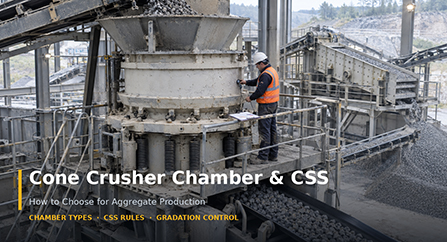
Two variables decide almost everything a cone crusher does in an aggregate circuit: the crushing chamber (the liner profile) and the CSS (closed side setting). Get them right and the plant hits its gradation at maximum tons per hour; get them wrong and you trade away capacity, product shape or liner life. This guide explains what CSS really is, how chambers differ, how CSS interacts with capacity and gradation, a step-by-step method for setting CSS to a target product, and the wear management that keeps the setting honest.
CSS (closed side setting) is the smallest gap between the bottom of the mantle and the bottom of the bowl liner, measured at their closest point during the gyrating cycle (this is the OEM-standard definition used in Metso application guides). OSS (open side setting) is the same gap at the widest point of the cycle. CSS is the industry reference because the smallest gap sets the ceiling on product particle size — a particle bigger than the CSS cannot pass through at the closest point. CSS is measured with lead wire or lead balls pressed through the gap (or by calibrated sensor on modern hydraulic cones), always at the same point in the cycle. One caution from practice: thermal expansion closes the CSS by roughly 2–5 mm between cold start and operating temperature, so measure and compare settings when the crusher is warm.
Cone Crusher Chamber Types Explained
The chamber — the combined profile of mantle and concaves — determines what feed the crusher can accept and what reduction it can deliver. Manufacturers label chambers from extra coarse (EC) through coarse (C), medium (M) and fine (F); in Symons-type machines the same logic appears as standard cavity (coarse, for secondary crushing) versus short-head cavity (fine, for tertiary crushing). The chamber rules:
| Chamber | Feed Character | Typical Stage | Typical Product |
|---|---|---|---|
| Extra coarse / coarse (standard) | Large feed, e.g. 150–350 mm jaw crusher output | Secondary | 35–65 mm base product |
| Medium | Pre-crushed feed, e.g. 50–150 mm | Secondary / tertiary | 10–35 mm |
| Fine / extra fine (short head) | Small screened feed, e.g. 25–50 mm | Tertiary / quaternary | 3–20 mm |
Three selection rules from OEM practice: (1) the chamber must accept your feed — maximum feed size should stay at or below about 80% of the chamber's nominal feed opening; (2) feed must not contain more than roughly 30% of material finer than the CSS — pre-screen those fines out or they pack the chamber and force the adjustment ring; (3) never run a CSS tighter than the chamber's minimum rating — a fine chamber's minimum CSS is smaller than a coarse chamber's for the same machine (see Metso's guide to selecting crushing chambers and Sandvik's chamber solutions overview).
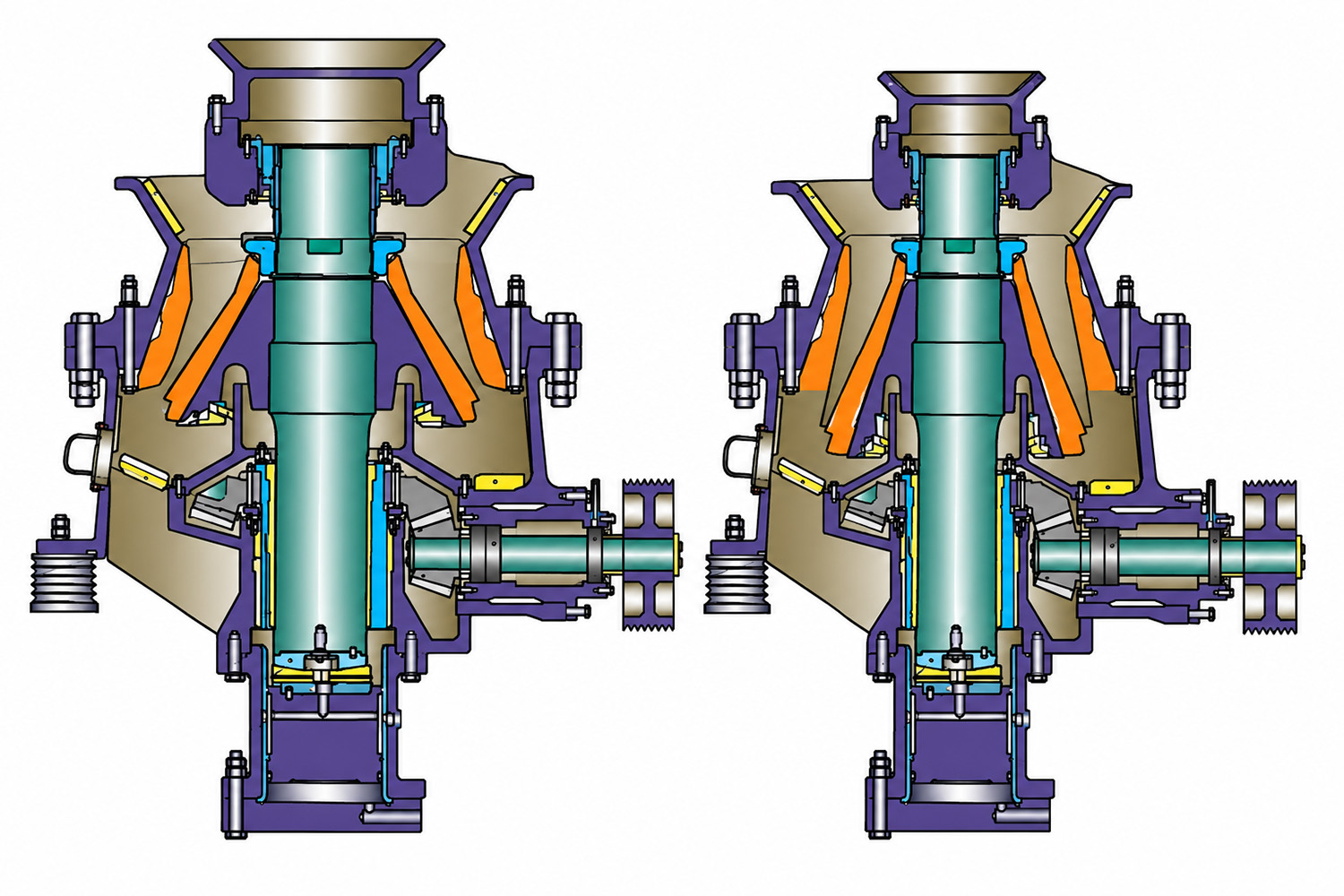 Choosing a chamber is therefore a feed-size question first, a product question second: secondary crushing after a jaw crusher usually wants a coarse or medium chamber; tertiary crushing feeding an asphalt or concrete spec usually wants a medium or fine/short-head chamber. For the machine-type context, see our cone vs. jaw crusher comparison.
How CSS Affects Capacity, Gradation and Shape
Within a given chamber, CSS is the master variable. The relationships are consistent across manufacturers:
| Change | Product Size | Capacity | Power Draw | Notes |
|---|---|---|---|---|
| CSS larger | Coarser | Increases | Decreases | More tons, coarser curve |
| CSS smaller | Finer | Decreases | Increases | Higher reduction, more wear |
CSS is not the product size. Because particles pass at the open side too, the product is always coarser than the setting. The working rule: product P80 ≈ 1.2–1.5 × CSS (exact factor depends on chamber, feed and material). A 20 mm CSS yields roughly a 24–30 mm P80. Conversely, to hit a target P80, start near CSS = target P80 × 0.85 and trim from there. Typical stage settings in aggregate practice: secondary coarse chamber at 20–38 mm CSS for a 40–60 mm P80; tertiary medium chamber at 10–22 mm for 20–35 mm; tertiary fine/short-head chamber at 6–16 mm for 12–25 mm.
Shape and fines respond to CSS as well. Tighter settings increase the proportion of laminated (inter-particle) crushing, which improves shape, but pushing below the chamber minimum over-crushes and generates fines while raising power draw. The danger sign of a too-small CSS is the adjustment ring bouncing on the main frame — the chamber is packing. For the machine upstream, our jaw crusher options and vibrating feeders control the feed size and consistency the chamber depends on.
Step-by-Step: Setting CSS for a Target Gradation
Here is a practical procedure for a common target — producing a 0–20 mm aggregate from a tertiary cone in closed circuit with a screen:
Step 1 — Start from the target. Required top size 20 mm means P80 around 16–18 mm. Initial CSS = P80 × 0.85 ≈ 14 mm; expected P80 ≈ 1.2–1.5 × 14 = 17–21 mm.
Step 2 — Set the screen above the product top size. A screen aperture slightly larger than the CSS-based P80 (here about 22 mm for a 20 mm product) returns the oversize. Target recirculating load is 15–30% of new feed — above that range, open the CSS or check the screen.
3 — Adjust in small steps. Move CSS by no more than 2–3 mm per adjustment, re-measure with lead, run 20 minutes to steady state, then sample the product. If P80 is above target, tighten 2 mm; if below target with power to spare, open up.
4 — Watch the gauges. Power draw should sit around 70–85% of motor rating in steady operation. Consistently higher means the setting is too tight or the feed is off; the adjustment ring moving on the frame is the classic overload signal.
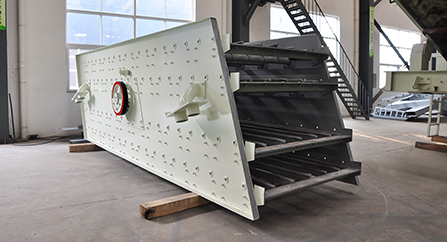
5 — Lock it in and document. Record the CSS, the position indicator reading and the product sieve result together — that record is your baseline for wear tracking. Screening support for the closed circuit comes from our vibrating screen line.

Choke Feed: The Non-Negotiable Condition
A cone crusher is designed to be choke fed — the chamber kept full at all times, with material 300 mm or more deep above the feed plate. Choke feeding maximizes multi-layer (inter-particle) crushing, which does three things: improves product shape (more cubical particles), improves crushing efficiency, and spreads wear across the full liner surface. Running with a partly empty chamber concentrates wear at the bottom of the profile, distorts the chamber geometry faster and worsens shape — operators report 20–30% shorter liner life without it. A feed distributor that spreads material evenly around the chamber is just as important: one-sided feed wears one side of the liners, tilts the product curve and can shift the CSS reading around the circumference. If your feed is intermittent, buffer it with a surge pile and a controlled feeder — never let the cone "hunt".
Liner Wear and CSS Drift
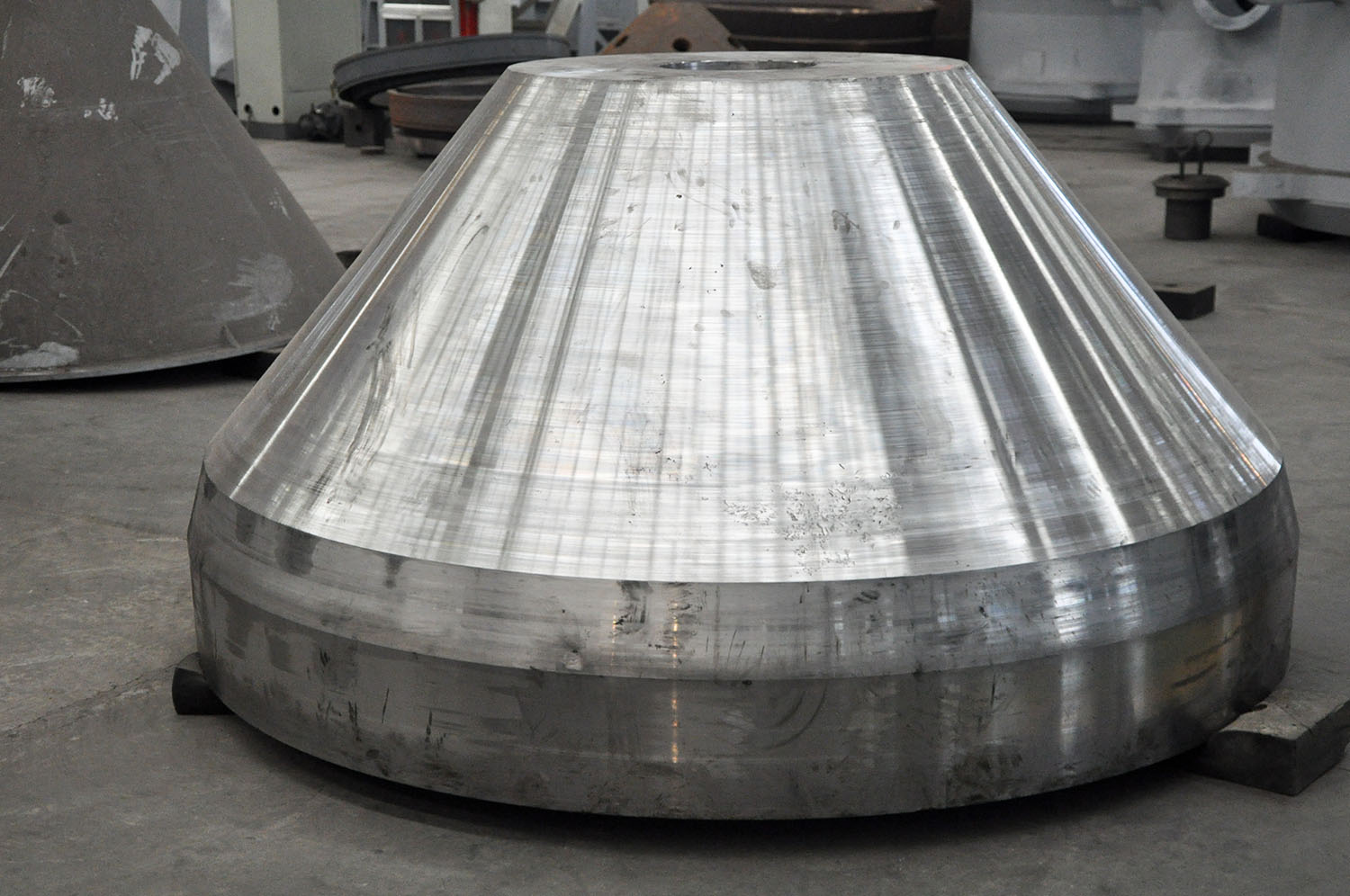
As mantle and concaves wear, the effective CSS gradually opens and the chamber's parallel zone shortens — the product curve drifts coarser and the yield in your target size fraction falls. Benchmark wear rates from liner-supplier data (planning figures — your material may run faster or slower):
| Operating Hours | Typical CSS Drift | Action |
|---|---|---|
| 0–300 h | 0–2 mm | Normal break-in; verify weekly |
| 300–600 h | 2–4 mm | Adjust CSS to hold product spec; plan spares |
| 600–900 h | 4–6 mm | Approaching end of liner life; schedule change-out |
In tonnage terms, expect roughly 1–2 mm of CSS drift per 10,000 tonnes processed. Compensate by tightening the adjustment as wear progresses — but remember that CSS adjustment cannot restore worn chamber geometry: when the drift needs more than ~2 mm of compensation per setting or the P80 has coarsened more than 10% from baseline, the liners are due. Liner material choice (Mn13/Mn18/Mn22 manganese vs. high chrome) interacts with chamber and CSS — our companion guide covers cone crusher liner material selection in detail.
HAMAC Cone Crushers: Chambers and CSS Ranges
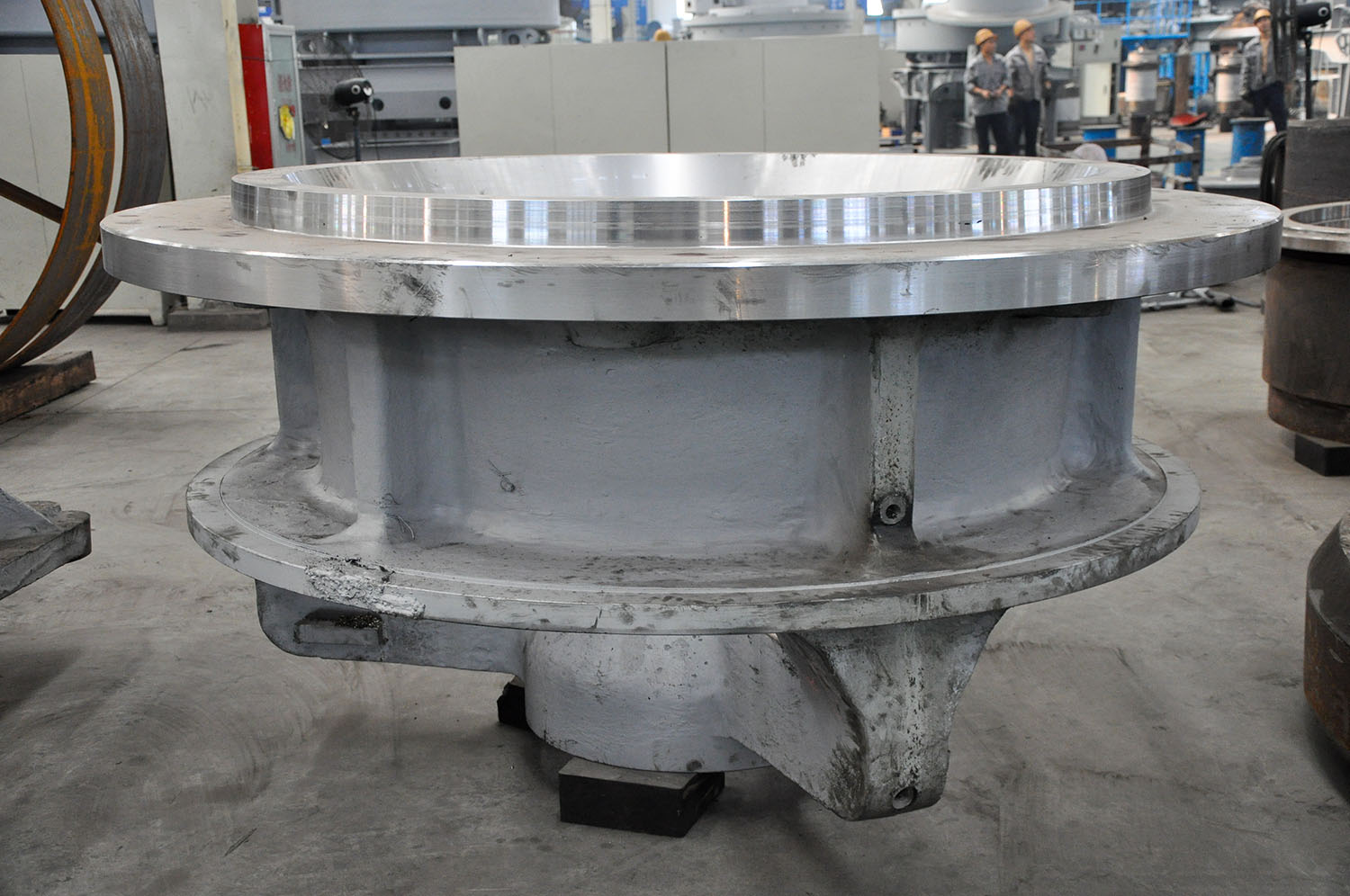
The logic above applies directly to the HAMAC Symons-type cone crusher series. The SCC (standard cavity) machines serve secondary crushing with coarse/medium/fine chambers; the SCCD (short-head cavity) machines serve fine tertiary duties. The table shows how chamber choice changes the feed side opening while the model sets the CSS range:
| Model | Fine Feed (mm) | Medium Feed (mm) | Coarse Feed (mm) | CSS Range (mm) | Capacity (t/h) |
|---|---|---|---|---|---|
| SCC 3' | 83 | 159 | 159 | 9–22 | 45–91 |
| SCC 4 1/4' | 109 | 188 | 216 | 13–38 | 109–181 |
| SCC 5 1/2' | 188 | 213 | 241 | 16–38 | 181–327 |
| SCC 7' | 253 | 303 | 334 | 19–38 | 381–726 |
| SCCD 3' | 13 | 33 | 56 | 3–13 | 27–90 |
| SCCD 4 1/4' | 29 | 54 | 70 | 3–16 | 36–163 |
| SCCD 5 1/2' | 35 | 54 | 98 | 5–13 | 90–209 |
| SCCD 7' | 51 | 95 | 127 | 5–16 | 190–408 |
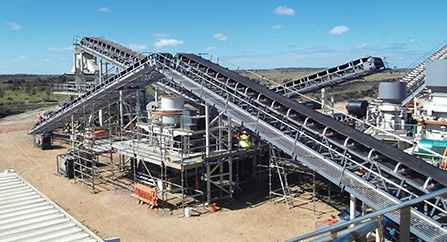
Read the table as a chamber selector: feed from a jaw crusher at 100–200 mm points to an SCC machine with a medium or coarse chamber; a screened 25–50 mm tertiary feed points to an SCCD short-head machine. Hydraulic models — the HP hydraulic cone crusher, HCS hydraulic cone crusher and compound cone crusher — add hydraulic CSS adjustment and clearing, which makes the small-step CSS discipline in this guide much easier to execute. See the 250 TPH granite crusher plant case for these machines in a hard-rock circuit, or our granite crushing plant solutions for stage layouts.
Frequently Asked Questions
Is the CSS the same as the product size?
No. Product is always coarser than the setting: P80 ≈ 1.2–1.5 × CSS. To target a P80, start at CSS = P80 × 0.85 and trim.
What is the difference between standard and short-head chambers?
Standard (coarse) chambers accept larger feed for secondary crushing with coarser product; short-head (fine) chambers take small screened feed for tertiary production of 3–20 mm material.
How do I measure CSS?
Lead wire or lead balls pressed through the gap at the closest point of the cycle (or the calibrated sensor on hydraulic machines), measured warm and at the same point each time.
Why is my cone's capacity dropping month by month?
Usually liner wear: the CSS opens 1–2 mm per ~10,000 tonnes and the chamber profile flattens. Track CSS drift, compensate by adjustment, and change liners at 4–6 mm drift.
Can I run a smaller CSS than the chamber rating?
No — too-tight CSS packs the chamber, bounces the adjustment ring, spikes power draw and shortens liner life. Each chamber has a minimum working CSS.
Does choke feeding really matter that much?
Yes — a full chamber is what produces inter-particle crushing: better shape, better efficiency, 20–30% longer liner life, and even wear across the profile.
Get Chamber and CSS Help from HAMAC
Send HAMAC your feed size distribution, target gradation and circuit layout, and our engineers will recommend the chamber, CSS starting point and screen aperture as a matched set — then support the wear tracking that keeps them honest. Visit the Symons cone crusher page or contact us for a configuration review and quotation.