





Jaw Crusher vs. Impact Crusher for Concrete Recycling | HAMAC
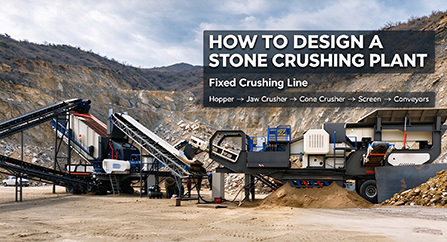
1. Jaw Crusher vs. Impact Crusher: Main Differences
| Selection Factor | Jaw Crusher | Impact Crusher |
|---|---|---|
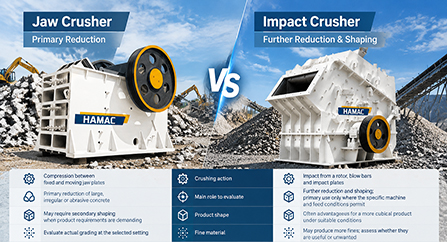
| Crushing action | Compression between fixed and moving jaw plates | Impact from a rotor, blow bars and impact plates |
| Main role to evaluate | Primary reduction of large concrete pieces | Further reduction and shaping; primary use only where the specific machine and feed conditions permit |
| Product shape | May require secondary shaping when product requirements are demanding | Often advantageous for a more cubical product under suitable conditions |
| Fine material | Evaluate actual grading at the selected setting | May produce more fines; assess whether they are useful or unwanted |
| Wear focus | Jaw plates and side liners | Blow bars, impact plates and liners |
| Reinforced concrete | Requires machine-specific feed limits, preparation and steel separation | Requires machine-specific reinforcement limits, preparation and protection arrangements |
| Finished-product control | Screening may be needed for required fractions and oversize control | Screening and a return circuit may be needed for required fractions and oversize control |
Concrete can contain hard, abrasive natural aggregate. Therefore, concrete that breaks relatively easily can still cause significant wear. Compare the actual feed and proposed wear parts rather than assuming all demolition concrete has the same processing cost.
McLanahan identifies throughput, the presence of rebar and final output size as key concrete-crusher selection factors. See its concrete processing and recycling guidance.
2. Check Concrete, Rebar and Contaminants Before Feeding
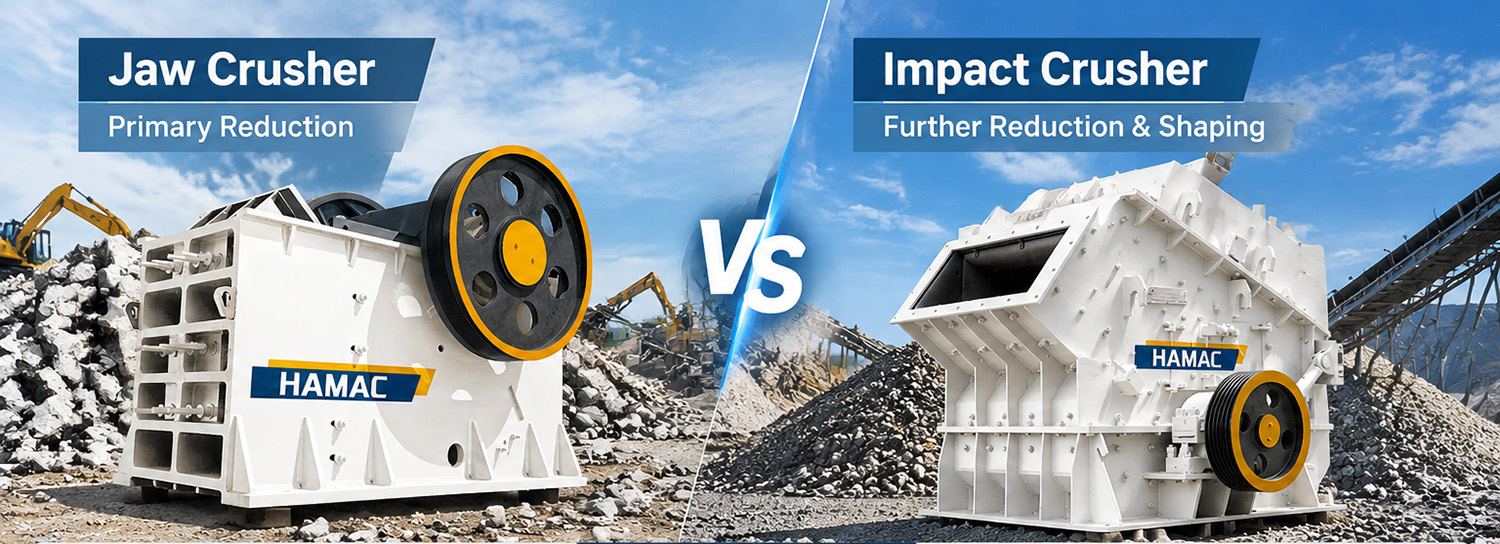
Clean concrete and mixed demolition waste are different feeds. Before choosing a mobile crusher for concrete, provide photos showing the full material stream, including reinforcement and contaminants.
| Feed Characteristic | What to Confirm | Why It Matters |
|---|---|---|
| Concrete dimensions | Maximum length, width, thickness and irregular shapes | A nominal feed-size figure alone may not describe whether slabs can enter and pass through safely |
| Reinforcement | Rebar length, amount, exposed ends and embedded steel | Determines pre-cutting, handling, separation and machine suitability |
| Contaminants | Wood, plastic, gypsum, soil and other non-concrete material | Can affect product quality and require sorting or separation |
| Material condition | Moisture, fines, clay and aggregate abrasiveness | Affects feeding, screening, wear and product grading |
| Required products | Sizes, intended use, fines limits and applicable specifications | Determines crushing stages, screening and quality checks |
Neither a jaw crusher nor an impact crusher should be described as accepting unrestricted rebar. Prepare the material to the selected machine's limits, remove unsuitable objects and confirm reinforcement restrictions with the supplier.
A magnetic separator removes released ferrous metal; it does not replace all front-end sorting or guarantee removal of steel still embedded in oversized concrete. Specify its location, coverage and discharge arrangement as part of the recycling system.
Never attempt to clear bridging, wrapped steel or blocked material while equipment is operating. Follow the machine-specific isolation, lockout and safe-clearing procedure.
3. Compare Three Concrete Recycling Configurations
| Configuration | Reference Process | When to Evaluate It |
|---|---|---|
| Jaw Crusher + Screen | Feed Preparation → Jaw Crushing → Ferrous-Metal Separation → Screening | Large feed needs primary reduction, and the resulting shape and grading may satisfy the intended product |
| Impact Crusher + Screen | Feed Preparation → Suitable Recycling Impactor → Ferrous-Metal Separation → Screening / Return Circuit | Feed is within the selected machine's limits and product shape or further reduction is important |
| Jaw Crusher + Impact Crusher + Screen | Feed Preparation → Jaw Crushing → Ferrous-Metal Separation → Impact Crushing → Screening | Primary reduction and further shaping or size control are both needed |
These flows are reference arrangements, not installation drawings. The number and position of magnets, pre-screens, sorting stages and return conveyors depend on the material and equipment design.
Do not add a second crusher automatically. First check whether a single crushing stage and screening can meet the product specification. Conversely, do not expect a primary jaw crusher alone to meet every recycled-aggregate shape and grading requirement.
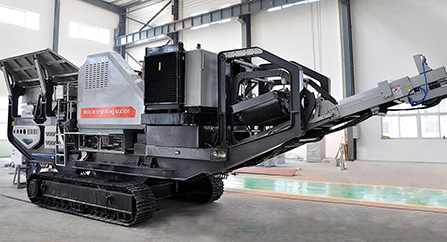
Explore HAMAC tracked jaw, impact and screening equipment for mobile configuration options. Confirm each selected model's suitability for the actual demolition feed.
4. HAMAC Reference Parameters: Feed Size, Capacity and Power
The following data comes from HAMAC's PE jaw crusher and PF impact crusher tables. It helps compare host-machine size and catalogue capacity. These are not matched pairs, mobile-package specifications or guaranteed capacities for reinforced concrete.
| Model | Feed Opening | Maximum Feed Size | Published Capacity | Published Motor Power |
|---|---|---|---|---|
| PE600×900 Jaw Crusher | 600 × 900 mm | 500 mm | 80–180 t/h | 55–75 kW |
| PE750×1060 Jaw Crusher | 750 × 1060 mm | 630 mm | 110–320 t/h | 90–110 kW |
| PF-1214 Impact Crusher | 400 × 1430 mm | 350 mm | 100–180 t/h | 132 kW |
| PF-1315 Impact Crusher | 860 × 1520 mm | 500 mm | 130–250 t/h | 220 kW |
Original specifications: PE Series Jaw Crusher and PF Impact Crusher.
HAMAC describes the PF series mainly as a secondary crusher for suitable softer or medium-hard materials and construction waste. This does not establish that every PF model is suitable for unrestricted reinforced-concrete feed. Obtain written confirmation of the intended application, reinforcement limits, wear-part specification and protection arrangements.
Catalogue power is not actual energy consumption per tonne. Compare equipment using equivalent feed, discharge requirements and measured or properly estimated operating conditions.
For example, both PE600×900 and PF-1315 list a maximum feed size of 500 mm, but this does not mean they accept the same slab shape, reinforcement or feed distribution. Maximum feed size is only one selection input.
5. Match Screening to the Recycled Product
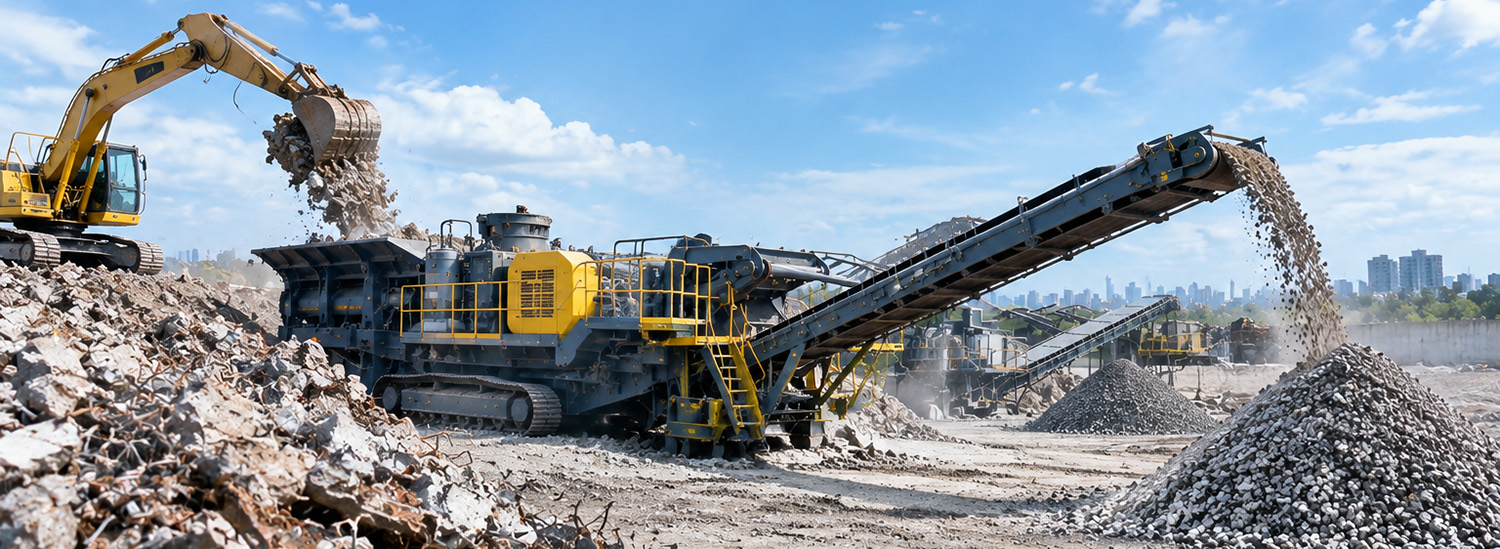
A crusher reduces size; a screen separates fractions. If you need several recycled-aggregate products, specify the required separation points, oversize route and individual product outlets.
Example sizes such as 0–5 mm, 5–20 mm and 20–40 mm must be checked against the intended application. Producing a size fraction does not by itself establish compliance for road base, drainage material or new concrete.
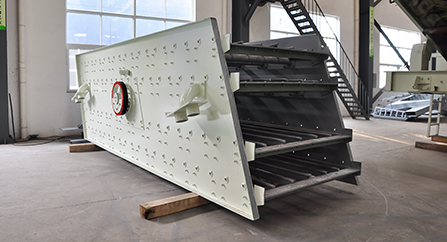
HAMAC's MS-3618E tracked screening plant provides a reference for screening and deployment checks:
| Specification | Published Value | Selection Check |
|---|---|---|
| Maximum feed size | 200 mm | Confirm the actual crusher discharge before connection |
| Screen dimensions | 1800 × 6000 mm | Check grading, moisture, openings and separation duty |
| Screen layers | 3 | Define product fractions and any oversize return |
| Feeder capacity | 350 t/h | Review together with the actual incoming circuit load |
| Listed processing capacity | 200–500 t/h | Do not treat this as concrete crushing capacity or guaranteed complete-unit throughput |
| Transport dimensions | 16,226 × 3,359 × 3,885 mm | Check transport equipment, access routes and permits |
See the HAMAC tracked vibrating screening plant specifications. The listed upper processing figure and 350 t/h feeder capacity require configuration-specific review; they are not interchangeable ratings.
Returned oversize increases internal flow. If a circuit receives 100 t/h of new material plus an assumed 30 t/h return stream, equipment receiving both streams must be assessed for approximately 130 t/h. The return quantity is illustrative, not a standard recycling ratio.
6. Compare Wear, Mobility and Cost per Saleable Tonne
Compare the full recycling process rather than only the crusher purchase price.
| Cost or Operating Item | What to Compare |
|---|---|
| Feed preparation | Breaking oversized pieces, cutting exposed reinforcement and removing contaminants |
| Wear parts | Jaw plates or blow bars, liners, replacement labor, access and spare-part availability |
| Production | Qualified product output, unwanted fines and returned material |
| Site operation | Energy, operators, loading equipment, sorting, screening and stockpiling |
| Relocation | Transport loads, permits, site preparation and recommissioning |
| Dust and safety | Source controls, traffic separation, inspection and safe maintenance arrangements |
Operating Cost per Saleable Tonne = Comparable Operating Costs ÷ Qualified Product Tonnage over the Same Period
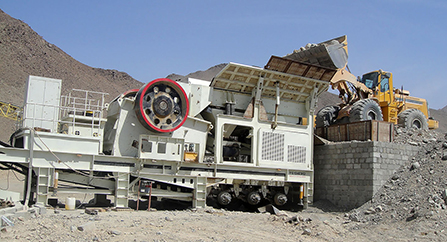
Mobile equipment can be useful for demolition sites and repeated contracts. A long-term recycling yard may also justify a stationary or modular comparison. Select mobility because the project benefits from it, not simply because the machine has tracks.
Frequently Asked Questions
Is a jaw crusher or impact crusher better for concrete recycling?
A jaw crusher is worth evaluating for primary reduction of large or demanding feed. An impact crusher can be advantageous when suitable feed and improved particle shape are priorities. Some projects need a jaw-first, two-stage process; others can meet requirements with one crusher and a screen.
Can a concrete crusher process rebar?
Only within the selected machine's documented application limits. Confirm reinforcement restrictions, prepare the feed and provide appropriate separation. Do not assume long rebar or heavy steel can pass safely through every jaw or impact crusher.
Do I always need a jaw crusher before an impact crusher?
No. An appropriate recycling impactor may process prepared feed directly. A jaw stage may be needed when feed dimensions, variability, abrasiveness or downstream acceptance require primary reduction.
Does impact crushing always make a better recycled product?
Impact crushing often improves shape, but product suitability also depends on grading, fines, contaminants and the intended use. Test the resulting aggregate against the applicable specification.
Can recycled concrete be used in new construction?
Potential uses depend on local requirements, material quality and testing. Crusher selection alone does not certify recycled aggregate for structural concrete, road construction or another specified application.
Request a Concrete Recycling Crusher Recommendation
Jaw crusher, impact crusher or a two-stage recycling system? Send HAMAC the information below so the equipment can be assessed against the actual feed and product requirements.
| Information to Send | Details |
|---|---|
| Concrete feed | Photos, video, maximum dimensions and typical material composition |
| Reinforcement and contaminants | Rebar dimensions, exposed steel, soil, wood, plastic and other impurities |
| Production target | Required feed rate or saleable output, project tonnes and effective working hours |
| Finished products | Sizes, proportions, intended uses and applicable quality requirements |
| Project arrangement | Permanent yard or multiple sites, transport conditions, utilities and dust-control requirements |
Request a HAMAC Concrete Crushing and Screening Configuration