



How to Choose a Vibrating Screen for Aggregate Production | HAMAC
How to Choose a Vibrating Screen for Aggregate Production
Choose a vibrating screen by the required aggregate sizes, actual feed conditions and screening duty—not capacity alone. The right screen must separate the required products, handle the incoming material and connect properly with the crushers, conveyors and stockpiles.
Start with three questions: What products must the plant make? What material enters the screen? How much material must each deck process? Then select the screen size, number of decks, openings and screening media.
1. Define the Aggregate Products and Screen Decks
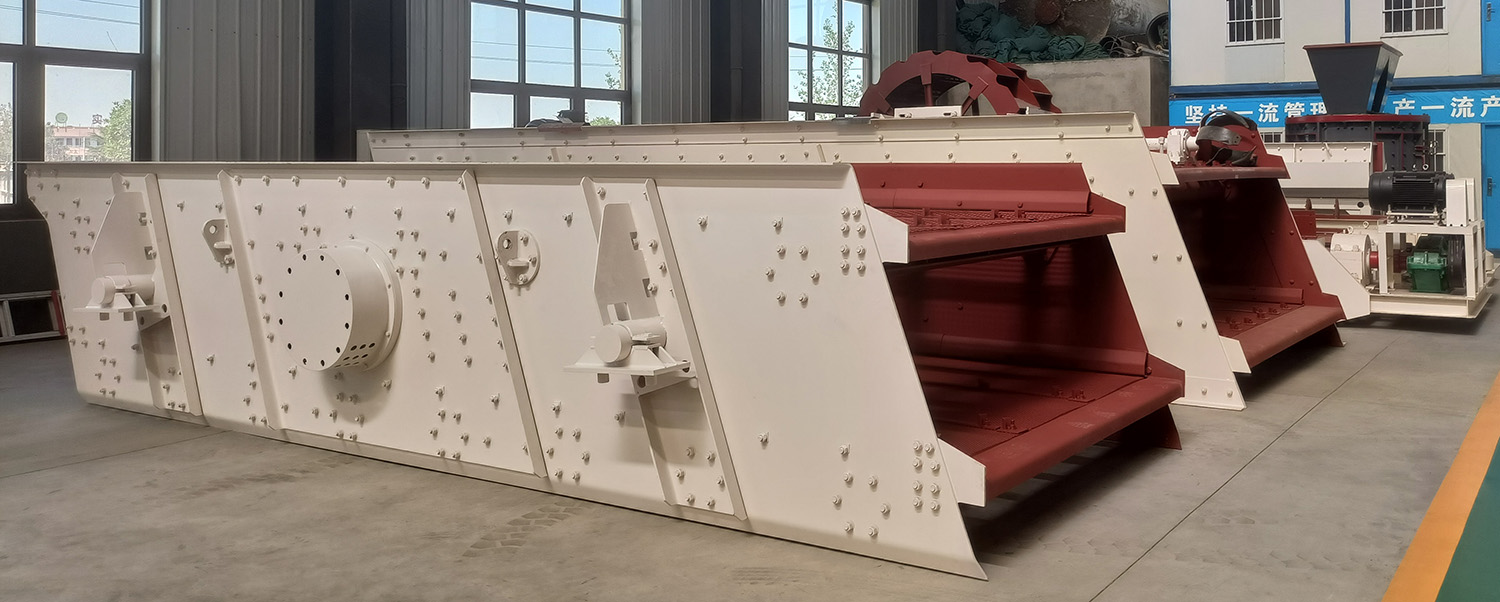
List the required product sizes and target proportions before selecting a multi-deck vibrating screen. Example aggregate sizes include 0–5 mm, 5–10 mm, 10–20 mm and 20–31.5 mm, but the final sizes and quality requirements should follow the local market or project specification.
| Product Requirement | What to Confirm | Effect on the Screening System |
|---|---|---|
| Several aggregate grades | Product boundaries and target proportion of each grade | Determines separation points, screen decks and product outlets |
| Oversize returned to a crusher | Maximum finished-product size and return destination | Requires an oversize outlet and suitable return conveyor |
| Fine aggregate or sand fraction | Grading, fines, shape and cleanliness requirements | May require fine screening, additional processing or washing |
| Changing product specifications | Frequency of mesh changes and required product flexibility | Influences media selection, maintenance access and chute arrangement |
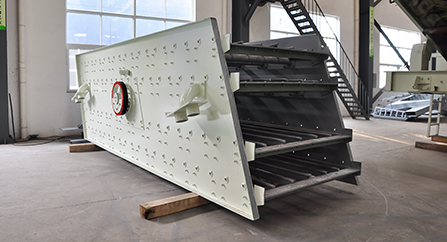
In a basic arrangement, three decks create four discharge fractions. If one fraction is returned oversize, the remaining fractions may become finished products. Therefore, the number of saleable products should not be used alone to determine the number of decks.
Illustrative three-deck arrangement: top deck separates oversize; middle and bottom decks make further cuts; material passing the bottom deck becomes the finest fraction. Actual outlet uses depend on the screen openings and plant flowsheet.
Screened 0–5 mm material is not automatically compliant manufactured sand. Check grading, particle shape, fines and other requirements before describing it as a finished sand product.
2. Select Screen Openings and Media Together
The screen opening establishes the intended separation, but product quality also depends on particle shape, material distribution, open area, moisture and the condition of the media. Do not treat the nominal mesh size as a guarantee of perfect separation.
| Screen Media | Applications to Evaluate | Main Trade-Off |
|---|---|---|
| Woven wire | General aggregate screening and frequently changing product specifications | Can provide high open area; wear life depends on material and wire design |
| Polyurethane | Abrasive materials and selected wet or washing applications | Can offer longer wear life, but open area may be lower than wire media |
| Rubber | Coarse, heavy or abrasive feed | Impact and wear resistance must be balanced against open area and throughput |
| Hybrid or anti-blinding media | Selected feeds with moisture, fines or plugging problems | Compatibility and performance require a material-specific review |
McLanahan reports that woven-wire media typically provides approximately 50–70% open surface area in many configurations. This is an industry reference, not a specification for every HAMAC screen mesh. Request the actual opening, wire thickness, open area and wear characteristics of the proposed media.
For an external sizing and media-selection explanation, read McLanahan's guide to selecting a vibrating screen for aggregate applications.
3. Choose Screen Size Using the Actual Feed
Screen width influences carrying capacity, while screen length influences the opportunity for particles to separate. Selection also depends on deck position, inclination, particle shape, density, open area and the proportions of oversize and near-size material.
| Sizing Input | Information Required |
|---|---|
| Incoming throughput | Normal and peak flow entering the screen, including returned material where applicable |
| Feed grading | Particle-size distribution, oversize, fines and material close to each screen opening |
| Separation sizes | Required cut points and finished-product specifications |
| Material properties | Bulk density, particle shape, abrasiveness, surface moisture, clay and stickiness |
| Screening duty | Dry or wet operation, product requirements and required separation performance |
| Installation | Available space, feed distribution, chutes, maintenance access and supporting structure |
HAMAC's YK circular vibrating screen page describes the standard application as screening ores and rocks with moisture content below 5%. Wet, sticky or clay-rich material needs a specific suitability assessment; the same capacity should not be assumed for all feed conditions.
The following published models provide reference options for preliminary selection.
| HAMAC Model | Decks | Listed Screen Area | Published Capacity | Power |
|---|---|---|---|---|
| 3YK1545 | 3 | 6.75 m² | 45–380 m³/h | 15 kW |
| 3YK1860 | 3 | 10.8 m² | 75–600 m³/h | 22 kW |
| 4YK1860 | 4 | 10.8 m² | 75–600 m³/h | 30 kW |
| 4YK2160 | 4 | 12.6 m² | 85–700 m³/h | 37 kW |
| 4YK2460 | 4 | 14.4 m² | 100–800 m³/h | 37 kW |
Source: HAMAC YK vibrating screen specifications. The area column reproduces the listed screen-size area; it is not the sum of all deck areas. Published capacity ranges are reference values, not guaranteed performance at every opening.
Do not compare m³/h directly with tonnes per hour. Convert using the actual bulk density:
Mass Flow (t/h) = Volume Flow (m³/h) × Bulk Density (t/m³)
For example, 200 t/h at an assumed bulk density of 1.6 t/m³ corresponds to 125 m³/h. This is a unit-conversion example only. It does not prove that any model whose catalogue range includes 125 m³/h will meet the required screening efficiency.
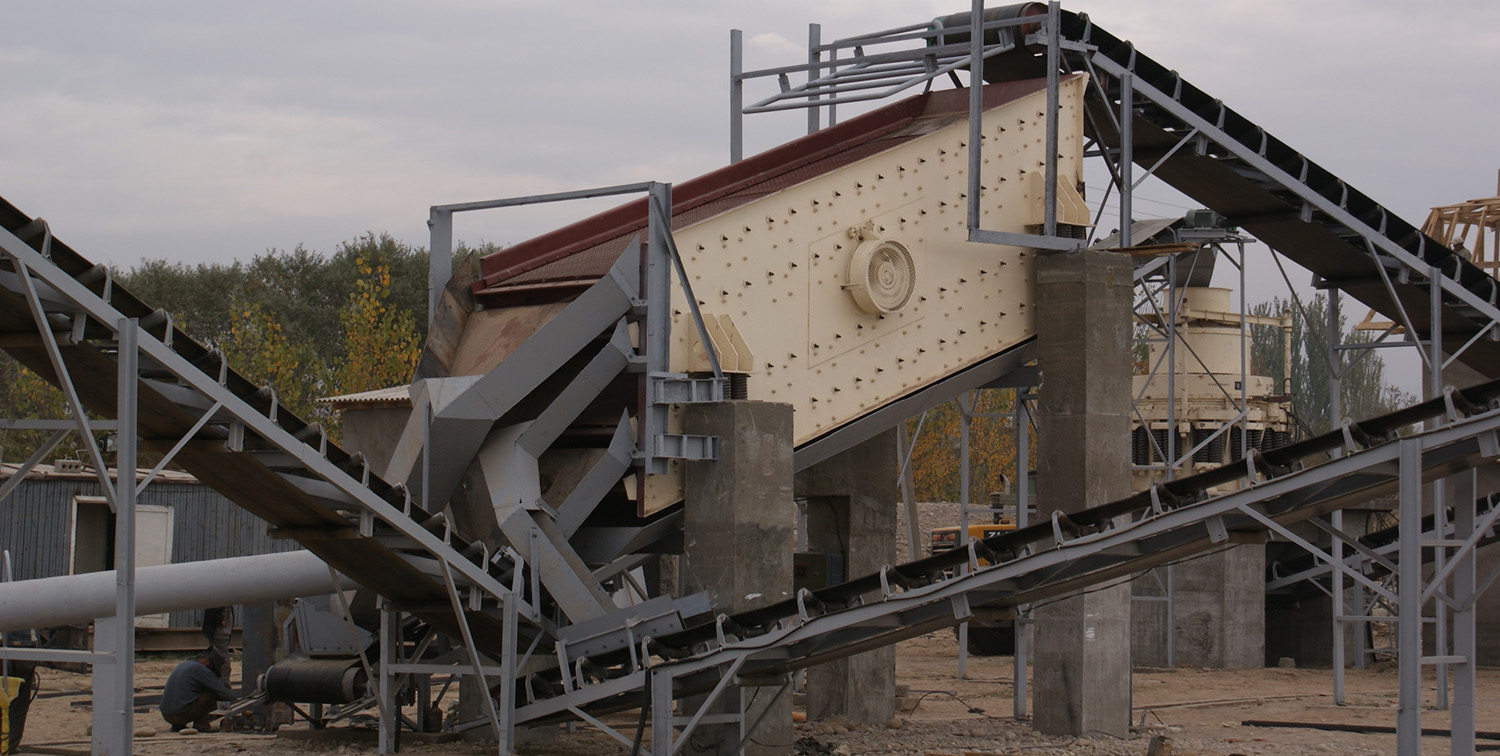
4. Fixed Vibrating Screen or Tracked Screening Plant?
| Project Situation | Option to Evaluate | Key Check |
|---|---|---|
| Permanent aggregate plant with fixed conveyors and stockpiles | Fixed YK vibrating screen | Screening duty, support structure, feed and discharge chutes |
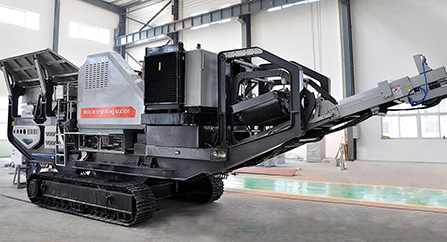
| Screening near a changing quarry face or mobile crusher | Tracked screening plant | Ground conditions, crusher discharge compatibility and site movement |
| Several project sites | Mobile screening arrangement | Transport dimensions, weight, permits and redeployment costs |
| Existing plant with insufficient screening | Replacement, additional screen or circuit modification | Identify whether the limitation is screen area, media, feed or the overall process |
HAMAC's MS-3618E tracked screening plant provides the following reference specifications:
| Specification | Published Value |
|---|---|
| Screen dimensions | 1800 × 6000 mm |
| Screen layers | 3 |
| Maximum feed size | 200 mm |
| Feeder capacity | 350 t/h |
| Listed processing capacity | 200–500 t/h |
| Total power | 68.5 kW |
| Total weight | 35 tonnes |
| Transport dimensions | 16,226 × 3,359 × 3,885 mm |
Review the HAMAC tracked vibrating screening plant before final selection.
The listed processing range and feeder capacity must be reviewed together. Do not quote the 500 t/h upper screening figure as guaranteed complete-unit throughput, or treat screening capacity as crushing capacity.
5. Match Feed, Return Conveyors and Product Stockpiles
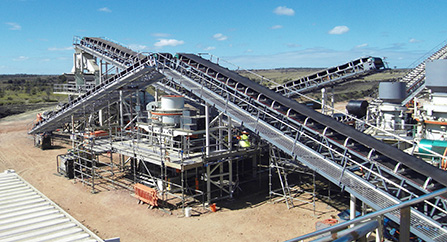
The screen is only one part of an aggregate screening plant. Feed must be distributed across the usable width, and every discharge stream needs a suitable chute, conveyor or collection arrangement.
In a closed circuit, returned oversize increases the flow through relevant equipment. For example, 200 t/h of new material plus an assumed 60 t/h return stream creates 260 t/h where both streams enter the screen. The return quantity is illustrative; use the actual circuit balance for design.
| System Part | What to Check |
|---|---|
| Feed conveyor and chute | Flow rate, maximum lump size, drop height and even distribution |
| Oversize return conveyor | Normal and peak return flow, chute loading and crusher interface |
| Product conveyors | Individual product flow, belt loading, incline and stockpile distance |
| Stockpiles | Separate grades, storage demand, loading access and prevention of mixing |
| Maintenance access | Screen-media replacement, safe inspection and access to chutes and transfers |
HAMAC supplies belt widths of 500, 650, 800, 1000, 1200 and 1400 mm. Width alone does not establish conveyor capacity: belt speed, loading cross-section, material density and inclination must also be assessed. See HAMAC aggregate belt conveyors.
Frequently Asked Questions
How many screen decks do I need for aggregate production?
Choose the number of decks from the required separation points and outlet uses. In a basic arrangement, three decks create four fractions, but one may be oversize return rather than a saleable product. Confirm the complete product and return-flow arrangement before selecting deck quantity.
Can one vibrating screen produce several aggregate sizes?
Yes, a suitable multi-deck screen can separate several fractions. The result depends on feed grading, openings, screen media, operating conditions and discharge arrangements. Separate product conveyors or outlets are needed to keep the grades distinct.
Why does a vibrating screen create too much return material?
Possible causes include excessive crusher oversize, unsuitable openings, blinded or pegged media, uneven feeding and insufficient screening capacity. Check both the screen and the upstream crushing process before deciding to purchase a larger machine.
Is a larger vibrating screen always better?
No. Select enough effective area for the required duty, while checking media, feed distribution, installation and operating cost. A larger machine does not correct every feed, chute or process problem.
Can a YK screen handle wet or sticky aggregate?
HAMAC describes its standard YK application as material moisture below 5%. Wetter, sticky or clay-rich feeds need a project-specific assessment of screen type, media and possible washing or pre-treatment.
Request an Aggregate Screening Configuration
Need several aggregate sizes from one screening system? Send HAMAC your feed grading, throughput and required products to evaluate a fixed vibrating screen or tracked screening plant.
| Information to Send | Details |
|---|---|
| Material | Rock type, photos, bulk density, moisture, clay and abrasiveness |
| Feed grading | Maximum size and particle-size distribution or sieve-analysis results |
| Actual screen feed | Normal and peak throughput, including return material where applicable |
| Finished products | Required sizes, target proportions and quality specifications |
| Plant arrangement | Fixed or mobile, existing crushers, conveyor layout and available space |
| Project location | Country, power supply, transport and site conditions |
Request a HAMAC Vibrating Screen and Aggregate Screening Plant Recommendation