



200 TPH Stone Crushing Plant: Equipment Configuration and Process Design Guide | HAMAC
Planning a 200 TPH stone crushing plant? The first step is to define what 200 TPH means for your project: fresh feed entering the plant or saleable aggregate leaving the screening system. These are not always the same because pre-screened material, rejected contaminants, fines and recirculating material affect the process balance.
A practical 200 TPH crushing and screening plant needs matched feeding, primary crushing, secondary crushing, screening, conveying and stockpiling equipment. The configuration depends on the raw material, maximum feed size, finished aggregate sizes, product proportions and operating conditions.
This guide focuses on equipment configuration and process matching. For the broader design checklist, read How to Design a Stone Crushing Plant by Capacity: 100 TPH, 200 TPH and 300 TPH.
1. Confirm the Design Basis Before Selecting Equipment
| Design Input | Information Required | Effect on Configuration |
|---|---|---|
| Raw material | Limestone, granite, basalt, river stone or another material; hardness, abrasiveness, clay and moisture | Determines the crushing route, wear requirements and need for pre-screening |
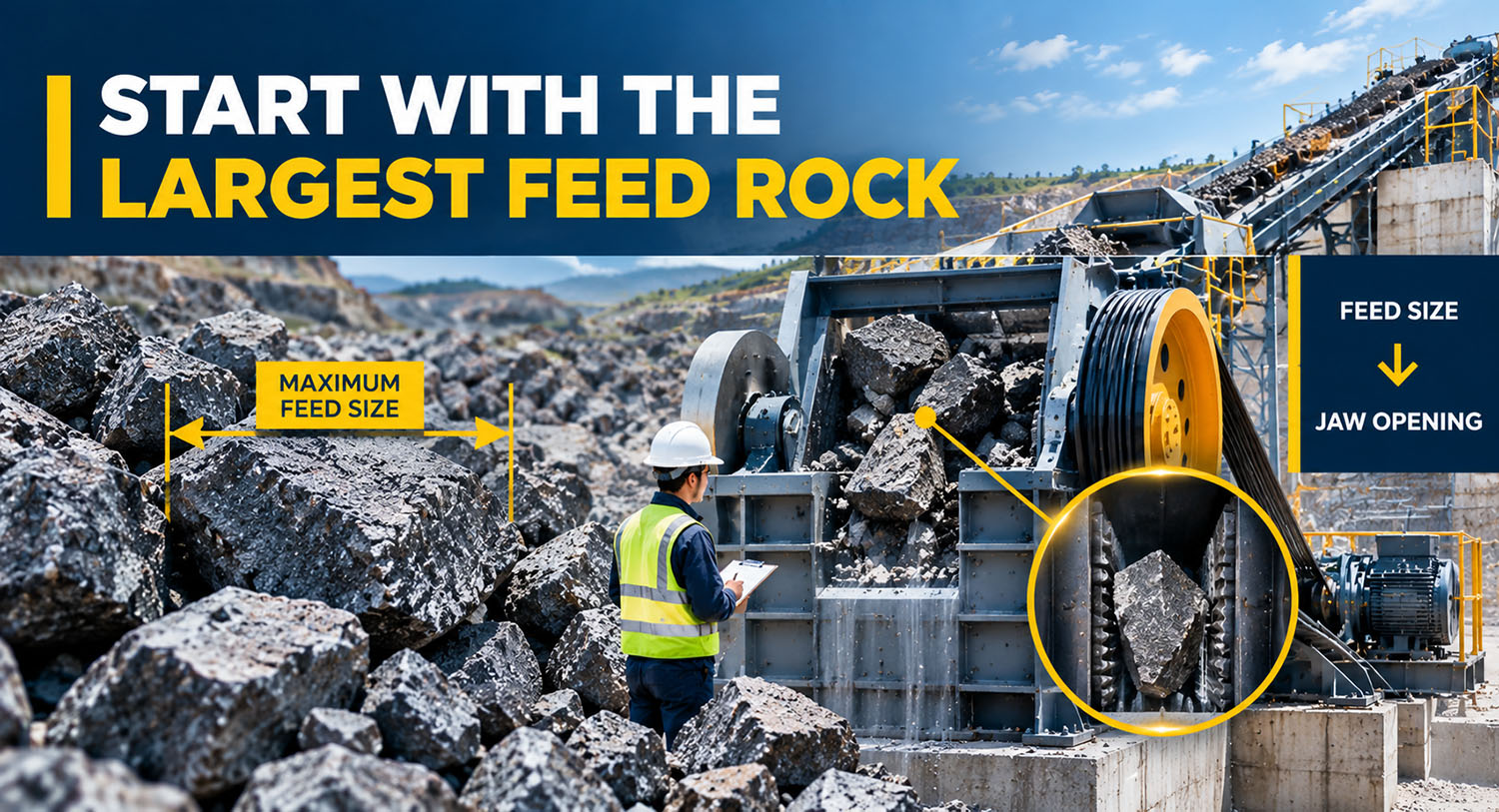
| Maximum feed size | Largest expected rock dimension and feed-size distribution | Determines feeder opening and primary crusher selection |
| Capacity target | 200 tonnes per hour of fresh feed or saleable finished products | Determines the plant mass balance and required equipment throughput |
| Finished products | Required sizes, target proportions and local quality specifications | Determines screening, return material and possible additional crushing |
| Operating conditions | Working hours, site layout, power, water, climate and relocation requirements | Determines plant format, utilities and installation scope |
For example, a target of 200 tonnes per hour of finished aggregate over 8 effective production hours corresponds to 1,600 tonnes per day. If the scheduled shift includes inspections, maintenance or interruptions, equipment planning must use the expected effective production time rather than assuming every scheduled hour is productive.
2. Two Reference 200 TPH Process Configurations
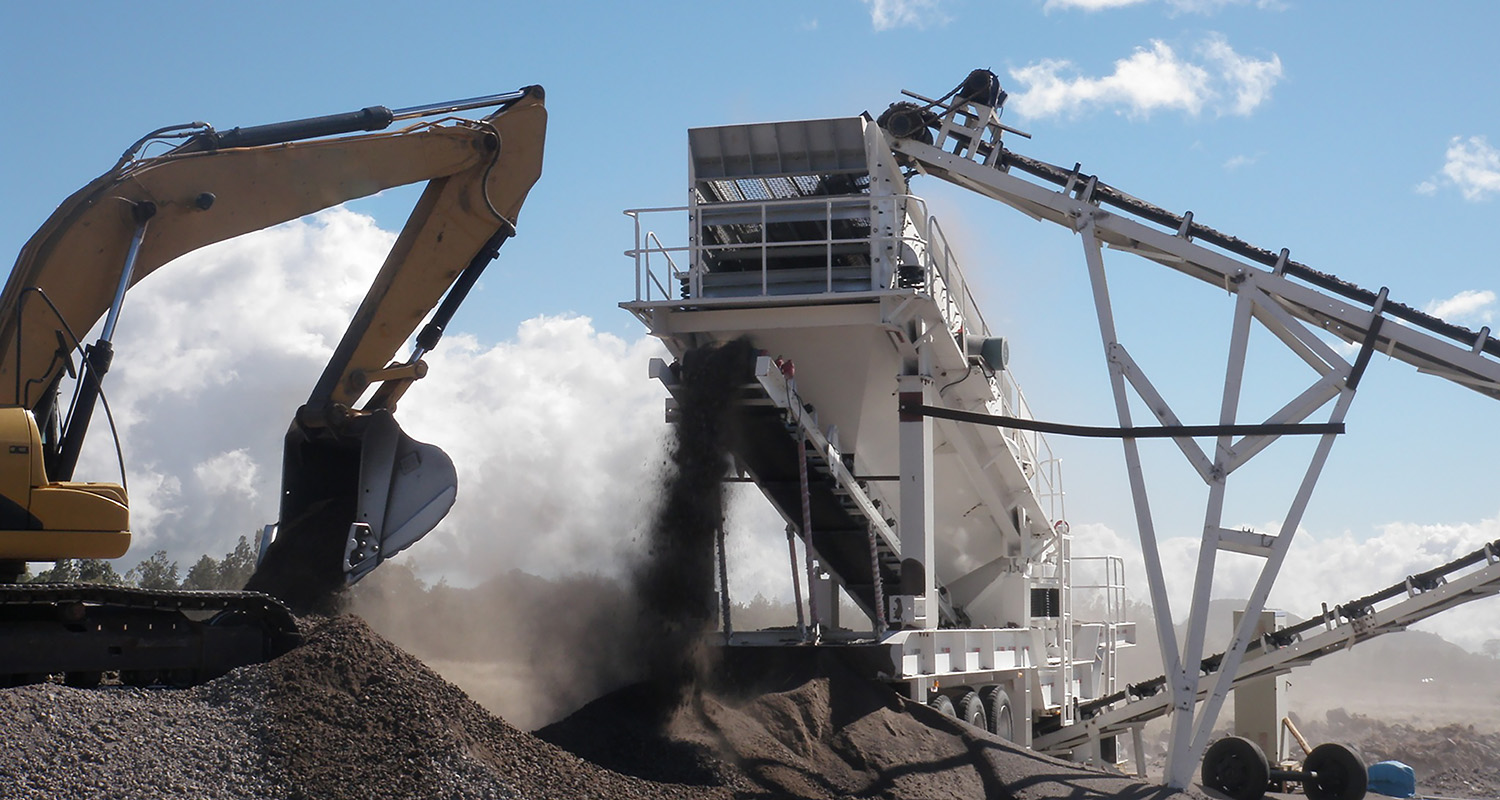
A 200 TPH limestone crushing plant and a 200 TPH granite crushing plant should not automatically use the same secondary crusher. The following flows are starting points for engineering review, not fixed equipment packages.
| Material | Reference Process | Main Selection Focus |
|---|---|---|
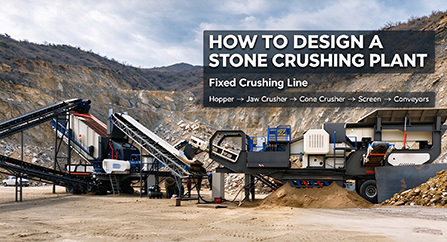
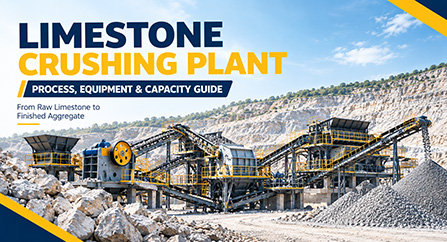
| Limestone and medium-to-low abrasiveness rock | Hopper → Vibrating Feeder → Jaw Crusher → Impact Crusher → Vibrating Screen → Product Conveyors | Feed size, aggregate shape, fines production, moisture and impact-crusher wear |
| Granite, basalt and abrasive hard rock | Hopper → Vibrating Feeder → Jaw Crusher → Cone Crusher → Vibrating Screen → Product Conveyors | Rock abrasiveness, cone chamber, discharge setting, liner wear and return load |
| Projects requiring additional manufactured sand or shaping | Base crushing circuit → Optional Sand Making or Shaping Stage → Fine Screening | Required sand proportion, grading, particle shape and fines limits |
In either aggregate circuit, oversized material can return from the screen to the secondary crusher. Pre-screening, bypass conveyors or another crushing stage may be required when feed conditions or product specifications justify them.
Do not add a third crushing stage simply because the target is 200 TPH. Add equipment only when the reduction requirement, product shape, fine-aggregate demand or circuit balance makes it necessary.
Explore HAMAC stationary crushing plant solutions for material-based configuration options.
3. HAMAC Equipment Parameters for Preliminary Selection
The following HAMAC specifications help identify candidate feeding and primary-crushing equipment. Published capacity ranges are reference values, not guaranteed production under every material or discharge-setting condition.
| Equipment | Published Size Specification | Maximum Feed Size | Reference Capacity | Published Power |
|---|---|---|---|---|
| ZSW4211 Vibrating Feeder | 1100 × 4200 mm | 650 mm | 180–400 t/h | 15 kW |
| ZSW4911 Vibrating Feeder | 1100 × 4900 mm | 650 mm | 250–480 t/h | 22 kW |
| PE750×1060 Jaw Crusher | 750 × 1060 mm feed opening | 630 mm | 110–320 T/H | 90–110 kW |
| PE900×1200 Jaw Crusher | 900 × 1200 mm feed opening | 780 mm | 220–450 T/H | 110–132 kW |
For material within the 630 mm feed limit, the PE750×1060 can enter the preliminary assessment for a 200 TPH project because its published capacity range includes that target. This does not establish that it will produce 200 TPH at every discharge setting or with every rock type. Larger feed material or different operating conditions may require another primary crusher.
Feeder capacity must not override the crusher feed limit. For example, a feeder accepting 650 mm material does not make 650 mm rock suitable for a jaw crusher with a published maximum feed size of 630 mm.
Review the original specifications for the HAMAC vibrating feeder and PE Series Jaw Crusher.
The secondary impact crusher or cone crusher must be selected using the primary crusher discharge, material characteristics, required final products and total circuit load. Do not assume that matching two catalogue capacity figures creates a balanced plant.
4. Size Screening and Conveyors for the Actual Circuit Load
In a closed-circuit crushing plant, some equipment handles both new material and returned oversize. Its required processing capacity can therefore be higher than the plant's fresh-feed rate.
Illustrative example: if a secondary circuit receives 200 TPH of new material and 60 TPH of returning oversize, the equipment receiving both streams must be assessed for approximately 260 TPH.
Circuit Load = New Material Entering the Circuit + Returning Oversize
The 60 TPH return stream in this example is an assumption for explanation, not a standard return rate. Actual return load depends on crusher settings, feed grading, screen performance and finished-product requirements. Material bypassing the circuit must also be included correctly in the mass balance.
| Equipment | What to Check |
|---|---|
| Secondary crusher | Combined new feed and returned material, maximum feed size and required discharge |
| Vibrating screen | Total incoming flow, screen openings, effective area, moisture, near-size particles and product proportions |
| Return conveyor | Expected and peak oversize flow, belt loading and transfer-chute capacity |
| Product conveyors | Individual product flow, stockpile distance, inclination and loading requirements |
Be careful when comparing units. A screen capacity published in m³/h is a volumetric value and must not be treated directly as tonnes per hour. Conversion requires the material bulk density, and screening performance still needs a separate engineering assessment.
HAMAC lists belt widths of 500, 650, 800, 1000, 1200 and 1400 mm. Belt width alone does not establish conveyor capacity; speed, loading cross-section, material density and inclination also matter. Review HAMAC belt conveyor options.
For an external explanation of screen placement and crushing-circuit arrangements, see Crushing and Screening Plant Design Factors.
5. Plan Products, Layout and Plant Format Together
Product sizes such as 0–5 mm, 5–10 mm, 10–20 mm and 20–31.5 mm are examples only. Confirm the sizes and quality specifications required by your local concrete, road or aggregate market.
Specify the target proportion of each product, not only the list of sizes. A plant targeting a high proportion of fine aggregate may need a different circuit from a plant selling mainly coarse stone. Screened 0–5 mm material should not automatically be described as compliant manufactured sand without checking grading, shape and fines requirements.
| Plant Format | Project Conditions to Evaluate | HAMAC Information |
|---|---|---|
| Stationary | Permanent quarry, long-term production, established utilities and product stockpiles | Stationary Crushing Plants |
| Modular | Modular assembly, staged implementation and planned layout changes | Modular Crushing Plants |
| Mobile | Temporary sites, quarry-face movement, road projects and relocation requirements | Mobile Crushing Plant Solutions |
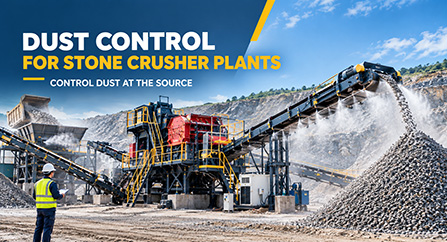
Reserve space for raw-material unloading, inspection and lifting access, the return circuit, separate product stockpiles, truck loading, electrical equipment and dust control. A shorter equipment layout is not better if it blocks maintenance or creates unnecessary material rehandling.
There is no universal land-area or total-power figure for a 200 TPH plant. These depend on the equipment arrangement, conveyor distances, product storage, ground conditions and optional process stages. Total installed power must be calculated from the confirmed equipment list rather than copied from another project.
6. Request a Project-Based 200 TPH Plant Configuration
For a useful 200 TPH crusher plant quotation, send the same technical requirements to each supplier and compare the complete scope of supply—not only the main crusher price.
| Information to Send | Details |
|---|---|
| Raw material | Material type, photos or test information; hardness, abrasiveness, moisture and clay |
| Feed conditions | Maximum feed size, typical grading and loading method |
| Capacity definition | 200 TPH fresh feed or saleable output; effective working hours per day |
| Finished products | Sizes, target proportions, end use and quality requirements |
| Site conditions | Country, site plan, voltage and frequency, water supply and relocation needs |
| Required scope | Crushers, screens, conveyors, electrical controls, dust control, installation, commissioning and spare parts |
Planning a 200 TPH limestone, granite or basalt crushing plant? HAMAC can review your material, feed size, required products and site conditions to recommend a project-based crushing and screening configuration.
Send Your Project Details for a 200 TPH Stone Crushing Plant Recommendation and Quotation