



What Is the Role of a Cone Crusher in a Crushing Plant? Secondary Crushing Guide | HAMAC
What Is the Role of a Cone Crusher in a Crushing Plant?
Once raw rock has passed through primary crushing, it is still too coarse and too irregular to become finished aggregate. This is the point where a cone crusher for secondary and tertiary crushing takes over. It receives the material discharged by the jaw crusher, breaks it down further through a compression action, and shapes it into the size range that screens and end customers actually need.
In this article, we explain exactly what a cone crusher does inside a crushing plant, why it is placed after the jaw crusher, how it affects final aggregate quality and plant capacity, and how to choose between Compound, Symons, HCS hydraulic and HP hydraulic cone crushers for your specific project.
Where Does a Cone Crusher Sit in a Crushing Plant Flow?
A typical secondary crushing plant flow design looks like this:
Raw Material → Hopper → Vibrating Feeder → Jaw Crusher (Primary) → Conveyor → Cone Crusher (Secondary/Tertiary) → Vibrating Screen → Closed-Circuit Return → Finished Aggregates
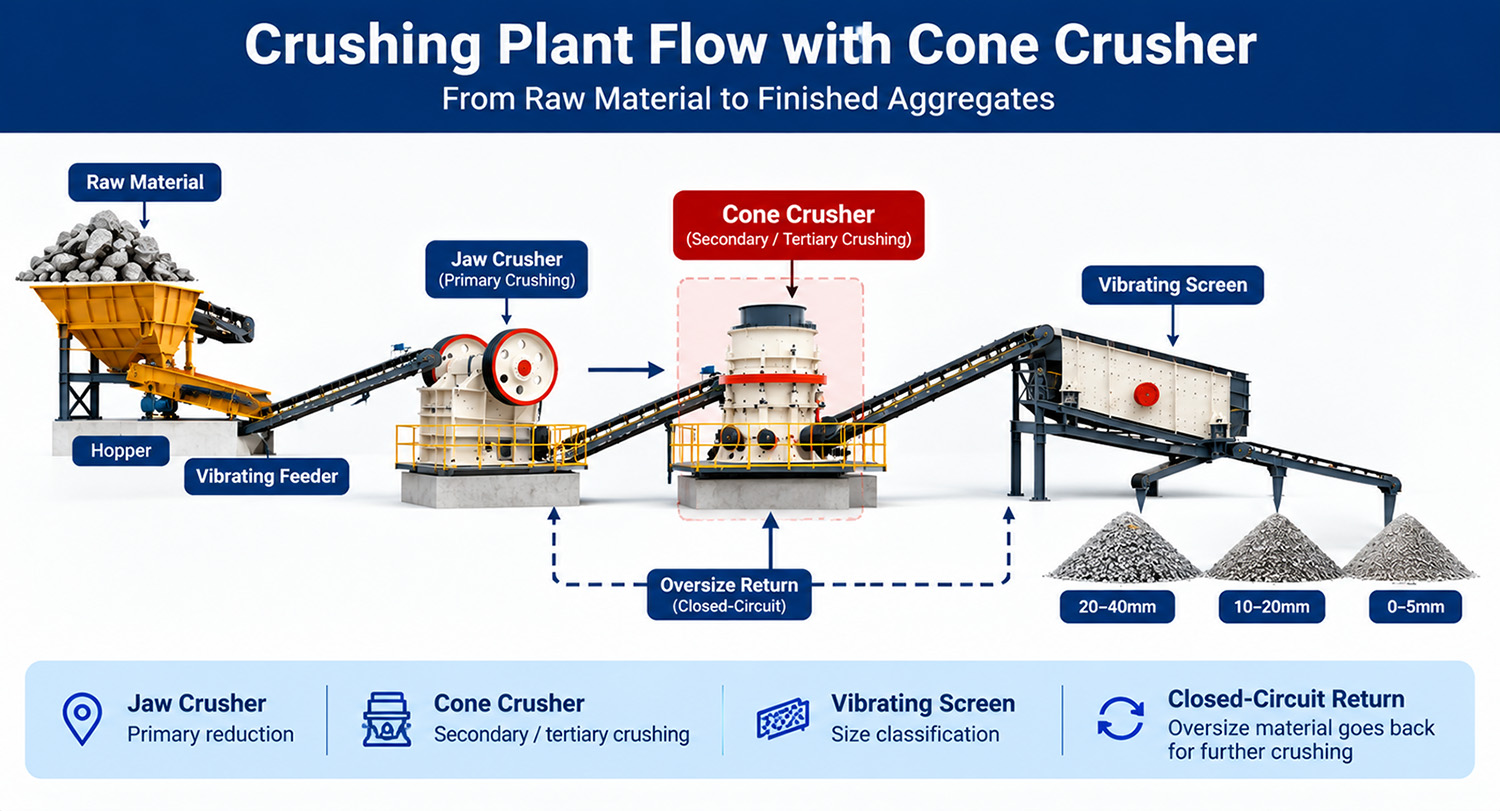
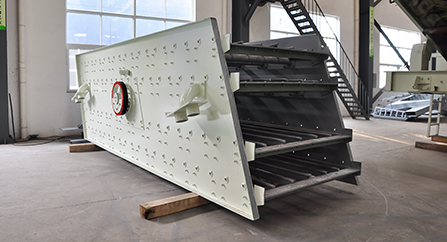
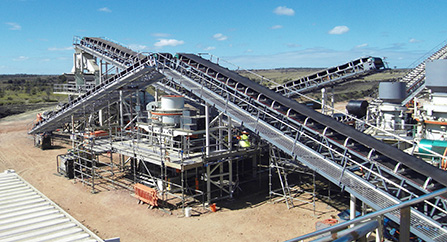
The jaw crusher handles the first, roughest reduction. The secondary cone crusher then takes that intermediate-sized material and reduces it further, often working together with a vibrating screen in a closed circuit as part of a complete stationary crushing plant: oversized particles that fail to pass the screen are sent back into the cone crusher for another pass, while correctly sized material moves on to become finished product.
Why a Cone Crusher Is the Common Choice for Secondary and Tertiary Crushing
| Feature | Why it matters for secondary/tertiary crushing |
|---|---|
| Compression crushing action | Suits hard, abrasive rock such as granite, basalt and many metal ores |
| Adjustable discharge setting (CSS) | Allows the operator to fine-tune final product size without changing the machine |
| Better particle shape than impact crushing | Produces more cubical aggregate, valuable for concrete and high-spec road base |
| Wear-resistant chamber design | Supports long, continuous runs on highly abrasive material |
| Works well in closed-circuit systems | Pairs with screens to automatically reprocess oversize material |
Five Ways a Cone Crusher Helps Mining and Aggregate Customers
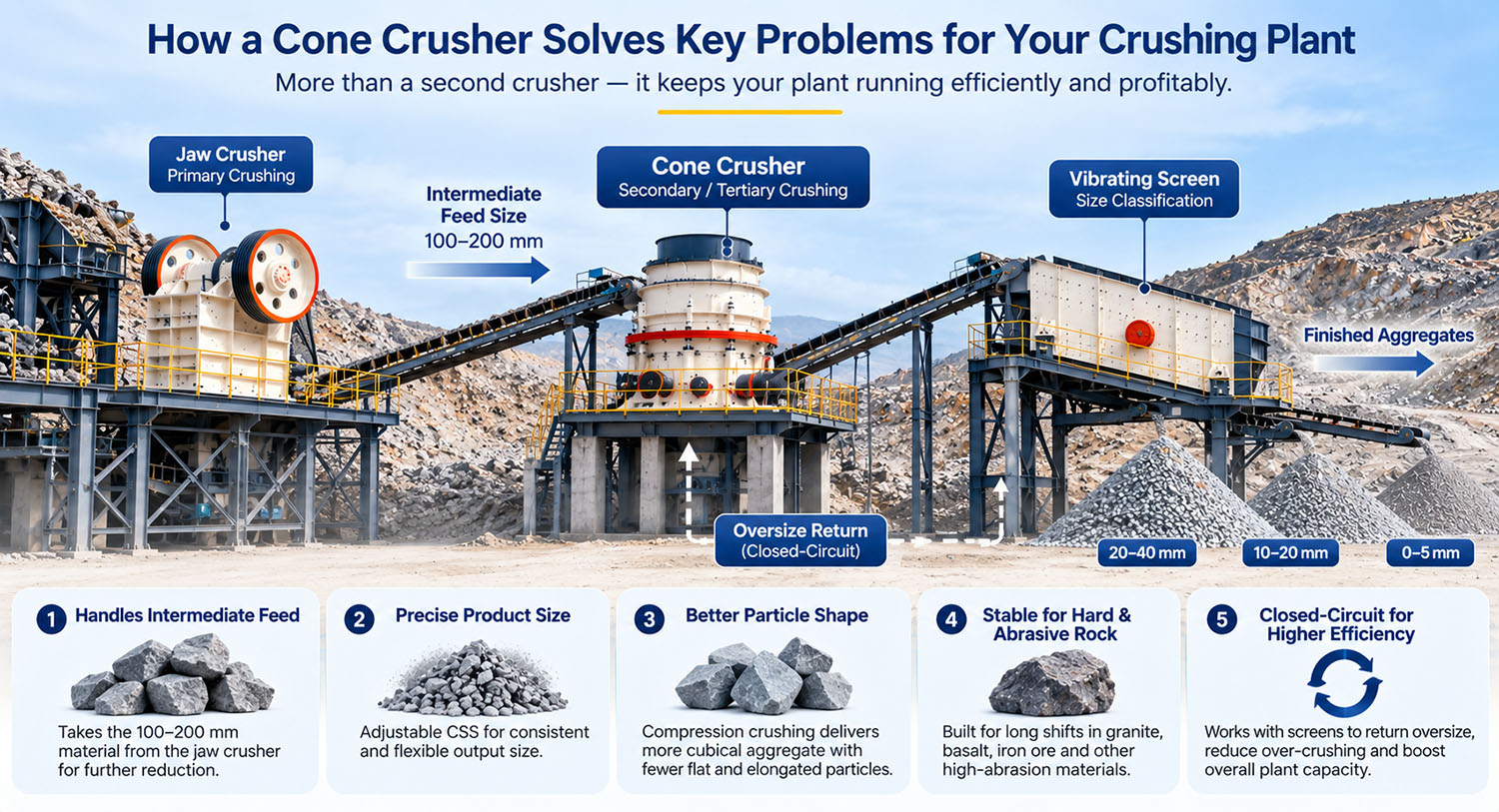
1. It Picks Up Where the Jaw Crusher Leaves Off
Picture a granite quarry where the jaw crusher discharges rock at around 150 mm. This material is far too large to sell as finished aggregate and too coarse to feed directly into a fine screen. Without a next stage, the operator would either need to run the jaw crusher at an impossibly tight setting — which kills its capacity and wears it out fast — or stockpile half-finished material that cannot be sold.
A cone crusher for granite crushing is built to take exactly this 100–200 mm intermediate feed and reduce it further, doing the job the jaw crusher was never designed to do efficiently. This lets the primary and secondary stages each work in the size range they are actually good at, instead of forcing one machine to do a job better suited to two.
2. It Gives the Customer Precise Control Over Final Product Size
Suppose a customer has a contract to supply 20–40 mm aggregate for a specific construction project, and the buyer will reject material outside that spec. A jaw crusher alone cannot deliver this precision — its output naturally varies in a wide range.
A cone crusher with adjustable discharge setting (CSS) lets the operator dial in the closed-side setting to consistently produce material within a narrow band. If the customer switches to a new order requiring 10–20 mm material next month, the discharge setting can be adjusted without replacing the machine, giving the plant flexibility to serve multiple contracts from the same crushing line.
3. It Improves Particle Shape for Concrete and High-Spec Aggregate
Consider a ready-mix concrete producer who rejects a batch of aggregate because too many pieces are flat or elongated ("flaky" or "needle-like"), which weakens concrete strength and increases cement demand. This is a common complaint when aggregate comes only from impact-type crushing.
Because a cone crusher works by compression crushing rather than impact, it tends to produce more cubical particles with fewer flat or elongated pieces. For a customer supplying concrete aggregate or high-spec road base through a stone crushing plant for aggregates, this directly reduces batch rejections and can support a better sale price for the finished product.
4. It Keeps Running Through Long Shifts on Hard, Abrasive Rock
Picture an iron ore operation running two shifts a day as part of a metal ore crushing and dressing line, crushing highly abrasive ore that would rapidly chew through lightweight equipment. If the secondary crusher's wear parts fail every few weeks, the plant loses production time to unplanned liner changes and repairs.
A heavy-duty cone crusher for iron ore and hard rock is designed with wear-resistant mantle and concave liners and a robust crushing chamber to withstand this abrasive duty over long production runs. For the customer, this translates into fewer unplanned stops, more predictable maintenance scheduling, and lower cost per tonne processed over the life of the wear parts.
5. It Works With the Screen to Eliminate Oversize Material Automatically
Imagine an aggregate line where 15% of the material coming off the screen is still oversized. Without a return path, this material would either need manual handling or would end up mixed into the finished stockpile, angering the customer who ordered a specific size.
By running the cone crusher in a closed-circuit crushing and screening system, oversized material from the vibrating screen is automatically conveyed back into the cone crusher for another crushing pass. The customer ends up with a finished stockpile that consistently meets spec, without needing an operator to sort or re-handle oversize rock by hand.
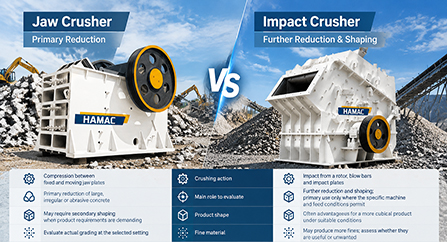
Cone Crusher vs Jaw Crusher vs Impact Crusher
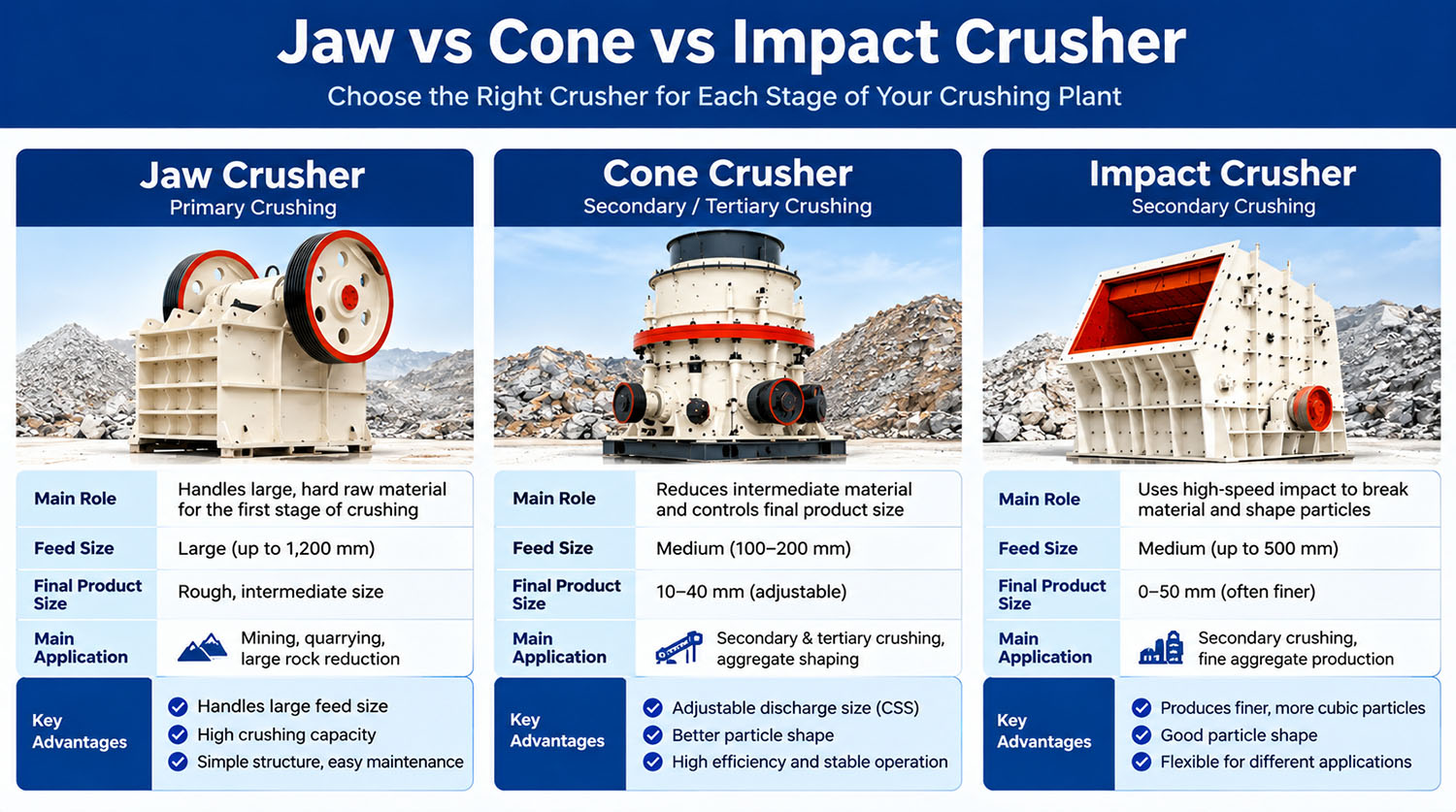
| Equipment | Typical position | Main role | Better suited for | Should not be relied on for |
|---|---|---|---|---|
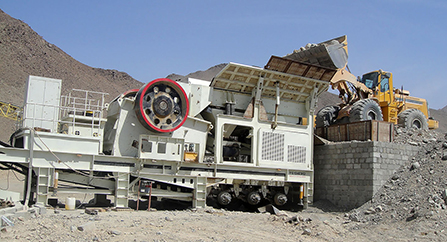
| Jaw crusher | Primary crushing | Receive large rock, initial size reduction | Large, hard, abrasive raw rock straight from blasting or mining | Fine, precisely sized final product |
| Cone crusher | Secondary/tertiary crushing | Medium and fine crushing, precise size control, better shape | Hard rock, high-abrasion material, high-tonnage aggregate and mineral processing lines | Accepting oversized feed straight from blasting |
| Impact crusher | Secondary crushing, sometimes primary | Impact-based crushing, high reduction ratio | Limestone, medium-hardness rock, recycled concrete | High-abrasion hard rock without accepting faster wear-part costs |
Many hard-rock aggregate and mining lines pair a jaw crusher with a cone crusher specifically because the cone crusher's compression action holds up better against abrasive material than impact crushers, while still delivering good particle shape.
How to Choose Between Compound, Symons, HCS and HP Hydraulic Cone Crushers
HAMAC offers four main cone crusher types, each suited to different project scales and material conditions.
| Cone crusher type | Typical project scale | Best suited for | Key advantage |
|---|---|---|---|
| Compound Cone Crusher | Small to medium plants | Medium-hardness material, budget-conscious projects | Simple structure, lower investment cost |
| Symons Cone Crusher | Medium to large plants | Stable, continuous operation on medium-to-hard rock | Proven, widely used design with reliable performance |
| HCS Hydraulic Cone Crusher | Medium to large plants processing hard rock | High-hardness, high-abrasion material | Hydraulic chamber-clearing system reduces downtime from tramp material |
| HP Hydraulic Cone Crusher | Large, high-capacity plants | High-tonnage aggregate and mining operations needing automation | Higher capacity, better automation and consistent product shape |
Customers processing highly abrasive ore or running large-scale aggregate operations often lean toward the HCS or HP hydraulic cone crusher for their chamber protection and higher throughput, while smaller quarries or budget-driven projects may find the Compound or Symons cone crusher a more practical fit.
How Cone Crusher Settings Affect Plant Capacity and Product Quality
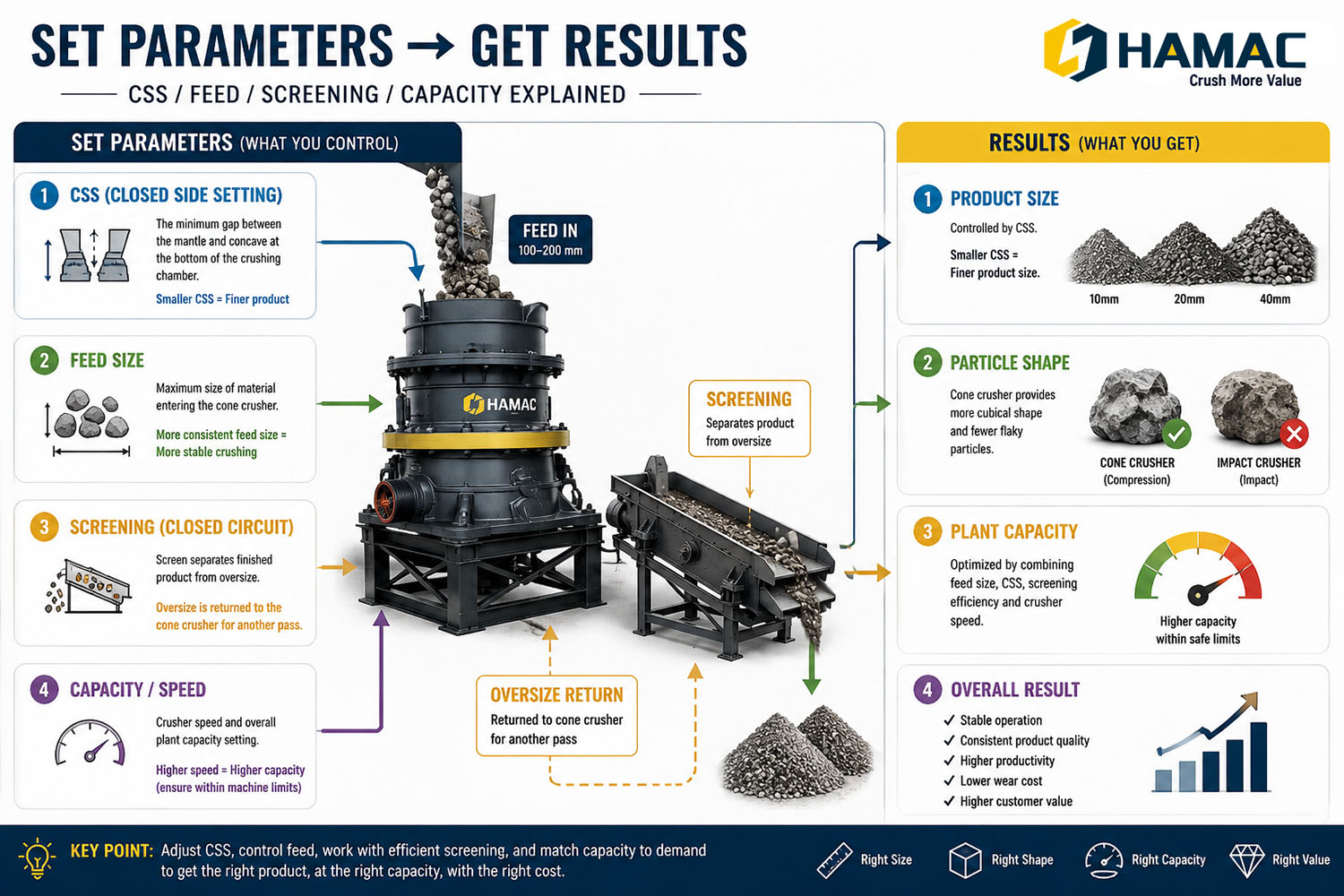
| Factor | Effect on capacity and product quality |
|---|---|
| Feed size vs. cone crusher's rated feed opening | Feed material that is too large or too fine for the chamber design reduces crushing efficiency and can accelerate wear |
| Closed-side setting (CSS) | Tighter setting produces finer, more precise output but lowers throughput and increases wear and power draw |
| Feed distribution | Uneven or one-sided feeding causes uneven liner wear and reduces crusher life |
| Closed-circuit screening | Automatically returns oversize material for another pass, improving product consistency without manual sorting |
| Matching upstream and downstream capacity | If the jaw crusher, cone crusher and screen are not sized to the same target tph, the lowest-capacity stage limits the whole plant's real output |
How to Choose a Cone Crusher by Material Type
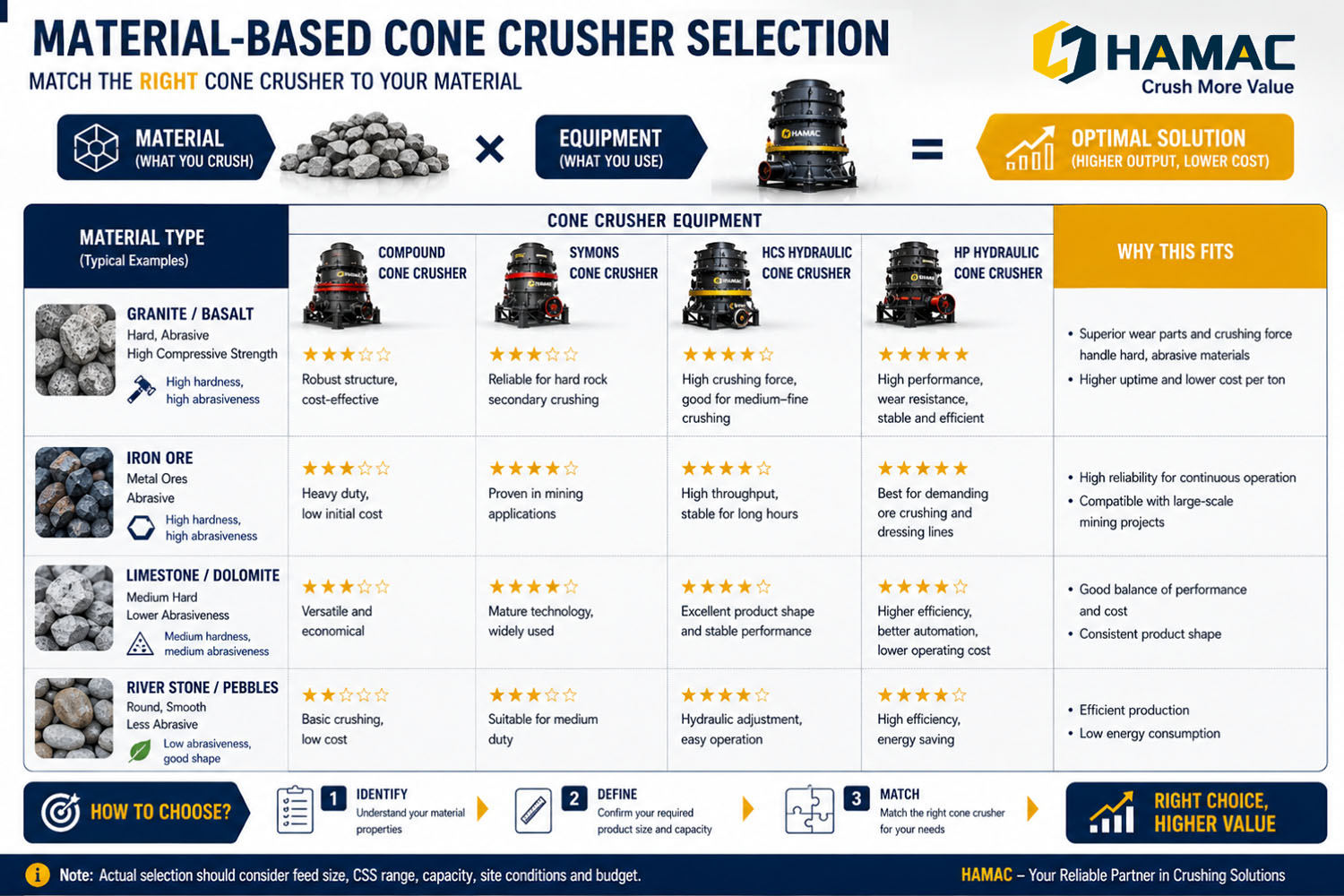
| Material type | Typical operating concern | Selection focus | Recommended cone crusher type |
|---|---|---|---|
| Granite | Hard, abrasive, common secondary crushing material | Wear-resistant liners, adequate CSS range | HCS or HP hydraulic cone crusher |
| Basalt | Hard and abrasive, used for high-strength aggregate | Chamber protection, planned wear-part replacement | HCS hydraulic cone crusher |
| Iron ore | High hardness and abrasiveness, long shift operation | Heavy-duty structure, high-quality wear parts | HP hydraulic cone crusher |
| Limestone | Usually softer, less abrasive | Capacity and cost-efficiency | Compound or Symons cone crusher |
| River stone | Hard and rounded, feed size can vary | Consistent feed distribution, good chamber design | Symons or HCS hydraulic cone crusher |
How to Select the Right Cone Crusher for Your Project: Data to Prepare Before Requesting a Quotation
Before requesting a cone crusher price quotation, prepare the following information so your supplier can recommend the right model instead of an isolated price:
| Data to prepare | Why the supplier needs it |
|---|---|
| Material type (granite, basalt, iron ore, limestone, river stone, etc.) | Determines crusher type, liner material and wear-part specification |
| Feed size coming from the jaw crusher or primary stage | Confirms the cone crusher's feed opening matches the actual upstream output |
| Material hardness, compressive strength and abrasiveness | Affects liner life and cone crusher type selection (Compound, Symons, HCS, HP) |
| Required final product size(s), such as 10-20mm or 20-40mm | Determines the closed-side setting range needed |
| Target capacity in tph and daily working hours | Determines cone crusher size and whether multiple units or stages are needed |
| Whether a closed-circuit screening system is required | Affects overall production line design and screen selection |
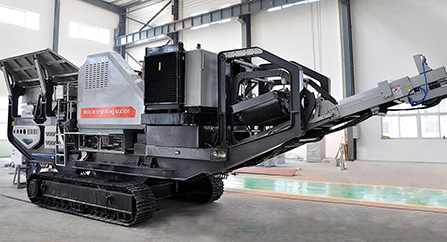
| Stationary or mobile plant preference | Determines the overall equipment format and installation plan |
| Existing equipment already on site (jaw crusher, screen, conveyor) | Ensures the new cone crusher integrates with the current crushing line |
With this information, HAMAC's engineering team can recommend a suitable cone crusher model — Compound, Symons, HCS or HP hydraulic — put together a complete secondary crushing production line design, prepare an equipment configuration list, and issue a project-based quotation. Contact HAMAC to submit your project data and request a customized solution.
Real Project Examples: How Site Conditions Shape Cone Crusher Selection
Cone crusher selection is never one-size-fits-all. The right type, capacity and plant format depend heavily on the raw material being processed, the target output tph, the layout of the site, and the specific region where the plant operates. Three HAMAC project examples below, drawn from our cases of aggregates, show how these variables lead to very different equipment configurations.
Case 1: 250tph Stationary Aggregate Crushing and Screening Plant in South Sudan
This project called for a high-capacity stationary aggregate crushing plant designed to reach 250 tph. In a region like South Sudan, where transport infrastructure and grid power availability can vary significantly by site, a stationary plant layout was chosen to support long-term, continuous production rather than frequent relocation. At this capacity level, the cone crusher stage needed to be sized generously enough that it would not become the bottleneck behind the primary jaw crusher, with the screening circuit designed to keep pace at the same 250 tph target. The project illustrates how a high-tonnage target for a fixed installation pushes the selection toward a heavier-duty cone crusher with strong throughput and reliable long-run performance, rather than a compact or mobile unit.
Case 2: 20t/h Limestone Crushing and Grinding Plant in Tanzania
In contrast, this Tanzania project processed limestone at a much smaller target capacity of 20 t/h, and the plant also included a grinding stage to produce powder rather than stopping at coarse aggregate. Because limestone is generally softer and less abrasive than granite or basalt, the cone crusher selection here could prioritize cost-efficiency and simpler chamber design over heavy-duty wear resistance. The lower capacity requirement also meant a smaller-scale plant footprint was appropriate, avoiding the cost of oversized equipment that a 20 t/h operation would never fully utilize. This case shows how material hardness and a modest capacity target together point toward a more economical cone crusher choice, paired directly with grinding equipment to serve a powder-product market rather than an aggregate market.
Case 3: 250tph Granite Crusher Plant in the Philippines
This project matched the South Sudan plant's 250 tph target but processed granite, a notably harder and more abrasive material than limestone. The combination of high abrasiveness and high required throughput meant the cone crusher stage needed both a wear-resistant chamber design and enough rated capacity to sustain 250 tph without excessive liner replacement frequency. Site conditions in the Philippines, including logistics for transporting large stationary equipment to the location, also factored into how the stone crushing plant for aggregates was configured. This case demonstrates that even at the same target capacity as another project, a harder, more abrasive raw material can shift the cone crusher selection toward a more robust, wear-resistant model to protect uptime and control long-term operating cost.
What These Three Cases Show About Cone Crusher Selection
| Project | Material | Target capacity | Plant format | Key selection driver |
|---|---|---|---|---|
| South Sudan | Mixed aggregate | 250 tph | Stationary crushing and screening plant | High throughput requirement for a fixed, long-term installation |
| Tanzania | Limestone | 20 t/h | Crushing and grinding plant | Softer material and small capacity favor an economical configuration |
| Philippines | Granite | 250 tph | Stationary crusher plant | High abrasiveness at high capacity requires a wear-resistant, heavy-duty cone crusher |
Comparing these three projects side by side makes the underlying logic clear: capacity target alone does not determine the right cone crusher — the South Sudan and Philippines projects share the same 250 tph target, yet the Philippines project's granite feed demands a tougher, more wear-resistant configuration than a softer aggregate mix might need. Likewise, material type alone is not the only factor — the Tanzania project's limestone is comparatively easy to process, but its much lower 20 t/h target is what ultimately justified a smaller, more cost-efficient plant rather than a heavy-duty high-capacity unit. This is why HAMAC's engineering team evaluates material hardness, target tph, plant format and site logistics together for each project rather than recommending a single "standard" cone crusher configuration. View more aggregate crushing case studies or explore metal ore dressing cases for additional project references.
Frequently Asked Questions About Cone Crushers in Crushing Plants
Why does my cone crusher keep choking or blocking?
Common causes include feed material that is too large or too fine for the chamber, uneven feed distribution, an incorrect closed-side setting, or excess moisture and clay causing material to pack in the crushing chamber.
How often do cone crusher liners need to be replaced?
There is no fixed schedule — liner life depends on material abrasiveness, actual tonnage processed, closed-side setting and feed distribution, so it should be tracked through regular wear inspection rather than a calendar.
Can a cone crusher process iron ore or other hard, abrasive ores?
Yes, but high-abrasion ores generally call for a heavy-duty hydraulic cone crusher such as the HCS or HP type, along with a proactive wear-part replacement plan to manage liner costs.
What is the difference between a Symons cone crusher and an HP hydraulic cone crusher?
A Symons cone crusher uses a proven, traditional spring-release design suited to steady medium-to-hard rock operations, while an HP hydraulic cone crusher offers higher capacity, hydraulic overload protection and better automation for large, high-throughput operations.
Does a cone crusher improve the shape of finished aggregate?
Yes. Because cone crushers use compression rather than impact, they generally produce more cubical particles with fewer flat or elongated pieces compared to impact crushers, which is valuable for concrete and road-base aggregate.
A cone crusher is not simply "another crusher" added after the jaw crusher — it is the stage that turns roughly sized primary output into precisely sized, well-shaped finished aggregate or mineral-processing feed. Matching the right cone crusher type to your material, feed size, target product and capacity is what allows a crushing line to consistently deliver saleable, spec-compliant product. Visit the HAMAC homepage to explore our full range of crushing and screening solutions.