



Mobile Crushing Plant: How to Choose the Right Mobile Crusher | HAMAC
Mobile Crushing Plant: When Should You Move the Crusher Instead of the Rock?
Is your quarry face constantly moving forward while your crusher stays exactly where it always has been? In quarry and open-pit mining operations, a stationary crushing plant can run reliably for years, but as the working face advances, the distance between raw material and the crusher tends to grow. That means longer haul distances, more truck cycles, higher fuel and maintenance costs, and a production process that becomes increasingly dependent on transport.
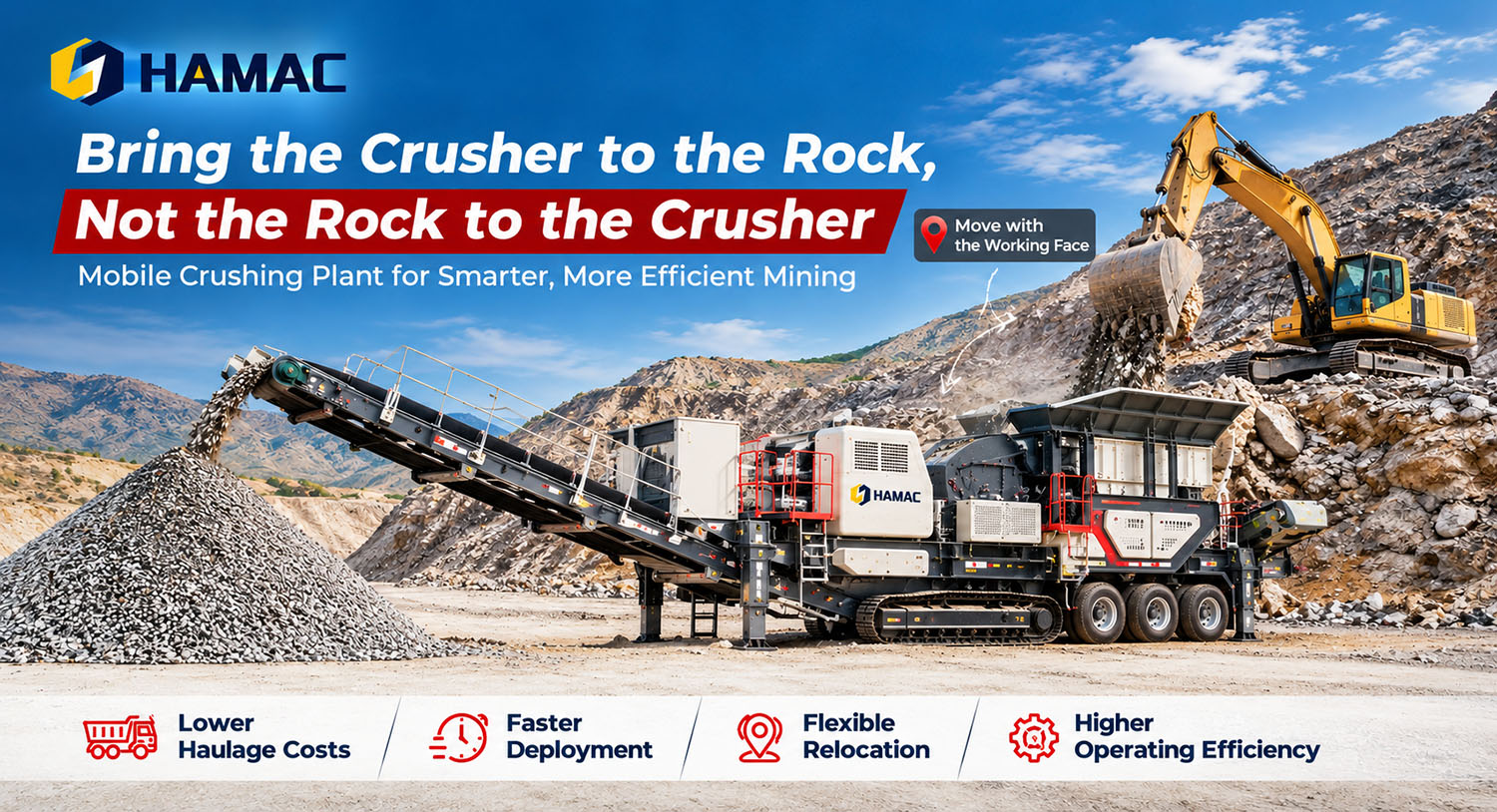
There is often nothing wrong with the crusher itself. What actually changes is the distance between the crusher and the material. That is why more and more mining operations are asking a different question: instead of constantly hauling rock to the crusher, why not bring the crusher to the rock? For sites where the working face keeps shifting, projects that require relocation, mine areas with limited infrastructure, or operations spanning multiple locations, a mobile crushing plant offers a different production model: letting the crushing equipment follow the material and the working area.
How Does Production Change With a Mobile Crushing Plant?
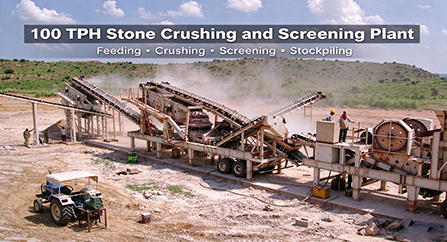
What a mobile crushing plant really changes is not just "the equipment can move" — it changes the entire material handling workflow. Traditional stationary production typically follows: excavation → loading → long-distance haulage → stationary crushing → screening → finished product. A mobile crushing line, on the other hand, moves the crushing step closer to the extraction area: excavation → loading → on-site crushing → screening → finished product. When the crusher can sit next to the raw material, mining operations gain real value in four key areas.
| Value Dimension | Traditional Stationary Crushing | Mobile Crushing Plant |
|---|---|---|
| Haul distance | Keeps increasing as mining advances | Crusher stays close to the working face, cutting haulage significantly |
| Adaptability to a shifting working face | Fixed crusher location, hard to adjust | Can be repositioned to match the production area |
| Infrastructure dependence | Requires piling, civil works, electrical installation and commissioning | Reduces dependence on permanent site construction |
| Multi-site / multi-project utilization | Fixed to a single site, limiting utilization | Can be relocated between Project A, Project B, Project C |
1. Move Closer to the Material, Cut Unnecessary Haulage
This is the most direct benefit of a mobile crushing plant. When the crusher can be positioned next to the quarry face, operators avoid hauling large volumes of unprocessed rock over long distances. Once material is crushed, its volume and size change, allowing downstream transport and handling to be adjusted accordingly — making the whole production process more efficient by removing unnecessary haulage.
2. Adapt to a Constantly Changing Working Face
A quarry is never a fixed production area. As mining advances, the working face moves, the location of raw material changes, and the optimal crushing position may shift as well. A mobile crushing plant can be repositioned to match the production area, so the layout no longer has to revolve around a crusher permanently fixed in one spot.
3. Reduce Dependence on Permanent Infrastructure
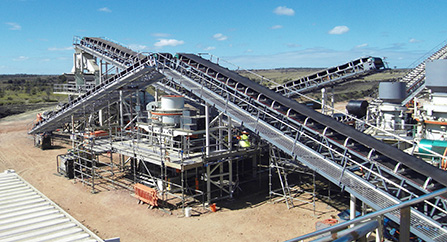
Stationary crushing plants usually require foundation construction, civil works, equipment installation, electrical connection, and commissioning. For long-term operations, this investment may be justified. But for temporary mine sites, short-term projects, road construction projects, remote mining sites, or contract work requiring frequent relocation, heavy permanent infrastructure may not be the optimal choice. A mobile crushing plant integrates crushing, screening, and conveying equipment into a mobile system, reducing reliance on any single fixed site.
4. One Machine, Multiple Projects
For crushing contractors and companies operating multiple mine sites, equipment utilization is a critical concern. A mobile crushing plant can be relocated according to project needs — from Project A to Project B to Project C. For operations running multiple mine sites, or equipment that needs to follow ongoing construction work, mobility is no longer just a feature — it can directly affect equipment utilization and return on investment.
Which Projects Are Best Suited for a Mobile Crushing Plant?
A mobile crushing plant is not necessarily the right choice for every mine. It is best suited for projects where the production location changes, relocation is required, or haul distance is becoming a growing problem.
1. Quarries With an Advancing Working Face
This is the most typical application for mobile crushing plants. If the crusher keeps getting farther from the working face, haul distances will keep increasing. A mobile crushing plant can be repositioned along with the mining area, keeping the crusher close to the material.
2. Remote Mines and Sites With Limited Infrastructure
Remote mining sites often face limited road access, insufficient power infrastructure, difficult site construction, and high permanent civil works costs. In these cases, a flexible mobile production setup reduces dependence on fixed production facilities. HAMAC mobile crushing equipment can process granite, basalt, limestone, marble, iron ore, copper ore, and other materials, covering applications in mining, aggregate production, road and railway construction (HAMAC Mobile Jaw Crusher Plant).
3. Road, Railway, and Infrastructure Construction Projects
Road and railway projects are inherently project-based. As construction progresses, the work zone shifts and the location where aggregate is needed can change too. A mobile crushing plant can be repositioned along with the construction zone, keeping production closer to actual site demand.
4. Crushing Contractors
For contractors, the key question is: what happens to the equipment once a project ends? If equipment is fixed to one location, its range of application is limited. A mobile crushing plant can instead be relocated to a new production site — a valuable flexibility for companies serving multiple projects.
5. Temporary or Short-Term Crushing Projects
If a project has a limited production cycle, building a full permanent crushing infrastructure may require excessive time and capital. A mobile crushing plant allows equipment to be deployed around the project instead, with a focus on fast deployment, flexible relocation, and on-site production.
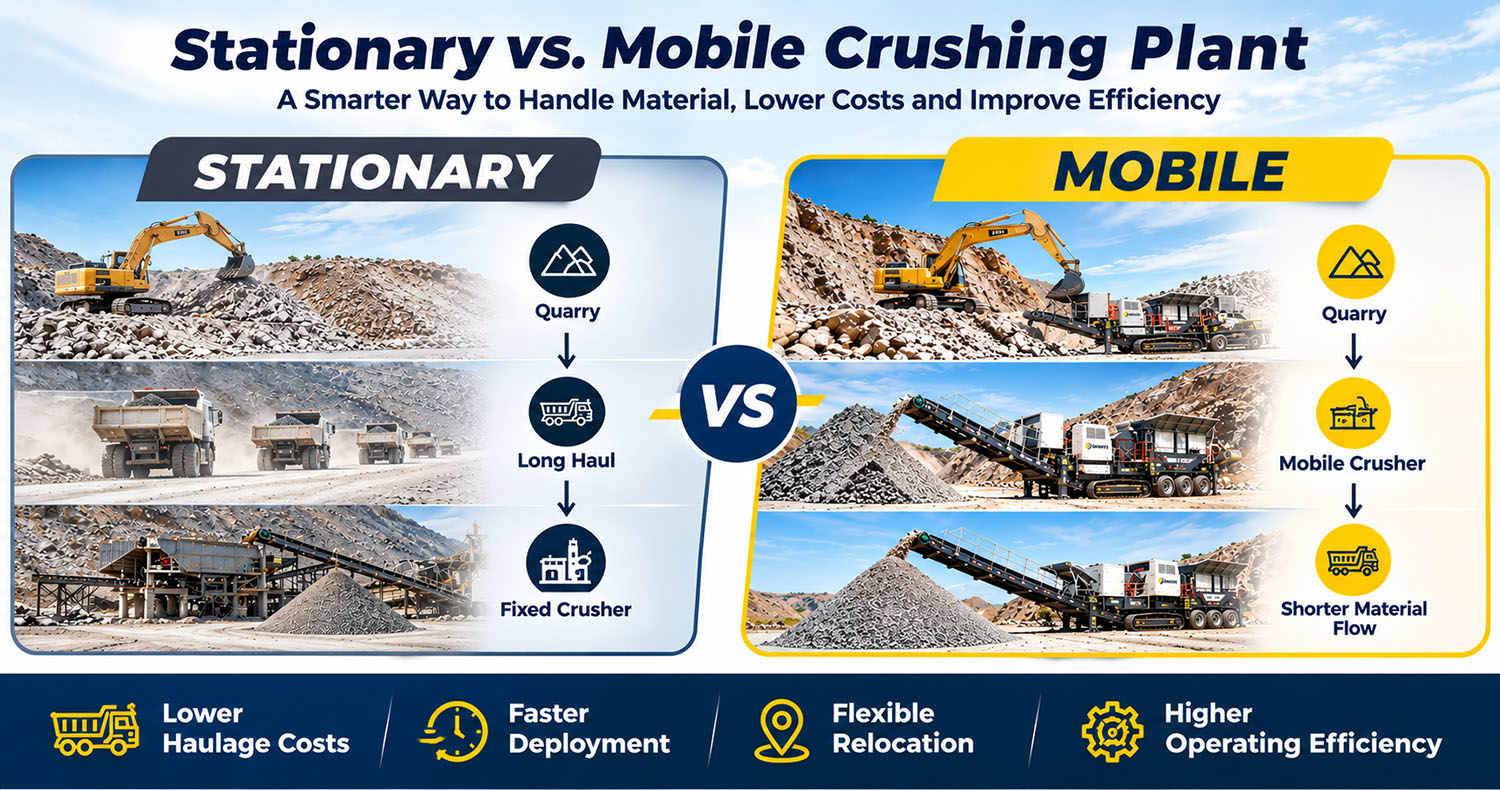
A mobile crushing plant is not superior to a stationary one in every scenario. What matters is: which type of equipment better fits your production model?
| Project Characteristics | Recommended Solution |
|---|---|
| Quarry face constantly changing, haul distance keeps increasing | Mobile Crushing Plant |
| Multiple mine sites, equipment needs frequent relocation | Mobile Crushing Plant |
| Short project cycle, remote mine site, limited on-site infrastructure | Mobile Crushing Plant |
| Long-term stable raw material source, production location fixed | Stationary Crushing Line |
| Very high long-term output required, permanent infrastructure already in place | Stationary Crushing Line |
So the best crushing equipment is not necessarily the biggest machine, nor the one with the highest power rating — it should be the one that best matches your site conditions, production model, and material transport method.
How to Choose the Right Mobile Crushing Plant
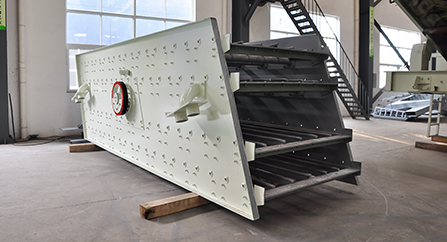
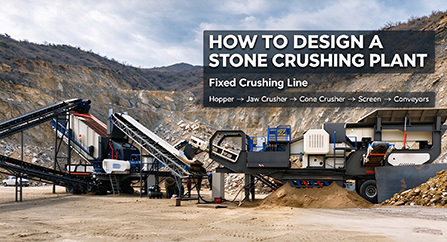
When we talk about a "mobile crushing plant," we are not referring to a single standard machine. Different materials, feed sizes, output requirements, and finished product specifications call for different crushing solutions. HAMAC's mobile crushing product line covers mobile jaw crusher plants, mobile impact crusher plants, mobile cone crusher plants, mobile 4-in-1 crushing and screening plants, tracked mobile crushing plants, and mobile screening equipment — which can be combined into different crushing production flows depending on project needs.
Choosing the Right Type of Mobile Crusher
| Equipment Type | Process Stage | Best Suited For | Product Page |
|---|---|---|---|
| Mobile Jaw Crusher Plant | Primary crushing | Initial crushing of large raw material, aggregate/road/railway projects | View Details |
| Mobile Impact Crusher Plant | Primary, secondary, and tertiary crushing | Projects that also require good aggregate particle shape and gradation | View Details |
| Mobile Cone Crusher Plant | Secondary and tertiary crushing | Hard rock and multi-stage crushing operations | View Details |
| Mobile 4-in-1 Crushing and Screening Plant | Feeding + primary crushing + secondary crushing + screening + conveying | Small-to-medium projects, reference output around 40-100 t/h | View Details |
Mobile Jaw Crusher Plant: A Reliable Choice for Primary Crushing
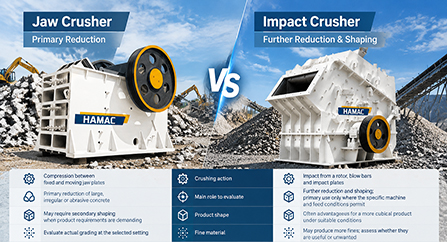
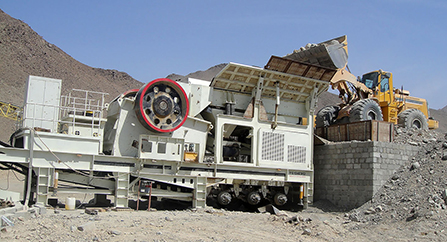
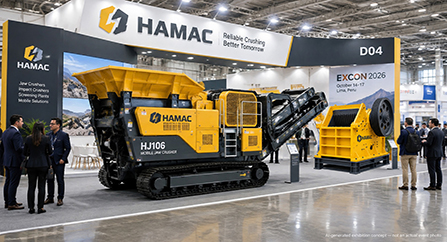
A mobile jaw crusher plant is designed for primary crushing tasks, mainly used to break down large raw material for further processing. If your feed material is large and needs to be reduced to a manageable size first, a mobile jaw crusher plant is typically the essential first step in the production flow. HAMAC mobile jaw crusher plants can be used on various rocks and ores, suitable for aggregate, road, and railway projects (HAMAC Mobile Jaw Crusher).
Mobile Impact Crusher Plant: Balancing Crushing Power and Product Shape
A mobile impact crusher plant is suitable for primary, secondary, and tertiary crushing, and can also help achieve the desired final aggregate shape in certain aggregate production applications. If a customer cares not only about crushing capacity but also about final product shape and gradation, an impact crushing solution is worth considering. HAMAC offers mobile impact crusher plants that can be configured with a screening system according to project requirements (HAMAC Mobile Impact Crusher).
Mobile Cone Crusher Plant: A Multi-Stage Solution for Hard Rock
For hard rock and projects that require further fine crushing, a mobile cone crusher plant is worth considering. HAMAC mobile cone crusher plants can be configured for different production needs and combined with screening and other crushing equipment (HAMAC Mobile Cone Crusher).
Mobile 4-in-1 Crushing and Screening Plant: An All-in-One Integrated Solution
If a project needs to reduce the number of separate on-site machines, an integrated mobile crushing and screening solution is worth considering. HAMAC's mobile 4-in-1 crushing and screening plant integrates feeding, primary crushing, secondary crushing, screening, and conveying into one mobile system, with a reference output of approximately 40-100 t/h depending on configuration (HAMAC Mobile 4-in-1 Crushing and Screening Plant). For small-to-medium projects or customers who need to set up a mobile production system quickly, this integrated solution reduces on-site equipment layout complexity.
Tracked Mobile Crushing Plant or Wheeled Mobile Crushing Plant?
Beyond crushing equipment type, choosing a mobile crushing plant also requires considering how the equipment needs to move.
| Type | Best Suited For | Mobility Method |
|---|---|---|
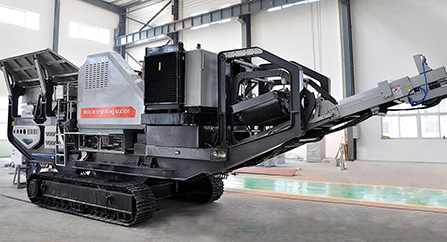
| Tracked Mobile Crushing Plant | Quarry working faces, mountainous and complex terrain, uneven ground, projects requiring frequent repositioning, remote mines | Self-propelled track chassis for flexible on-site movement |
| Wheeled Mobile Crushing Plant | Good road conditions, transport and relocation between different projects | Towed trailer configuration, suitable for road transport |
HAMAC's tracked mobile crushing products cover jaw, impact, and cone crusher configurations (HAMAC Tracked Crushing Plants), while the wheeled product line offers wheeled mobile jaw, impact, cone crushers and 4-in-1 crushing and screening equipment (HAMAC Mobile Crushing Plants). Choosing between tracked and wheeled is not simply about which is "better" — it requires weighing terrain, road conditions, relocation frequency, transport method, production capacity, and material characteristics together.
HAMAC: A Crushing Solution Designed Around Your Mine
No two quarry or mining projects are exactly the same.
Material type, hardness, feed size, capacity, final product requirements, terrain, infrastructure and relocation frequency can all influence the equipment configuration.
HAMAC provides a complete range of crushing and screening solutions, including:
- Mobile Jaw Crusher Plants
- Mobile Impact Crusher Plants
- Mobile Cone Crusher Plants
- Mobile 4-in-1 Crushing and Screening Plants
- Tracked Mobile Crushing Plants
- Stationary Crushing Plants
- Modular Crushing Plants
- Vibrating Screens
- Vibrating Feeders
- Belt Conveyors
Whether you are developing a quarry, mining project, aggregate production site, road construction project or temporary crushing operation, HAMAC can help evaluate the appropriate crushing configuration based on your actual working conditions.
To discuss your project, prepare the following information:
- Material to be crushed
- Maximum feed size
- Required production capacity
- Required final product sizes
- Number of final aggregate products
- Site terrain and access conditions
- Expected relocation frequency
Based on these factors, the right solution may be a mobile or stationary plant, tracked or wheeled equipment, a jaw, impact or cone crusher, or a complete mobile crushing and screening system.
HAMAC doesn't start with a machine model. We start with your mine.
Frequently Asked Questions (FAQ)
Is a mobile crushing plant cheaper than a stationary crushing plant?
It depends on project duration and site conditions. For short-term projects, multi-site operations, or sites with limited infrastructure, a mobile crushing plant can save on civil works and haulage costs. For long-term, high-volume operations at a single fixed site, a stationary crushing line may offer lower unit production costs.
What materials can a mobile crushing plant process?
HAMAC mobile crushing equipment can process granite, basalt, limestone, marble, iron ore, copper ore, and other rocks and metal ores, widely used in mining, aggregate production, road, and railway construction.
What is the output of a mobile 4-in-1 crushing and screening plant?
HAMAC's mobile 4-in-1 crushing and screening plant has a reference output of approximately 40-100 tons per hour, depending on material characteristics, feed size, and equipment configuration.
What kind of mine site is a tracked mobile crushing plant suited for?
A tracked mobile crushing plant is best suited for mountainous areas, complex terrain, uneven ground, and quarries or remote mine sites that require frequent repositioning within the site.
Should You Buy a Mobile Crushing Plant?
The real question to ask is: will bringing the crusher closer to the material make your entire production process more efficient? If your quarry face keeps advancing, if your haul distance keeps increasing, if you operate multiple mine sites, if your project requires frequent relocation, or if your mine site is far from established infrastructure — a mobile crushing plant may be more than just "a crusher that can move." It may change your entire production layout, letting the equipment follow the production area instead of hauling large volumes of rock long distances to a fixed machine.