





Jaw Crusher Troubleshooting Guide: Common Problems, Safe Checks & Maintenance | HAMAC
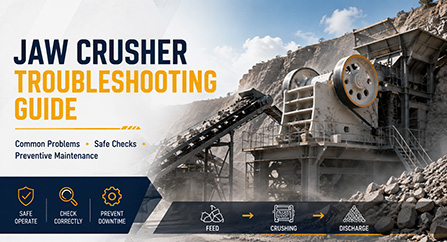
Jaw crusher problems often appear first as lower production output, material blockage, excessive vibration, abnormal noise, bearing overheating or uneven jaw plate wear. These symptoms can be caused by the crusher itself, but they can also come from feeding, material characteristics, discharge flow, screening, conveying or incorrect operating conditions.
This guide helps operators, maintenance teams, quarry managers and crushing plant owners identify likely causes, perform safe first checks and decide when qualified technical service is required. It is designed for fixed jaw crushers, mobile jaw crushers and jaw crushers used in quarry, mining, aggregate, road construction and recycling applications.
HAMAC jaw crushers are commonly used as primary crushers for limestone, granite, basalt, marble, iron ore, copper ore and other materials. The HAMAC PE Series covers reference capacities from approximately 10 to 1000 TPH, depending on model and operating conditions, with maximum feeding sizes from approximately 125 mm to 1020 mm. Actual output always depends on material properties, feed size distribution, closed side setting (CSS), feeding stability, wear condition and downstream equipment capacity.
This is a troubleshooting guide, not a replacement for the equipment-specific operation manual. Always follow the applicable HAMAC manual, local regulations, site lockout/tagout procedures and instructions from qualified personnel before inspection, adjustment, cleaning or maintenance.
1. How to Use This Jaw Crusher Troubleshooting Guide
Use this guide in a structured sequence. Start by identifying the visible symptom, confirm whether the crusher must be stopped immediately, inspect the complete material-flow process and then compare current operating data with the machine’s normal baseline.
| Step | What to Do | Why It Matters |
|---|---|---|
| 1. Identify the symptom | Confirm whether the main issue is low output, blockage, vibration, abnormal noise, overheating, wear or drive trouble. | Different symptoms require different checks and should not be treated as the same problem. |
| 2. Stop safely when required | Shut down, isolate energy sources and wait for all movement to stop before inspection. | Never inspect inside the chamber, under guards or around moving parts while the crusher is energized. |
| 3. Check the complete process | Inspect feeding, crushing chamber, discharge conveyor, screen and stockpile area. | The actual bottleneck may be upstream or downstream, not inside the jaw crusher. |
| 4. Compare against normal operating data | Compare actual TPH, motor load, bearing-temperature trend, CSS, product size and wear condition with normal baseline data. | Trend changes are often more useful than one isolated reading. |
| 5. Correct the root cause | Do not simply replace a part without checking why the failure occurred. | Repeated failures may indicate feed, setting, material-flow, installation or operating problems. |
| 6. Escalate when necessary | Contact qualified technicians for structural, bearing, electrical, hydraulic, flywheel, drive or repeated-failure problems. | Early technical support can prevent secondary damage and extended downtime. |
2. Safety First: When to Stop the Crusher Immediately
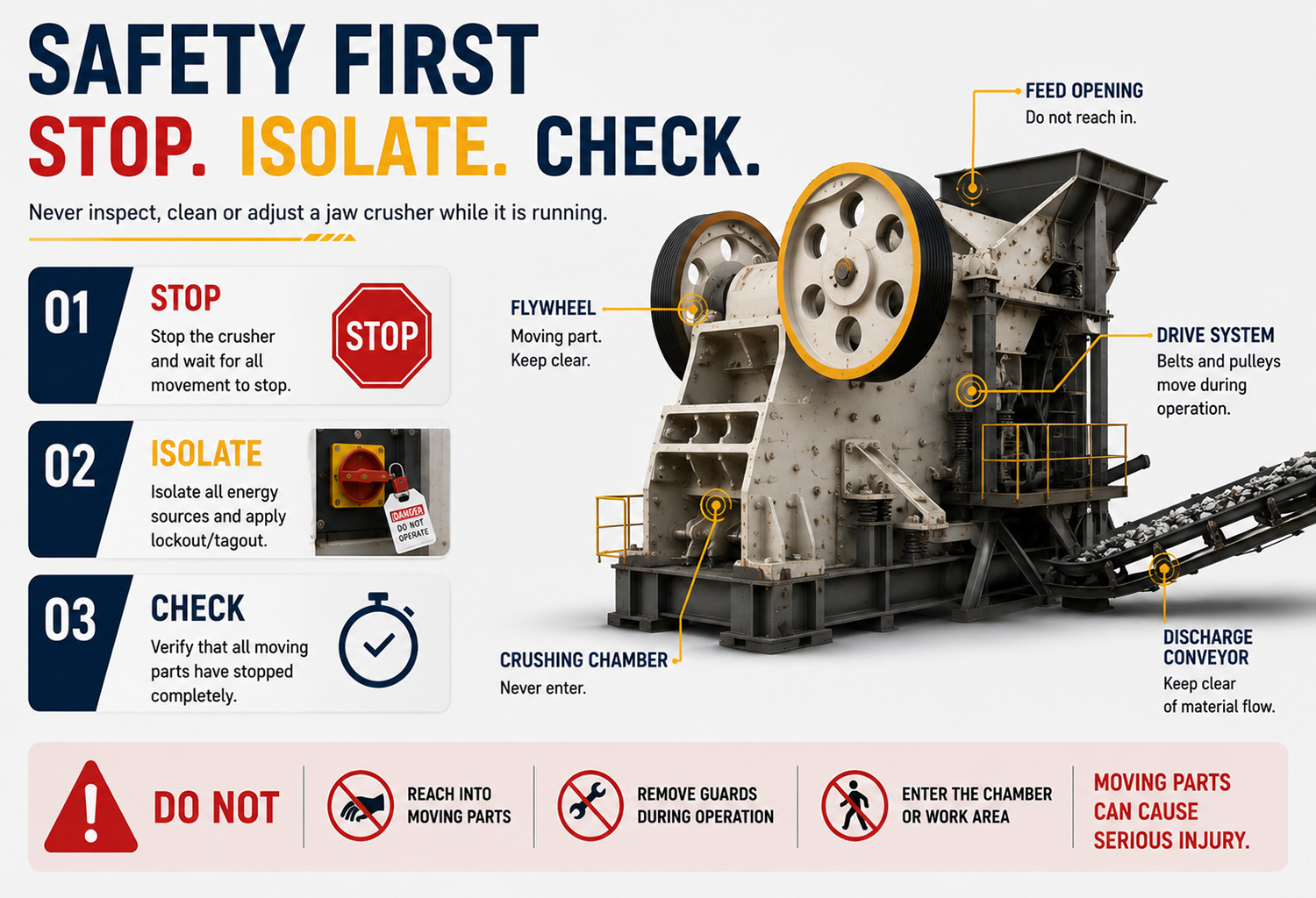 Stop the jaw crusher and follow your site shutdown and isolation procedures if you observe persistent abnormal noise, sudden severe vibration, smoke, burning smell, visible cracks, damaged guards, damaged flywheels, repeated overload trips, suspected bearing damage, broken toggle components, belt failure, trapped uncrushable material or a blocked crushing chamber that cannot be safely cleared.
Before inspection or maintenance, isolate electrical and mechanical energy sources according to your site lockout/tagout procedure. Wait until the crusher, flywheels, belts, feeder and conveyors have stopped completely. Do not enter the crushing chamber, reach through feed or discharge openings, remove guards during operation or use unapproved lifting methods for jaw plates and heavy components.
Only qualified personnel should perform electrical repairs, bearing replacement, welding, structural repairs, hydraulic work, drive-system adjustments or work involving heavy lifting. Always restore guards, fasteners, safety devices and access covers before restart.
For maintenance safety, consult the OSHA Control of Hazardous Energy (Lockout/Tagout) standard. It addresses servicing and maintenance work where unexpected energization, startup or release of stored energy could result in injury.
For quarry and mobile crushing operations, the UK Health and Safety Executive provides useful guidance on machinery guarding and isolation in quarries. It highlights the importance of lockable isolation points, safe guards around moving parts and inspection of protection devices after mobile crushing equipment is relocated.
3. Quick Jaw Crusher Troubleshooting Table
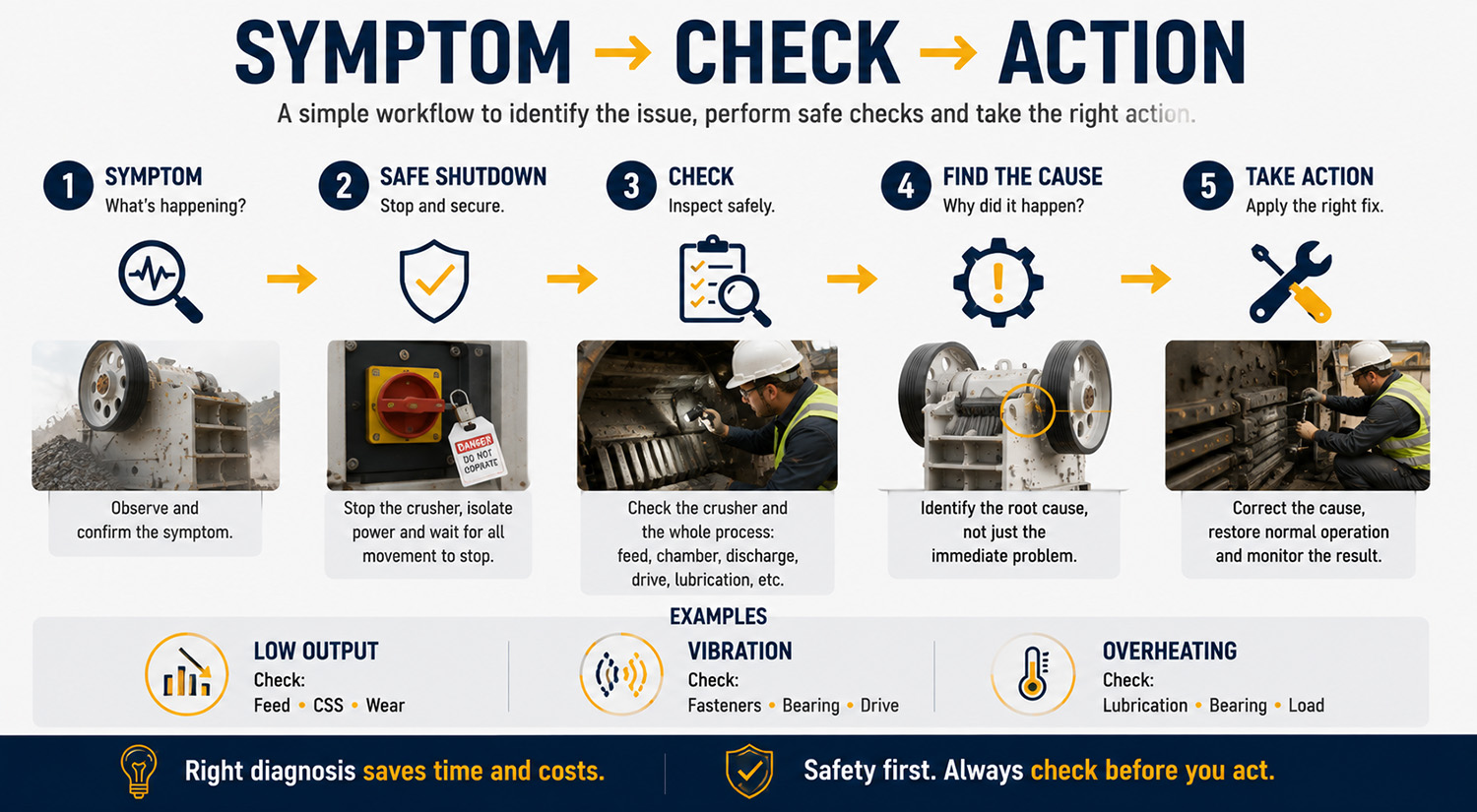
The table below provides a quick starting point for common jaw crusher problems. It does not replace the model-specific maintenance manual, but it helps identify whether the issue is likely related to material flow, crusher settings, wear parts, lubrication, drive components or downstream equipment.
| Symptom | Likely Causes | Safe First Checks | Recommended Next Action |
|---|---|---|---|
| Low production output | Uneven feed, oversized material, worn jaw plates, unsuitable CSS, excessive fines, blocked discharge or downstream bottleneck | Check feed distribution, maximum feed size, jaw plate profile, CSS, conveyor loading and screen flow after safe shutdown | Correct feed control, inspect wear parts, review CSS according to the manual and remove downstream restrictions |
| Oversized discharge product | CSS too wide, worn lower jaw plate profile, jaw plate damage or incorrect crusher setting | Measure or verify CSS according to the applicable manual and inspect jaw plate profile | Adjust the setting only using approved procedures; plan jaw plate replacement if wear is confirmed |
| Material blockage or choking | Oversized feed, wet or sticky material, high clay content, excessive fines, excessive feed rate or restricted discharge | Inspect the complete material path: hopper, feeder, chamber, discharge conveyor, screen and stockpile | Improve feed preparation, consider pre-screening, control feed rate and eliminate discharge restrictions |
| Excessive vibration | Loose fasteners, support or chassis problem, bearing wear, flywheel buildup, feed imbalance or structural damage | Inspect fasteners, supports, flywheels, guards, feed pattern and visible cracks after shutdown | Do not restart if vibration is severe or unexplained; arrange qualified inspection for persistent vibration |
| Abnormal knocking or rattling noise | Loose components, toggle issue, foreign material, worn bearing, damaged jaw plate, flywheel or drive issue | Identify when the noise occurs: empty running, feeding, high load or shutdown; inspect safely | Stop operation if noise persists; investigate root cause before returning to production |
| Bearing overheating | Incorrect or contaminated lubricant, over-lubrication, under-lubrication, bearing wear, misalignment, excessive belt load or poor cooling | Check temperature trend, lubrication condition, leaks, grease contamination, belts and abnormal noise | Follow the model-specific lubrication manual; contact qualified service personnel if temperature continues rising or noise is present |
| Uneven jaw plate wear | Off-center feed, uneven feed distribution, unsuitable plate profile, incorrect CSS or material variation | Inspect wear pattern on both plates, cheek plates and feed distribution | Improve material centering, review plate selection and schedule rotation or replacement as applicable |
| Toggle plate damage or repeated failure | Tramp metal, uncrushable material, overload, oversized feed, incorrect operating condition or related component damage | Inspect chamber, feeder, feed source and associated toggle-seat or tension components after isolation | Correct the root cause before replacing parts; repeated failures require a broader technical review |
| Drive belt slipping or cracking | Incorrect belt tension, worn belts, pulley misalignment, contamination, overload or damaged guard arrangement | Inspect belts, pulleys, guards and alignment after shutdown | Adjust or replace only according to equipment instructions; investigate overload if the problem recurs |
| Excessive dust | Dust suppression inactive, dry fines, poor transfer-point sealing, damaged covers or housekeeping issue | Inspect spray system, water supply, covers, seals and transfer points | Restore dust-control equipment and improve containment at feed and discharge points |
| Frequent overload or motor trip | Overfeeding, tight CSS, difficult material, blockage, feed surges, downstream restriction or power issue | Check feed rate, material size, CSS, motor-load trend and discharge flow | Reduce the overload cause; do not repeatedly restart without identifying the reason for the trip |
4. Troubleshooting Low Jaw Crusher Production Output
Low production output is one of the most common jaw crusher complaints. Before assuming that the crusher is too small or mechanically damaged, check the complete process from the raw-material stockpile to the final discharge point.
A jaw crusher may be rated for a certain capacity range, but actual TPH depends on material characteristics and process conditions. HAMAC PE Series jaw crushers include compact models such as PEX250×750, with a reference capacity of approximately 13–35 T/H, medium models such as PE400×600, with a reference capacity of approximately 16–60 T/H, PE600×900 with approximately 50–180 T/H, PE750×1060 with approximately 110–320 T/H, and larger models such as PE1200×1500 with approximately 400–800 T/H.
These are reference capacity ranges only. Actual output depends on feed size distribution, hardness, abrasiveness, moisture, clay content, CSS, feed stability, jaw plate condition, power availability and downstream equipment capacity.
4.1 Check Feed Rate and Feed Distribution
Jaw crushers generally perform more consistently when the chamber receives a stable and evenly distributed feed. Large surges followed by empty running can cause fluctuating output, overload events, uneven jaw plate wear and unstable downstream flow.
After safe shutdown, inspect whether material is being centered over the chamber or repeatedly entering one side. Also check whether the feeder is matched to crusher capacity and whether the hopper shape encourages bridging or uneven discharge.
4.2 Check Maximum Feed Size
Oversized rock can bridge at the feed opening, reduce effective crushing time, create overload conditions and cause repeated stoppages. The maximum feed size should always be checked against the crusher model and the actual largest occasional rock, not only the average feed size.
For reference, HAMAC PE Series models list maximum feeding sizes from approximately 210 mm for PEX250×750 and PEX250×1000 models, to 340 mm for PE400×600, 500 mm for PE600×900, 630 mm for PE750×1060, 780 mm for PE900×1200 and 1020 mm for PE1200×1500. Confirm the applicable values in the equipment documents for your actual model before operation or adjustment.
4.3 Check the Closed Side Setting (CSS)
A tighter CSS generally produces a finer discharge size but can reduce throughput and increase crushing load and wear. A wider CSS can increase throughput but may produce a coarser product that the secondary crusher or screen cannot accept efficiently.
Do not change CSS based only on the desired product size. Review the feed material, downstream equipment, product specification and equipment manual. If the setting has drifted due to wear or incorrect adjustment, the jaw crusher may appear to have a capacity problem when the actual issue is product-size control.
4.4 Inspect Jaw Plate and Cheek Plate Wear
Worn jaw plates can reduce gripping action, change the crushing chamber profile, increase material slippage and reduce effective reduction. Uneven wear often points to off-center feeding, uneven material distribution, unsuitable jaw plate profile or changing feed conditions.
HAMAC’s jaw plate maintenance guidance uses a sustained throughput reduction of approximately 15–20%, under comparable feed and CSS conditions, as a practical trigger to inspect plate profile and plan replacement when wear is confirmed. This is an inspection indicator only; replacement decisions should also consider actual remaining thickness, cracks, chipped teeth, plate fitment and the specific equipment manual.
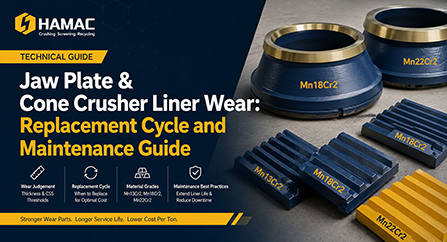
Read HAMAC’s Jaw Plate and Cone Crusher Liner Wear Replacement Cycle and Maintenance Guide.
4.5 Check for Excessive Fines and Downstream Bottlenecks
Fine material, soil or clay entering the chamber may use crushing capacity without adding useful reduction work. Depending on the material and process, a feeder grizzly or pre-screening arrangement may help remove fines before they reach the jaw crusher.
Also inspect the discharge conveyor, transfer chutes, screen and stockpile area. If the jaw crusher produces more material than the conveyor, screen or stockpile can accept, the entire plant may be limited by the downstream bottleneck.
5. Troubleshooting Material Blockage and Jaw Crusher Choking
Jaw crusher blockage, choking and material bridging can begin at several points: the hopper, feeder, crushing chamber, discharge opening, discharge conveyor, screen or stockpile area. A safe inspection should follow the full material path rather than focusing only on the crusher chamber.
5.1 Oversized Material and Irregular Feed
Large irregular rock may bridge across the feed opening or become trapped in a position that prevents normal crushing. The risk increases when the largest feed pieces approach or exceed the machine’s permitted feed limit, or when a loader feeds large material in sudden batches instead of maintaining a controlled feed bed.
Review blast fragmentation, excavator or loader practice, hopper design and feeder grizzly selection. If oversize is frequent, the problem may need to be corrected before the jaw crusher, not inside it.
5.2 Wet, Sticky or Clay-Rich Material
Wet material, high moisture content and clay contamination can reduce material flow, cause buildup in the chamber or discharge chute, and affect screening efficiency. In these conditions, production may decline even when the crusher itself is mechanically sound.
Consider whether feed preparation, scalping, pre-screening, grizzly separation, water management or a different process arrangement is needed. Never attempt to remove material from a chamber or chute until the equipment is fully stopped, isolated and confirmed safe for access according to site procedures.
5.3 Excessive Fine Material
Excessive fines can reduce effective crusher capacity, contribute to packing and buildup, and overload downstream screens or conveyors. When natural fines, soil or clay are present, evaluate whether removing part of the fine fraction before primary crushing would improve overall plant performance.
5.4 Restricted Discharge Flow
A blocked or overloaded discharge conveyor can cause material to build up beneath the crusher. This can lead to reduced output, recirculation, overload trips and unsafe cleanup conditions. Inspect belt tracking, transfer chutes, product stockpile height, conveyor speed and downstream screen capacity.
6. Troubleshooting Excessive Vibration and Abnormal Noise
Persistent vibration, knocking, rattling or unusual mechanical noise should never be treated as a normal condition. These symptoms can indicate loose fasteners, worn bearings, damaged or loose components, flywheel imbalance, foreign material in the chamber, toggle-system problems, drive-system issues or structural damage.
6.1 Identify When the Noise Occurs
Record whether the noise occurs during empty running, when material enters the chamber, under high load, during shutdown or only after the machine has warmed up. This information helps distinguish between feed-related issues, mechanical issues and temperature-related issues.
6.2 Check Fasteners, Guards and Supports
After complete shutdown and isolation, inspect accessible fasteners, guards, support structures, mounting points, feeder connections and conveyor interfaces. Loose bolts, damaged guards and loose supports can create vibration and noise, but repeated loosening may also indicate a larger alignment or structural problem.
6.3 Check Flywheels and Drive Components
Material buildup on flywheels, damaged belt guards, belt misalignment, pulley issues or unusual flywheel movement can contribute to vibration and drive problems. Do not remove guards or inspect rotating components while the machine is operating.
6.4 Check Toggle Components and the Crushing Chamber
A toggle plate, toggle seat, tension rod or related component can create unusual noise if damaged, misaligned or affected by overload. Foreign metal, uncrushable material or damaged jaw plates can also produce abnormal sounds inside the chamber.
If knocking is persistent, vibration suddenly increases, a crack is visible or the machine has suffered an overload event, stop the crusher and arrange qualified inspection before restart.
7. Jaw Crusher Bearing Overheating and Lubrication Problems
Jaw crusher bearing overheating can be caused by lubrication problems, grease contamination, incorrect grease quantity, bearing wear, misalignment, excessive drive-belt loading, dust ingress, water ingress or operating conditions that differ from the machine’s normal baseline.
Do not judge a bearing problem from one temperature reading alone. Compare the current temperature with normal operating trends for the same machine, material, feed rate, ambient condition and operating period. A sudden temperature increase, a large difference between comparable positions, burnt odor, grease leakage, grease contamination, abnormal noise or vibration should be investigated.
7.1 Lubrication Quantity and Lubricant Condition
Both insufficient lubrication and excessive lubrication can create problems. Insufficient lubricant may increase friction and wear; excessive lubricant can increase churning, temperature and seal stress. Contaminated grease may indicate dust, water or wear particles entering the bearing area.
Use only the grease type, lubrication quantity and lubrication interval specified in the model-specific operating manual. Do not apply a generic lubrication schedule from another crusher model.
7.2 Bearing Wear, Alignment and Drive Load
Bearing wear, installation problems, alignment issues and excessive belt tension can increase bearing load and temperature. If heating is accompanied by noise, vibration, irregular grease appearance or repeated overload, qualified maintenance personnel should inspect the system.
7.3 Use Trend Monitoring Instead of One Fixed Temperature
As a general maintenance practice, record bearing temperatures at consistent points and times. Compare readings between sides of the machine and against normal baseline data. The acceptable operating range must follow the applicable bearing, lubrication and crusher manufacturer documentation.
For general bearing reliability principles, SKF explains that poor lubrication practice and contamination contribute to a significant share of premature rolling-bearing failures. See SKF’s lubrication management guidance for broader information on friction reduction, contamination control and bearing-life improvement.
For condition-monitoring concepts involving temperature, vibration, load and lubrication-condition trends, see SKF’s condition monitoring overview. These references provide general industrial principles; always follow the requirements stated in the applicable HAMAC equipment manual.
8. Jaw Plate Wear, Uneven Wear and Replacement Planning
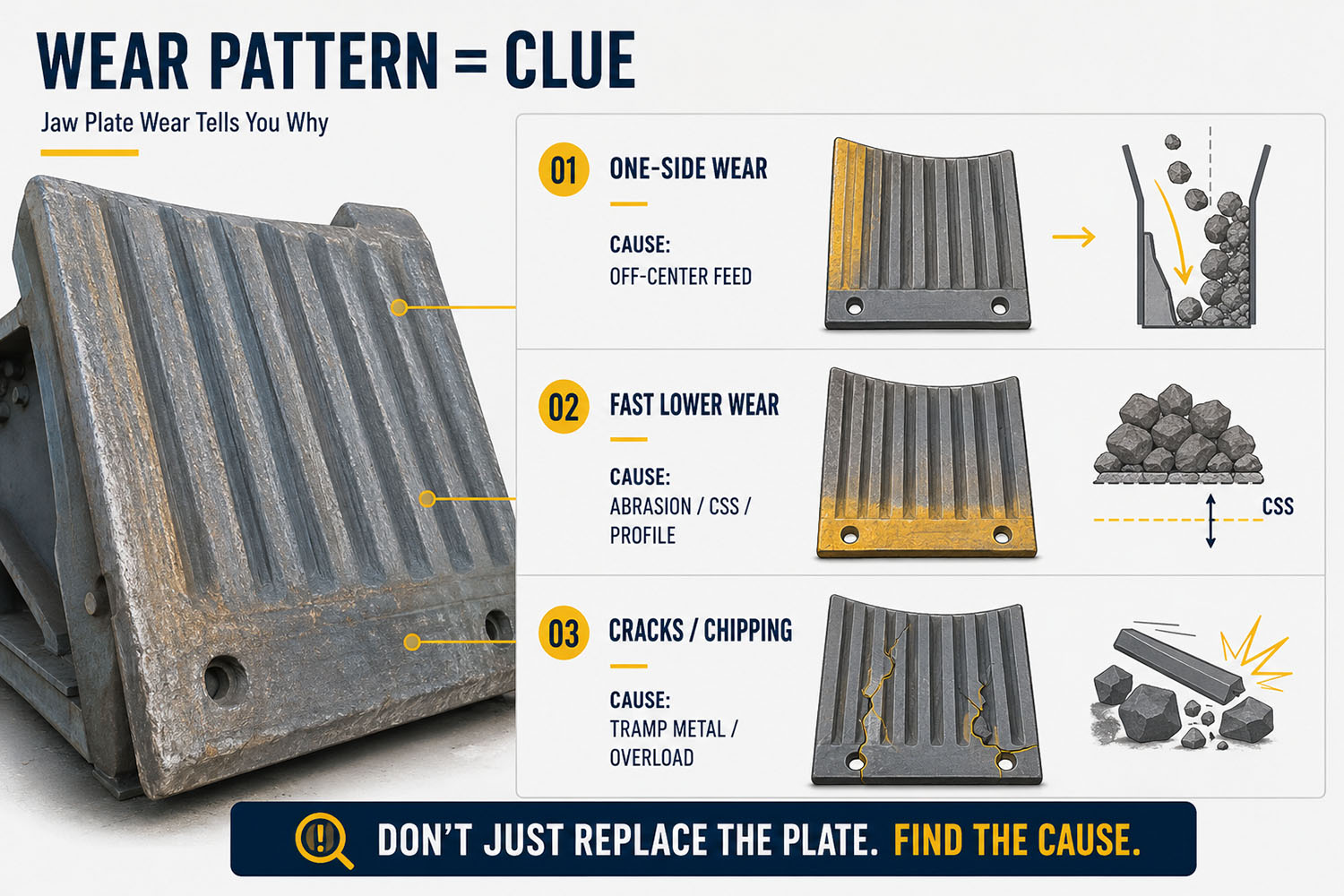
Jaw plates are wear parts, but abnormal or uneven wear can reveal a process problem. Plate life is affected by rock hardness, abrasiveness, feed size, feed distribution, CSS, chamber design, operating hours, throughput and the presence of fines or tramp metal.
8.1 Normal Wear Versus Abnormal Wear
| Wear Pattern | Possible Meaning | Recommended Review |
|---|---|---|
| Wear concentrated on one side | Off-center feeding or uneven distribution across the chamber | Review feeder alignment, hopper discharge and material entry pattern |
| Rapid wear in the lower section | High abrasiveness, CSS influence, chamber loading pattern or unsuitable plate profile | Review material type, feed size, CSS and applicable jaw plate selection |
| Cracks, chipped teeth or local deformation | Possible tramp metal, high impact, overload, installation issue or severe operating condition | Stop and inspect; do not continue operation until the cause is assessed |
| Loss of throughput with a worn plate profile | Reduced gripping action and crushing efficiency | Measure wear, compare production under similar conditions and plan rotation or replacement |
8.2 Track Wear with Tonnage, Thickness and Output
Do not rely only on calendar time to decide when jaw plates should be replaced. Track operating hours, tonnes processed, material type, actual TPH, CSS, plate thickness and visible condition. If production drops while feed conditions and CSS remain comparable, inspect the jaw plate profile and the full crushing process before deciding on replacement.
HAMAC’s wear guidance identifies three useful inspection triggers: remaining plate thickness approaching the model-dependent usable limit, sustained output reduction of approximately 15–20% under comparable conditions, and visible cracks, chipped teeth or deformation. Visible damage requires immediate assessment regardless of remaining thickness.
8.3 Material Type Affects Wear Planning
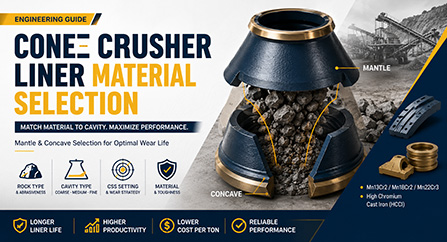
Limestone, granite, basalt, quartzite, iron ore and recycled concrete can produce very different jaw plate wear rates. Hard and abrasive rock may require more frequent monitoring and a suitable manganese grade. Recycled concrete can create additional risk from embedded steel and other uncrushable material.
Uneven wear is not only a wear-part issue. It can also indicate off-center feeding, improper feed distribution, material segregation, unsuitable chamber loading or an incorrect operating condition. Correcting the feed pattern may help improve jaw plate life and reduce the risk of premature replacement.
See HAMAC’s jaw plate wear, manganese grade and replacement-planning guide.
For general jaw plate wear-life planning, Metso explains that the most efficient use of jaw plates is achieved when wear is distributed as evenly as possible across the plate area. Their technical guidance also discusses rotatable one-piece and two-piece jaw plates, which may allow available wear material to be used more effectively where the specific crusher design supports rotation.
See Metso’s guide to getting more wear life from rotatable jaw crusher plates for general wear-life and plate-rotation concepts. This external reference is provided for general information only. Always confirm whether jaw plate rotation, reversal, replacement sequence, lifting method and fastener procedures are permitted for your specific HAMAC jaw crusher model.
For general information about jaw crusher wear and spare parts, including jaw plates and cheek plates for different rock types and applications, see Metso’s jaw crusher wear parts overview.
Jaw plates are heavy wear components. For safe maintenance principles related to crusher wear-part handling, see Metso’s crusher maintenance tools and lifting-safety overview. Use only approved lifting equipment, follow the applicable HAMAC manual and ensure that lifting work is performed by trained personnel under site safety procedures.
9. Toggle Plate, Drive Belt and Flywheel Problems
Toggle plates, drive belts and flywheels are important components in jaw crusher operation. Repeated damage should not be treated as a simple spare-parts issue. It may indicate oversize material, uncrushable material, excessive feed, unsuitable CSS, poor feed control or an unresolved mechanical problem.
9.1 Toggle Plate Damage
A broken or damaged toggle plate may follow an overload event or the entry of tramp metal and other uncrushable material. Before replacing the part, inspect the feed source, feeder, chamber, jaw plates, toggle seats, related tension components and operating conditions.
If the same problem occurs repeatedly, record the material type, feed size, any foreign material found, CSS, production rate and recent operating events. This information is important for root-cause analysis.
9.2 Belt Slipping, Cracking or Misalignment
Drive belts can slip or wear prematurely because of incorrect tension, pulley misalignment, contamination, damaged guards, overload or general wear. Inspect belts only after shutdown and isolation. Follow the applicable manual for belt type, tensioning method, replacement and guard reinstallation.
9.3 Flywheel Condition
Material buildup, damage, loose components or abnormal flywheel movement can cause vibration and drive problems. Because flywheels carry significant rotating energy, any suspected flywheel issue requires strict shutdown procedures and qualified assessment.
10. Daily, Weekly and Monthly Jaw Crusher Maintenance Checklist
Preventive maintenance is usually less costly than unexpected repair. The checklist below is a general operating framework. Adjust it to the specific HAMAC model, service manual, material condition, operating hours, local climate and site maintenance plan.
| Frequency | Inspection Item | What to Check | Record to Keep |
|---|---|---|---|
| Daily | Feed material | Oversize rock, uneven feed, excessive fines, clay, moisture and tramp metal | Material changes, oversize events and feed-related stoppages |
| Daily | Jaw plates and cheek plates | Wear pattern, cracks, chipped teeth, loose wedges or visible damage | Visual condition and measured thickness where applicable |
| Daily | Discharge area | Material buildup, conveyor restriction, transfer-point blockage and stockpile interference | Blockage event and corrective action |
| Daily | Noise and vibration | Changes from normal operating sound, rattling, knocking or increasing vibration | Time, operating condition and location of symptom |
| Daily | Lubrication system | Leaks, grease condition, lubrication-system operation and cleanliness | Lubricant used and exceptions from normal condition |
| Daily | Belts, guards and safety devices | Visible belt wear, guard condition, loose covers and safety-device function | Damage found and repair status |
| Weekly | Fasteners and structure | Accessible bolts, frame, hopper, supports, feeder interface and visible cracks | Inspection date and repair actions |
| Weekly | Flywheels and drive | Buildup, pulley condition, belt tracking, guard condition and abnormal movement | Drive inspection findings |
| Weekly | Bearing-temperature trend | Temperature trend compared with normal baseline and comparable bearing locations | Temperature readings, ambient condition and operating load |
| Weekly | Motor load or power trend | Unexpected changes under comparable material and feed conditions | Motor current, load trend or power data where available |
| Monthly | CSS verification | Setting accuracy, setting drift and final-product-size effect | CSS measurement and product-size observations |
| Monthly | Wear-part review | Jaw plate thickness, cheek plate condition, toggle-related parts and other wear components | Remaining life estimate and planned replacement date |
| Monthly | Process coordination | Feeder performance, conveyor capacity, screen performance, transfer points and stockpile flow | Recurring bottlenecks and process-improvement actions |
| Monthly | Maintenance review | Recurring failures, downtime hours, parts consumption and training requirements | Monthly maintenance and downtime report |
Recording operating data improves maintenance decisions. At a minimum, track actual TPH, operating hours, downtime reason, jaw plate condition, CSS, material changes, bearing-temperature trend, motor-load trend where available, lubrication activity and spare parts used.
For a general explanation of grease behavior, temperature and lubrication-condition monitoring, see SKF’s technical overview of grease lubrication mechanisms in rolling bearing systems. It explains that grease operates within a defined temperature range and that vibration monitoring is commonly used to assess bearing condition.
Use this information only as a general maintenance reference. The daily, weekly and monthly inspection intervals for a specific jaw crusher must be adjusted to the machine model, material abrasiveness, duty cycle, site temperature, contamination level and the applicable HAMAC operation and maintenance manual.
11. How to Reduce Jaw Crusher Downtime
Reducing jaw crusher downtime is not only about faster repair. It begins with stable feeding, correct equipment selection, regular inspection, suitable wear parts, clean lubrication practices, available critical spares and early reporting of abnormal conditions.
| Downtime Reduction Practice | Operational Benefit |
|---|---|
| Match feeder capacity to jaw crusher capacity | Reduces overload and idle cycles and helps maintain a stable crushing-chamber load |
| Control maximum feed size | Reduces bridging, blockage and overload risk |
| Remove excessive fines where appropriate | Frees crusher capacity for material that actually requires size reduction |
| Keep uncrushable material out of the feed | Reduces toggle, jaw plate, conveyor and chamber-damage risk |
| Verify CSS and product size regularly | Helps control throughput, load, product specification and wear |
| Inspect wear parts before output declines severely | Allows planned replacement instead of emergency downtime |
| Maintain lubrication according to the specific manual | Helps protect bearings and related components |
| Keep critical spare parts available | Reduces waiting time when wear parts or service parts are needed |
| Train operators to report changes early | Small changes in sound, vibration, temperature and TPH can be addressed before major failure |
| Review recurring failures with a technical team | Helps identify root causes rather than repeating the same repair |
The lowest downtime cost comes from preventing a small operating deviation from becoming a major mechanical failure.
12. When to Contact HAMAC Technical Support
Contact HAMAC or qualified technical service when you have persistent abnormal vibration, repeated bearing overheating, repeated toggle or belt failure, visible structural damage, unexplained capacity loss, recurring blockage, difficulty maintaining product size, repeated overload trips or uncertainty about compatible spare parts.
To help the technical team provide a more useful response, prepare the following information before submitting an inquiry:
| Information to Provide | Why It Helps |
|---|---|
| Jaw crusher model and serial number | Helps identify the correct configuration, documents and compatible spare parts |
| Material type | Helps assess hardness, abrasiveness, moisture, clay and expected wear conditions |
| Maximum feed size | Helps evaluate feed suitability and overload or blockage risk |
| CSS or discharge setting | Helps review product-size control, load and capacity relationship |
| Expected TPH and actual TPH | Helps identify capacity loss and process bottlenecks |
| Daily operating hours | Helps evaluate wear, lubrication and maintenance timing |
| Bearing-temperature trend | Helps assess overheating, lubrication or bearing-condition concerns |
| Motor current or power trend, if available | Helps identify overload, feed variation or operating changes |
| Photos of jaw plates, damaged parts and feed material | Helps identify wear patterns, visible damage and material-related issues |
| Video of abnormal noise or vibration | Helps technicians review when and how the symptom occurs |
| Recent maintenance and failure history | Helps identify recurring root causes and previous corrective actions |
Need help diagnosing a jaw crusher issue? Send HAMAC your crusher model, material, feed size, CSS, expected and actual production data, photos and videos of the problem. This allows the technical team to review likely causes and recommend the next step.
Explore HAMAC PE Series Jaw Crusher technical specifications.
Explore HAMAC tracked crushing plants for mobile crushing projects.
View HAMAC mobile crushing plant project cases.
Request Jaw Crusher Technical Support or Spare Parts Advice
13. Frequently Asked Questions
Why is my jaw crusher producing less material than expected?
Low jaw crusher output can be caused by uneven feeding, oversized rock, an unsuitable CSS, worn jaw plates, excessive fines, wet or clay-rich feed, a blocked discharge area or a downstream conveyor or screen bottleneck. Compare actual operating conditions with normal baseline data before assuming the crusher itself is undersized.
What causes excessive vibration in a jaw crusher?
Excessive vibration may be caused by loose fasteners, support or chassis issues, material buildup on flywheels, bearing wear, feed imbalance, damaged components, foreign material in the chamber or structural problems. Persistent or sudden severe vibration requires safe shutdown and qualified inspection.
Why is my jaw crusher bearing overheating?
Common causes include incorrect lubrication quantity, contaminated grease, bearing wear, alignment problems, excessive belt load, dust or water ingress and abnormal operating conditions. Compare temperature trends with the machine’s normal baseline and follow the model-specific lubrication manual.
Why does a jaw crusher make a knocking noise?
A knocking or rattling noise can be caused by loose parts, damaged toggle components, foreign material, worn bearings, jaw plate damage, flywheel issues or drive-system problems. If the noise is persistent, stop the machine and inspect the cause before restarting.
What causes uneven jaw plate wear?
Uneven jaw plate wear is often related to off-center feeding, uneven feed distribution, unsuitable jaw plate profile, incorrect CSS, material variation or the presence of excessive fines. Inspect both jaw plates, cheek plates, feeder alignment and the way material enters the chamber.
Why does my jaw crusher keep blocking or choking?
Jaw crusher blockage can result from oversized material, wet or sticky feed, high clay content, excessive fines, excessive feed rate, an unsuitable CSS or restricted discharge flow. Check the hopper, feeder, crushing chamber, conveyor, screen and stockpile as one connected material-flow system.
Why does a jaw crusher toggle plate break?
A toggle plate can be damaged by uncrushable material, tramp metal, overload, oversized feed, unsuitable operating conditions or a related mechanical issue. Do not replace the part without checking the root cause, especially if failure occurs repeatedly.
How often should jaw crusher jaw plates be inspected?
Jaw plates should be visually checked as part of routine daily inspection and measured or reviewed in more detail according to the site maintenance plan. Replacement timing should be based on wear thickness, plate profile, cracks, product quality, throughput trend, material abrasiveness and the equipment-specific manual rather than a fixed calendar alone.
What information is needed for jaw crusher technical support?
Provide the crusher model and serial number, material type, maximum feed size, CSS, expected and actual TPH, operating hours, bearing-temperature trend, motor-load data if available, maintenance history, photos of wear parts and videos of abnormal noise or vibration.
14. Related HAMAC Jaw Crusher Resources
Use the following resources to continue your equipment selection, maintenance and crushing-process review:
- PE Series Jaw Crusher: Technical Data, Applications and Solutions
- European Tech Jaw Crusher: High-Capacity Primary Crushing Options
- What Is the Role of a Jaw Crusher in a Crushing Plant?
- Jaw Plate and Cone Crusher Liner Wear: Replacement Cycle and Maintenance Guide
- Mobile Crushing Plants for Quarry, Aggregate and Recycling Projects
- Tracked Crushing Plants: Mobile Jaw, Impact, Cone and Screening Solutions
- HAMAC Mobile Crusher Project Cases
15. Request Jaw Crusher Technical Support
For jaw crusher troubleshooting, maintenance planning, jaw plate selection, spare parts, primary crushing equipment selection or complete crushing-plant configuration, send HAMAC your material information, feed size, capacity target, current operating data and photos or videos of the issue.
HAMAC can help you review jaw crusher operating symptoms, wear-part requirements and practical next steps for your crushing project.